October 12, 1917. The mud swallowed men alive.
The Deadliest Quagmire
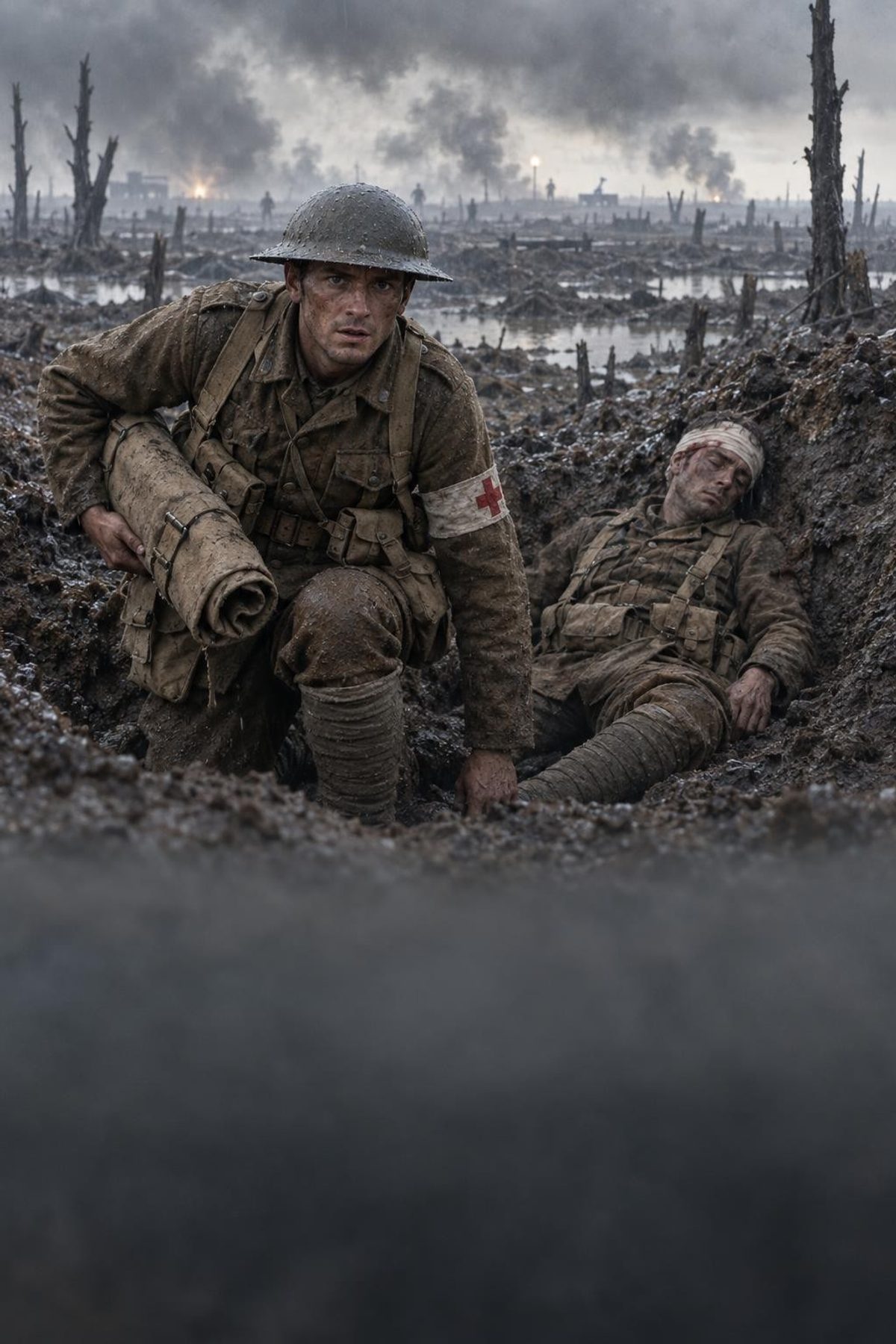
The Battle of Passchendaele, known as one of the most harrowing confrontations of World War One, gripped the fields of Flanders in a deadly embrace. Amidst relentless artillery shelling and incessant rain, the landscape was churned into a morass of mud and blood. Soldiers faced a formidable adversary, not just in the enemy ahead, but in the earth beneath, which threatened to bury them slowly, suffocatingly alive.
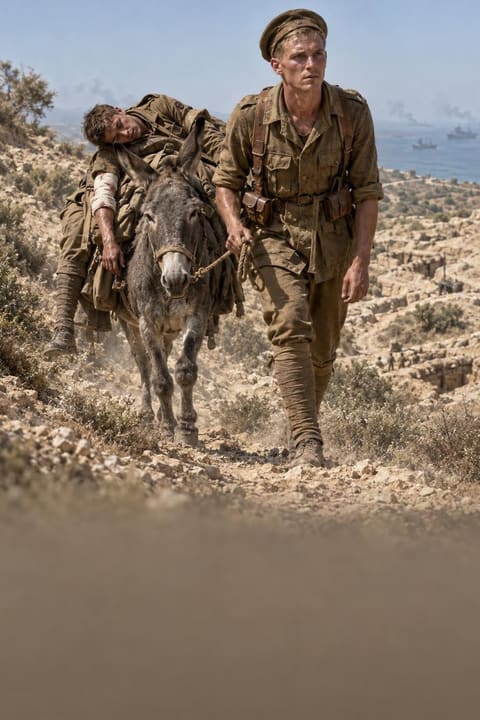
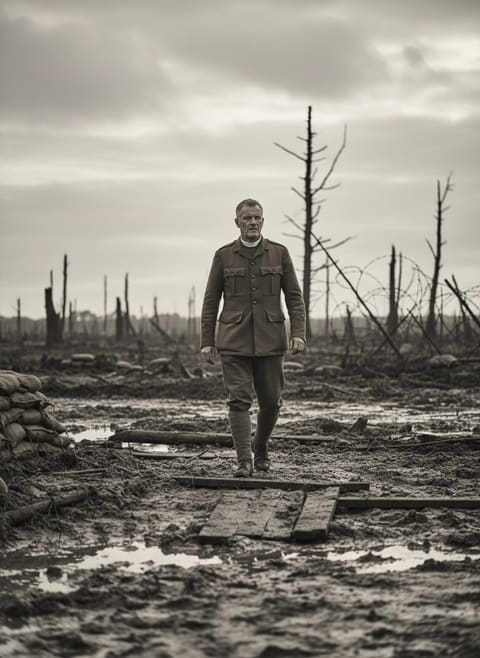
In this nightmarish setting, Private William Harold Coltman performed deeds that would etch his name into history. Coltman, a modest man of deep conviction, walked unarmed into no man's land, the infamous stretch of death and despair between opposing trenches. Yet Coltman's purpose was not to take life, but to save it. A conscientious objector, he refused to carry a weapon, choosing instead the harrowing duty of a stretcher-bearer.
In the chaos of warfare, where rifle fire, mortar blasts, and the cries of fallen comrades filled the air, Coltman ventured again and again into deadly territory. He braved machine-gun fire and shell bursts, driven by a near-miraculous courage. His mission was simple yet profound: to shepherd the wounded back to the safety of friendly lines, to offer a glimmer of hope where hope seemed extinguished.
Read next: The Letter That Made Britain Stop for Two Minutes Every Year
The Conscientious Hero
Coltman's refusal to carry arms was a personal credo grounded in his Baptist faith, a testament to his deep commitment to the sanctity of life. Yet his stance did not shield him from the horrors of war. Far from it, being a stretcher-bearer demanded unparalleled bravery and resolve. With every foray into the mud-soaked abyss, Coltman faced overwhelming odds. But he never wavered.
Often, it was in the dead of night, under the pale glow of flares and tracers, that his work reached the zenith of peril. Each foray into no man's land was an act of defiance against death and despair. Coltman did not walk alone; he was accompanied by courage, a silent and steadfast companion. He earned the trust of those he saved, and respect from even the hardiest of his peers.
His exploits did not go unnoticed. Coltman was conferred Britain's highest military honour, the Victoria Cross, along with the Distinguished Conduct Medal and bar, and the Military Medal and bar. These accolades marked him as Britain's most decorated non-officer rank soldier of the Great War — a remarkable feat achieved without firing a single bullet.
The Muddy Path to Immortality
The conditions Coltman worked under were scarcely imaginable. Passchendaele's infamous mud was a sinister adversary. Thick, clinging, and treacherous, it ensnared the unwary, a silent partner to shrapnel and gunfire. Stretcher-bearers like Coltman faced not just the risk of enemy action, but the very real possibility of being swallowed by the earth itself, never to be seen again.
In the mire of destruction, amid the debris of war, Coltman's calm, compassionate presence was like a beacon. Fellow soldiers, shattered by the carnage, took solace in each other, but knowing men like Coltman walked among them brought a unique sense of security. He lay down his own safety for theirs, affirming a simple truth amidst the chaos: in the darkest of times, humanity's light can shine brightest.
Read next: The Railway That Carried a Nation's War to Victory
His story is a sobering reminder of the individual acts of heroism often overshadowed by the grand narratives of war. These quiet tales, of men and their actions in the face of insurmountable odds, are woven into the very fabric of history. They show, powerfully, that even amidst vast, impersonal forces, a single person's resolve can echo through time.
Beyond the Legend
William Coltman's legacy prompts a reflection on the nature of heroism and the true cost of war. His courage, borne out of a deep moral conviction, challenges us to reconsider the value we place on human lives amid conflict. Coltman exemplified bravery not in slaying enemies but in saving comrades, embodying a humanitarian spirit seldom associated with the battlefield.
As our world grapples with the realities of conflict and its toll on human life, Coltman's story remains profoundly relevant. His deeds remind us that there are many kinds of courage, many paths to heroism, each with their own ethical and philosophical footprints. The tale of the stretcher-bearer who walked into hell 300 times adds a rich layer to our understanding of valor, one that continues to resonate today.
In remembering Coltman, we remember not just his actions, but the countless untold stories of those who walked through the same rain, mud, and fire. His story isn't just about war or peace; it's about humanity — enduring, sacrificing, and hoping for a brighter tomorrow in the darkest of nights. This is why Coltman's legacy endures, speaking quietly yet powerfully to all who listen.