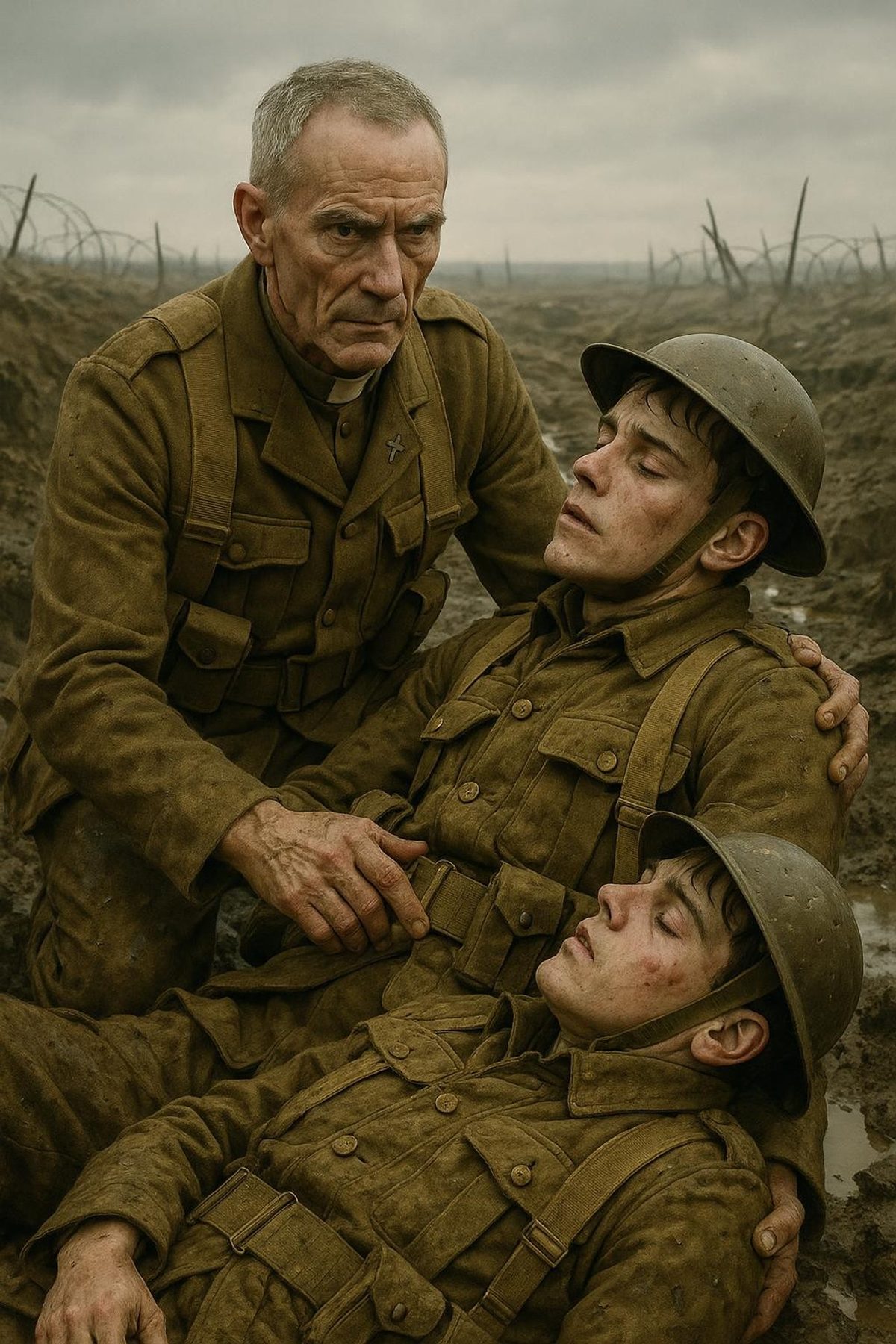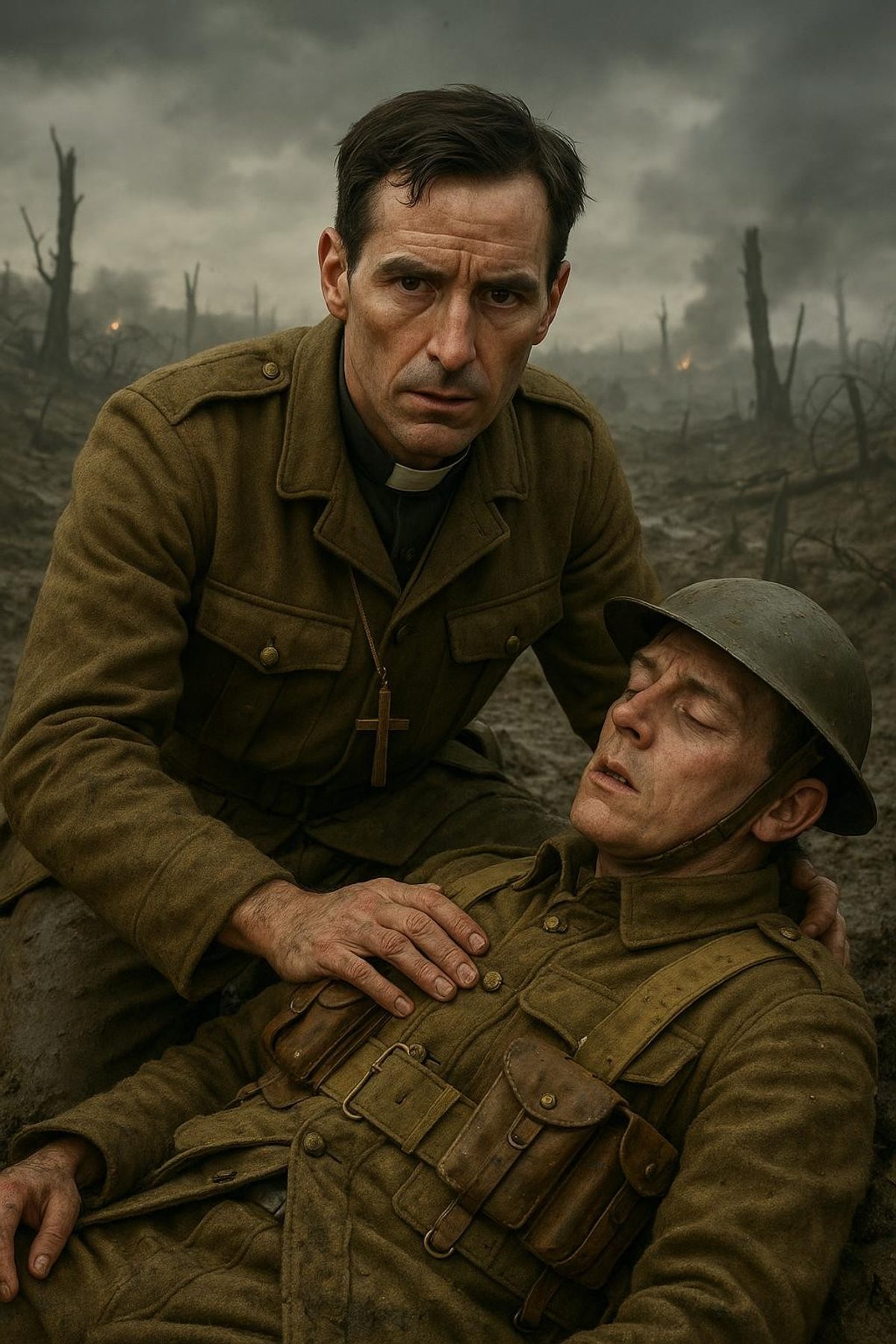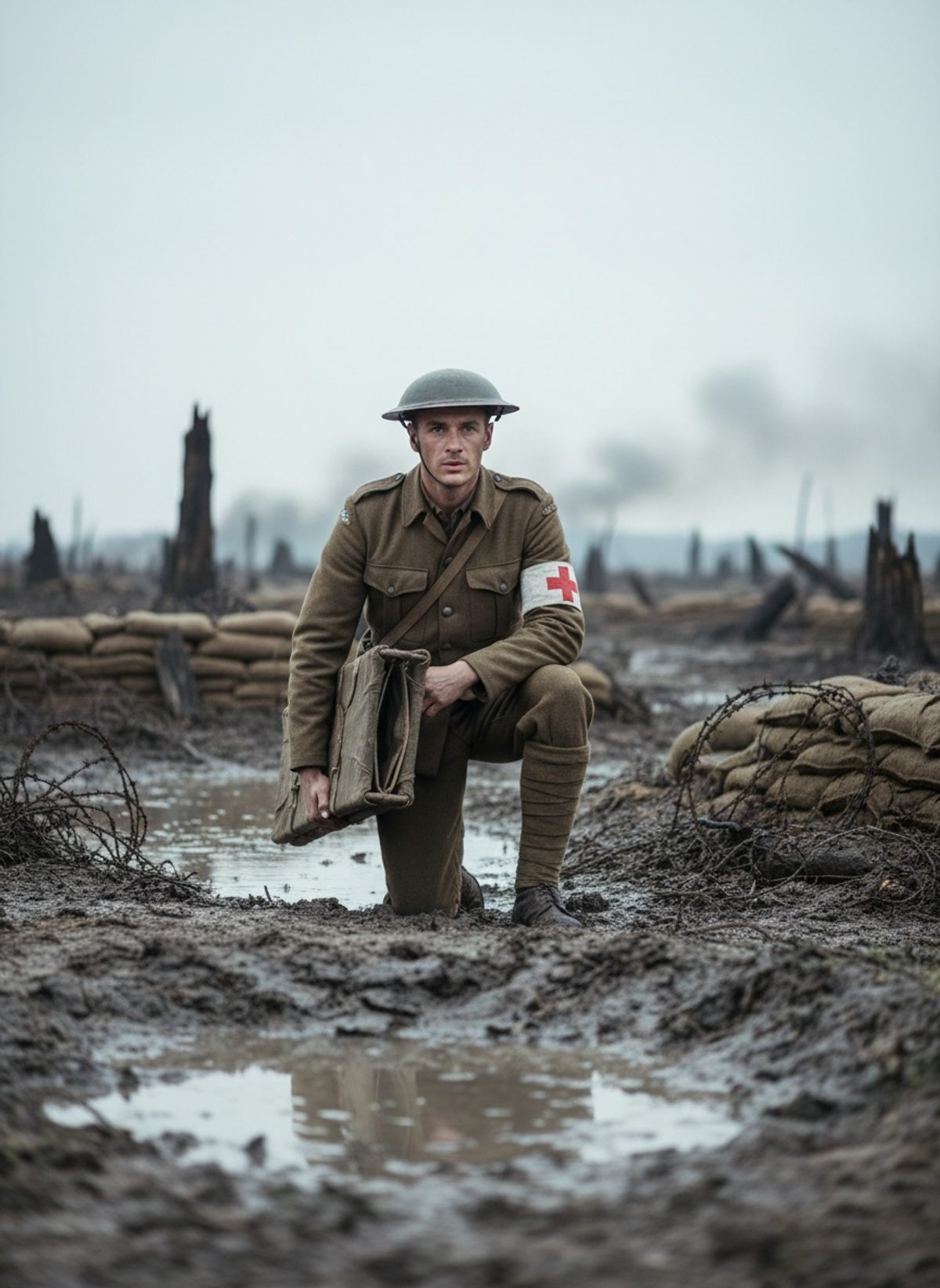
The earth trembled beneath his feet as the artillery barrage lifted, leaving a surreal and deafening silence. Mud clung thickly to William Coltman’s boots, and in the eerie quiet, he could hear the cries of the wounded echoing across no man's land. Unarmed and resolute, Coltman plunged forward, each step a fight against the quagmire that threatened to swallow him whole.
The Reluctant Hero
William Coltman was far from the image of a traditional soldier. A conscientious objector by faith, he had resolutely refused to carry a weapon, taking a vow to heal rather than harm. Yet, this vow of peace led him into the heart of hellish chaos at Passchendaele in October 1917, during one of the bloodiest campaigns of World War One. The battlefield was a nightmarish expanse of churned mud and wire, where desperation turned men into phantoms fighting for survival.
The horror of the Western Front was vividly etched across Coltman's face as he made his way into the dreaded mire, muffling the sound of distant screams under the blood-curdling quiet of anticipation before the next barrage. Every journey he made was a tightrope walk between life and death—an unarmed pilgrimage through hell, driven by unwavering compassion.
No Man’s Land: The Ultimate Test
No man's land was an inhospitable stretch where dreams turned to nightmares. The mud was thick enough to drag men down, transforming the eager into the inert in seconds. But it wasn't just the treacherous terrain that posed a threat. Coltman knew that each venture into the open came with the real risk of sniper fire from the enemy lines, a hidden lethal presence beneath the stagnant fog of war.
Read next: The Day a British Padre Walked Into No Man's Land Unarmed
Yet, Coltman always returned, breathless and dusty, clutching the life of a fellow soldier. The sounds of his comrade's rasping breaths, the rake of their fingernails against the stretcher's coarse fabric, were constant reminders of the human cost of war that couldn’t be measured by medals or accolades.
Each soldier Coltman brought back added to the quiet acknowledgment among his peers that this man, who had refused to bear arms, possessed a courage and tenacity unmatched by those who did. His bravery was not in facing the enemy with a weapon, but in his relentless pursuit of saving lives, heedless of the danger that scythed looming around him.
A Soul Steeled by Compassion
The truth of William Coltman’s heroics lies not within the confines of a battlefield map or a textbook glossing over strategies—the essence of his legacy was etched in the mud and blood of Passchendaele’s trenches. Beneath the grimy exterior lay a simple man's quiet resolve, fueled not by a desire for recognition but by an unyielding commitment to his fellow soldiers.
Coltman, the stretcher-bearer who tread in places others dreaded, accomplished feats on the battlefield that often defy belief. He worked tirelessly in unspeakable conditions, determined to provide a glimmer of hope where despair hung heavy like the morning fog. His selfless actions stemmed from a deep conviction that each life was precious, deserving of every ounce of effort he could muster.
The Legacy of Silence and Bravery
When the guns finally fell silent, and the bloodied fields were left to the whispers of the wind, William Coltman became the most decorated other rank in the entire British Army. Yet, his story rarely finds a place in the annals scrolled with tales of war heroes. His courage was quiet, his resolve silent, but his impact resonated far beyond the battlefield.
In a conflict defined by destruction and death, Coltman’s pacifism under fire reveals the often overlooked human capacity for compassion amidst chaos. His life serves as a poignant reminder that real courage can come not from the willingness to take lives, but from the commitment to save them. In the heart of war’s darkest hours, he found his moment of light, and the path he forged remains a beacon for those who seek peace in a world all too fond of war.