October 1917. The mud threatened to pull the living into the depths that already claimed the dead.
The Mire and the Madness
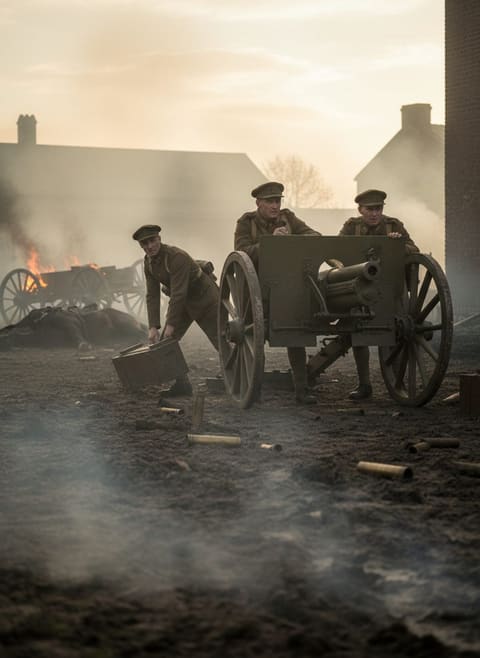
There, amid the sodden wasteland of Passchendaele, nature and ambition tangled in an unholy alliance. The battle for Passchendaele had become a menacing tableau of war—where artillery shells turned fields and forests into a muddy quagmire so relentless it could consume a man whole. A bitter irony lined the thought that these fields, once lush and green, now bore witness to one of humanity's darkest hours. Machine gun fire crackled constantly in the distance, harmonizing dissonantly with the thunderous roar of an artillery barrage that knew no end.
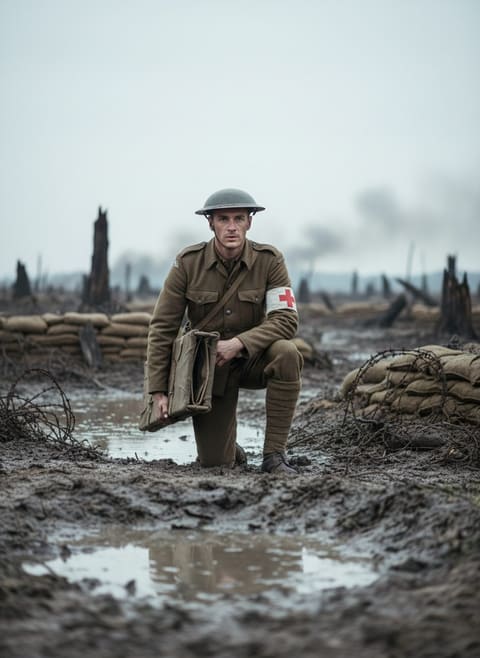
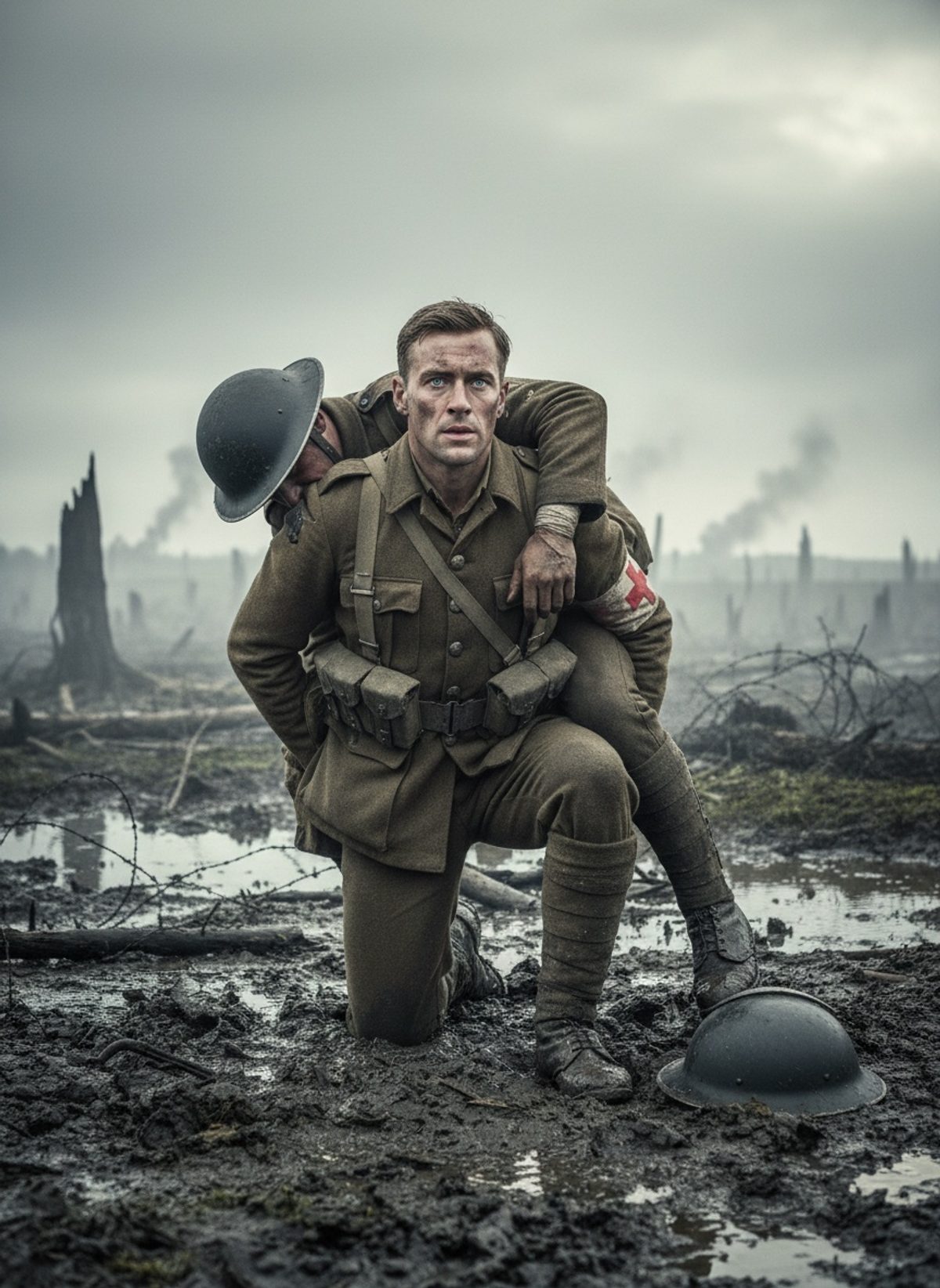
Within this nightmarish realm lived men who tested the bounds of bravery. Stretcher-bearers became the unsung heroes here, both reviled for their perceived safety away from the front lines and revered for their courage under fire. Among the muted hues of khaki and grey, Corporal Ernest Sykes emerged, a figure whose actions would defy imagination. Armed with little more than a stretcher and an unwavering sense of responsibility, Sykes set out across No Man's Land—a treacherous expanse that had already claimed countless lives and offered no hope of refuge.
The Battle of Passchendaele was not just a contest between armies but against the very landscape itself. Each step felt heavy with the weight of the sodden earth, a ground so thick with mud that it seemed to possess a life of its own. With bodies sunken beneath him and the screams of the wounded echoing across the expanse, Sykes confronted a savage choice: wait for orders and watch comrades fade, or act and risk permanent oblivion. On that cursed October day, Sykes chose action. And that choice cost him what little innocence wartime obscurity offers.
Read next: The Day a British Stretcher-Bearer Refused an Order to Save Lives
The tale of perseverance begins here—within the first journey he made that day. Crawling over shattered remnants of life and limb, past crater holes filled with still rainwater and scattered scraps of wartime debris, Sykes grew familiar with the beating of danger in his pulse. Few men would dare cross once. He ventured forth five times, as though compelled by unseen duty.
Courage Begets Courage
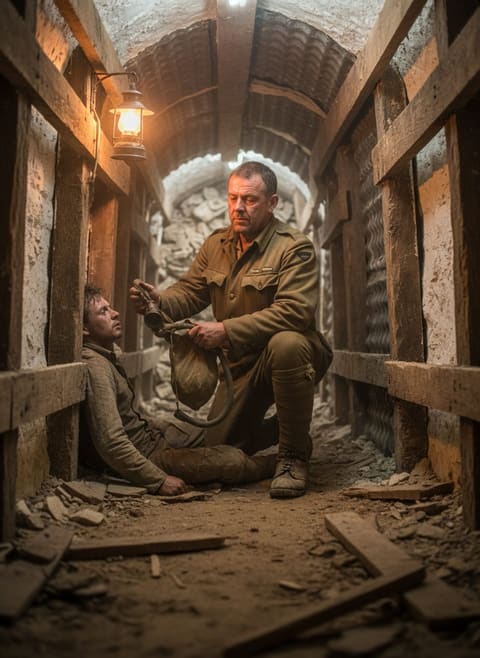
In a world defined by brutality, courage can be contagious. As Sykes ventured forth across the perilous fields, his commitment drew an unspoken line against despair. Each trip across that forsaken land meant another chance—a wounded man found and ferried back under the heavy weight of enemy fire. No commanding officer had given the order; no rulebook described such acts of valiance. The instinct for survival traditionally promotes self-preservation, yet here was Sykes, unarmed except for grit and resolve, where each dash through the mud defied logic and expectation.
Encounters with danger almost felt surreal, as if the very geometry of that land intended malice. When shells screamed through the air and exploded, parting earth and sky alike, Sykes pressed on. The chaos around him became a grim symphony with a rhythm he danced awkwardly with, the notes crescendoing until he stumbled—another comrade in need had been located. The necessity for speed met its match in mud that acted like quicksand, but retreat was not an option. Faced with moving what remained of fellow brothers, Sykes exemplified the rarest form of bravery—the kind that does not stand on ceremony but rather silently endeavors to fulfill duty knowing it may all end with another flash, another concussion, another enemy line fired unseen.
As Sykes made his fifth and final crossing of that desolate ground, eyes ravenous with fatigue and limbs weary beyond compare, he grappled with the enormity of each purpose-driven task. The knowledge that he, a single man armed with the kindness that bellied disaster, held the fate of others within his grasp was undeniable. But even through the mud’s clutches and gunfire’s menace, Sykes found resistance a futile endeavor. The condition of humanity on that field demanded a beacon, and for five miraculous crossings, Sykes responded.
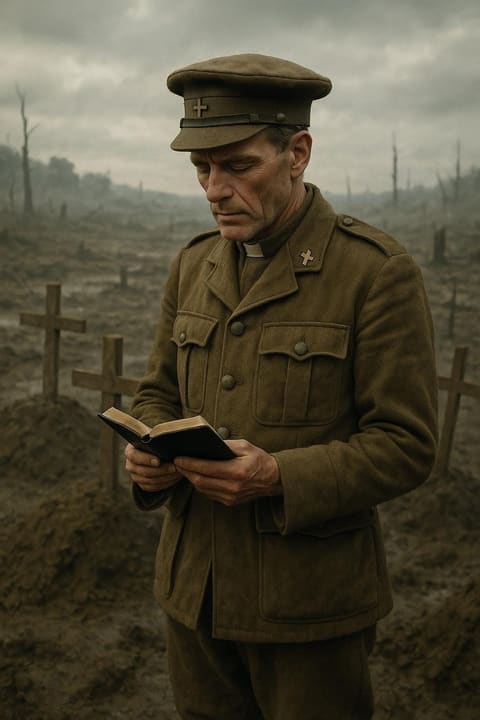
Read next: The Day a Army Chaplain Gave His Coat to a Dying Stranger
Reflections in a Medaled Mirror
The stories of lasting wartime valor are few, and rarer still are those recorded with unembellished clarity. For Corporal Ernest Sykes, an encapsulation of heroism crystallized not in grandiose proclamations but in the simple conveyance of gratitude. The Victoria Cross he received, Britain’s highest accolade for gallantry, served as the state’s acknowledgment of his intrusions into death’s domain. Yet to him, medals bore less weight than life itself. The valor of a man who dreamed not of accolades but acted from an unfathomable wellspring of communal responsibility shines brightly against the backdrop of Passchendaele’s carnage.
This singular tale of unparalleled courage in World War One reveals much about the indescribable depths that war forces upon humanity. Was it duty that drove Sykes repeatedly into danger? Perhaps, but just as likely it was the binds of brotherhood, strings cascading through history connecting those who dare amidst death’s darkness to affirm life. It’s a pioneering narrative offering quiet contemplation into the manner courage manifests in silence. Like many tales from the trenches, Sykes' did not end with celebration but with the recognition that one man's trials can inspire generations to transcend their confines—geographical, ideological, psychological.
On those blood-soaked grounds of Passchendaele, the deeds of one stretcher-bearer defied the marching annals of history. Through the swirl of mud and gunpowder, Corporal Ernest Sykes pursued vulnerability not simply as a duty fulfilled, but as an allegory on the human condition—a reminder of the collective courage within us that flickers during our darkest times.