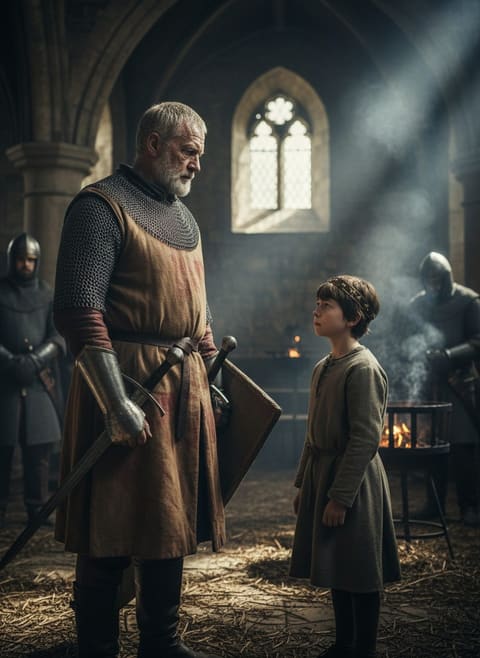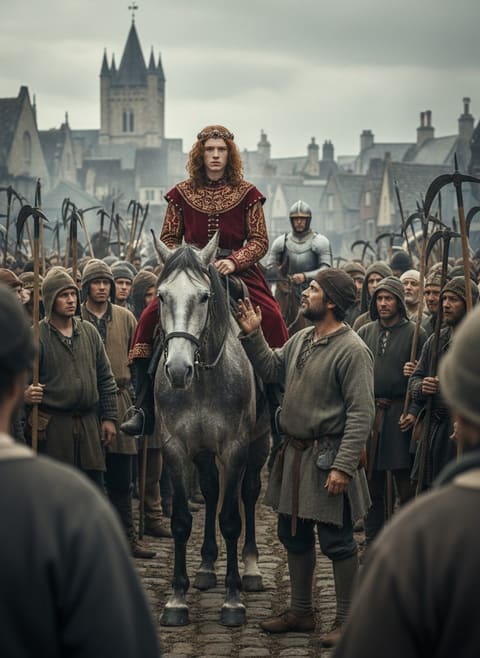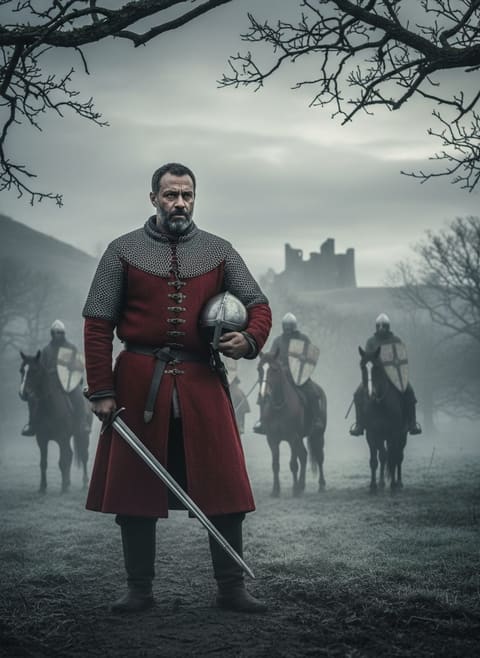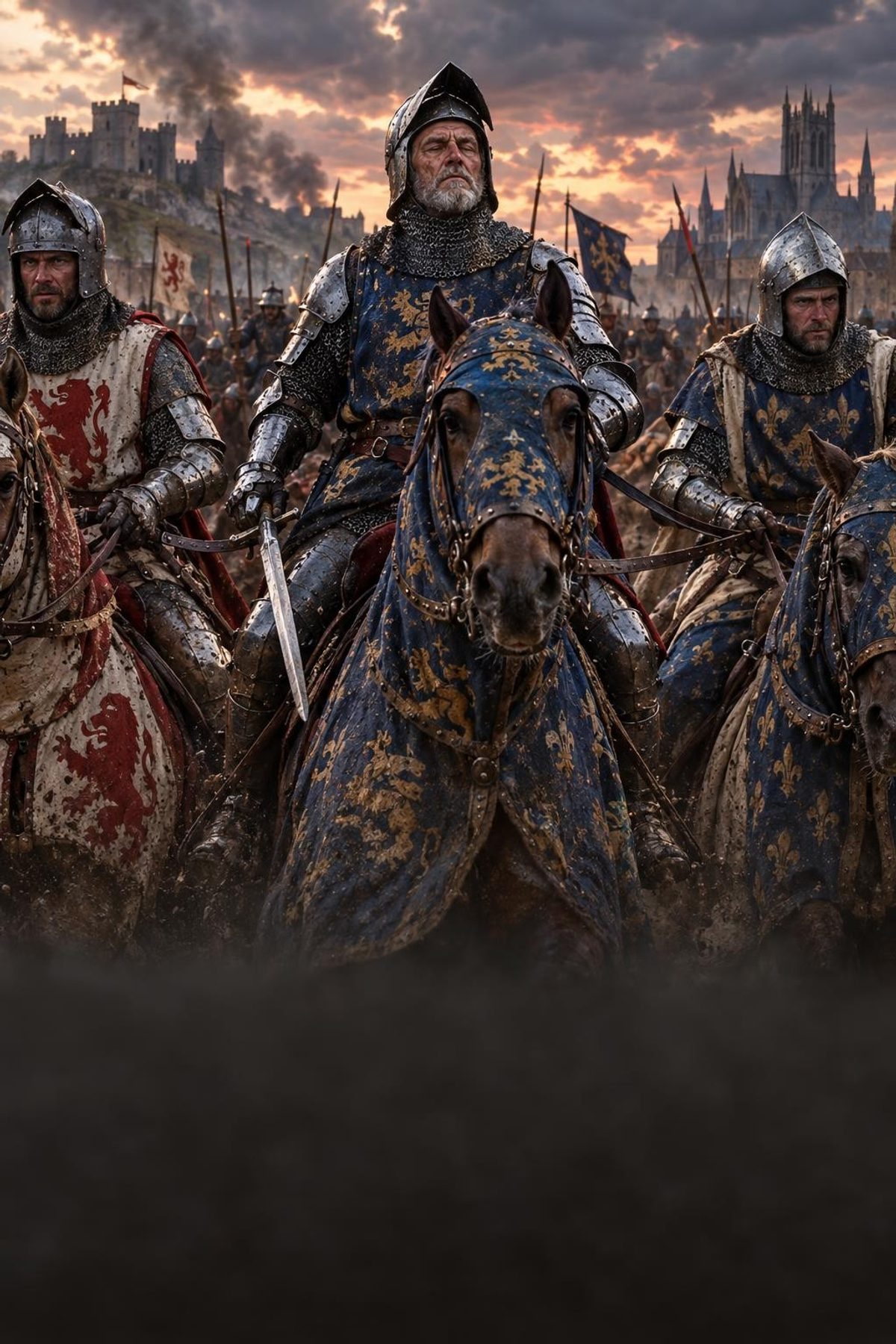
August 26, 1346. The air thrummed with the clamor of battle as lances splintered and arrows flew.
The King Who Couldn't See the Battle
As the sun dipped in the sky over the fields of Crécy, the din of war echoed across the landscape, muddied by the precise clink of chain mail and the heavy thud of hooves on soft earth. Amongst the chaos, King John of Bohemia, despite his inability to see, was conspicuously resolute.
His blindness did not deter him from desiring a place in one of the most significant battles of the medieval era. Though he had not seen the sun in years, he knew that history need not feel the sting of sunset.
King John was an enigmatic figure, ruling over the lands of Bohemia while forging alliances across Europe. His affliction, the result of a progressive ophthalmic condition, did little to diminish his reputation as a leader of men. John's presence in battle was not merely symbolic; it was a statement of courage and solidarity with his allies. His spirit was not just meant to be felt but to serve as an indelible mark of duty turned legend.
Read next: The Day a Hostage Prince Came Home and Became England's Law
On that fateful day in August, King John's resolve crystallized as he called for his closest knights. His instructions were simple, yet profound: lead him into the heart of the fight, into the crucible where heroes are forged.
They obliged, with palpable reverence, tying their horses' reins to his, forging a moving tribute to camaraderie and kingly valor. As they charged toward the English line, the scene transformed into a tapestry of honor and audacity — one that would echo through the annals of time as an enduring testament to bravery.
The Charge into Legend
The ensuing clash was no spectacle for the meek. The thunder of hooves and the clash of steel surged like ocean waves, with King John and his retinue at its center. Picture the swirl of colors — the Bohemian sigil flapping violently in the wind — as they pierced through the throng of English longbowmen.
John's sword, gripped firmly in his hand, was an extension of his will, not his eyes. The knights around him formed an iron phalanx, determined to form a living shield as they flanked their beloved leader.
The battle itself, the first major engagement of the Hundred Years' War, was a cacophony of noise and strategy, with the longbowmen forming the backbone of England's defense. However, King John plunged into the fray with a singular purpose, etching his name in a place that did not require sight to be remembered.
As legend recounts, he fought with a ferocity that belied his blindness, each swing of his sword a testament to the warrior heart within. The ties binding the horses were more than leather and rope; they symbolized the iron will of a king out to defy his limitations.
As dusk fell and the battlefield began to quiet save for whispers of victory and cries of the fallen, John of Bohemia's valor had reached its zenith. He lay among his men, having forged an unbreakable bond in their unity and sacrifice. The moment was immortalized not by the pages of books but by the stories carried back to firesides and courts as a profound act of medieval gallantry.
Read next: The Strip of Linen That Changed England Forever
The Crest of a New Chapter
Yet the legacy of John of Bohemia transcended the confines of his rule. Upon his demise, his crest — three ostrich feathers with the motto “Ich Dien” (I serve) — was claimed by none other than the Black Prince of England, Edward of Woodstock.
It was an act that spoke louder than the roar of battle. The Black Prince, renowned for his own martial prowess, adopted this symbol almost as if to absorb the essence of a king who had brought dignity beyond sight.
The feathers became emblematic of service and honor, an unexpected lineage passed on from one sovereign to another. It was as though John’s unseen bond with his men had manifested into a physical artifact, carried forth into the future by a prince who respected the depths of such loyalty and courage. This crest would remain forever entwined with the legacy of the House of Windsor, whispering the tales of undying valor and the spirit of John of Bohemia.
The battle of Crécy may have been one of overwhelming might and military strategy, but it is King John's poignant narrative — a tale where the blind saw light and steel carved stories — that navigates the ethereal realm of history. In a world where the blindness of a man's eyes did not blind his soul, King John's charge is a story not just marked by his death, but immortalized by his unyielding grasp on the principles of knightly conduct.
It's a narrative that reminds us that vision is not solely the province of the eyes but of the spirit. And within the clash of swords and the cries of warfare, it becomes clear that the legacy of courage knows no bounds, transcending even the darkened vision of a king.