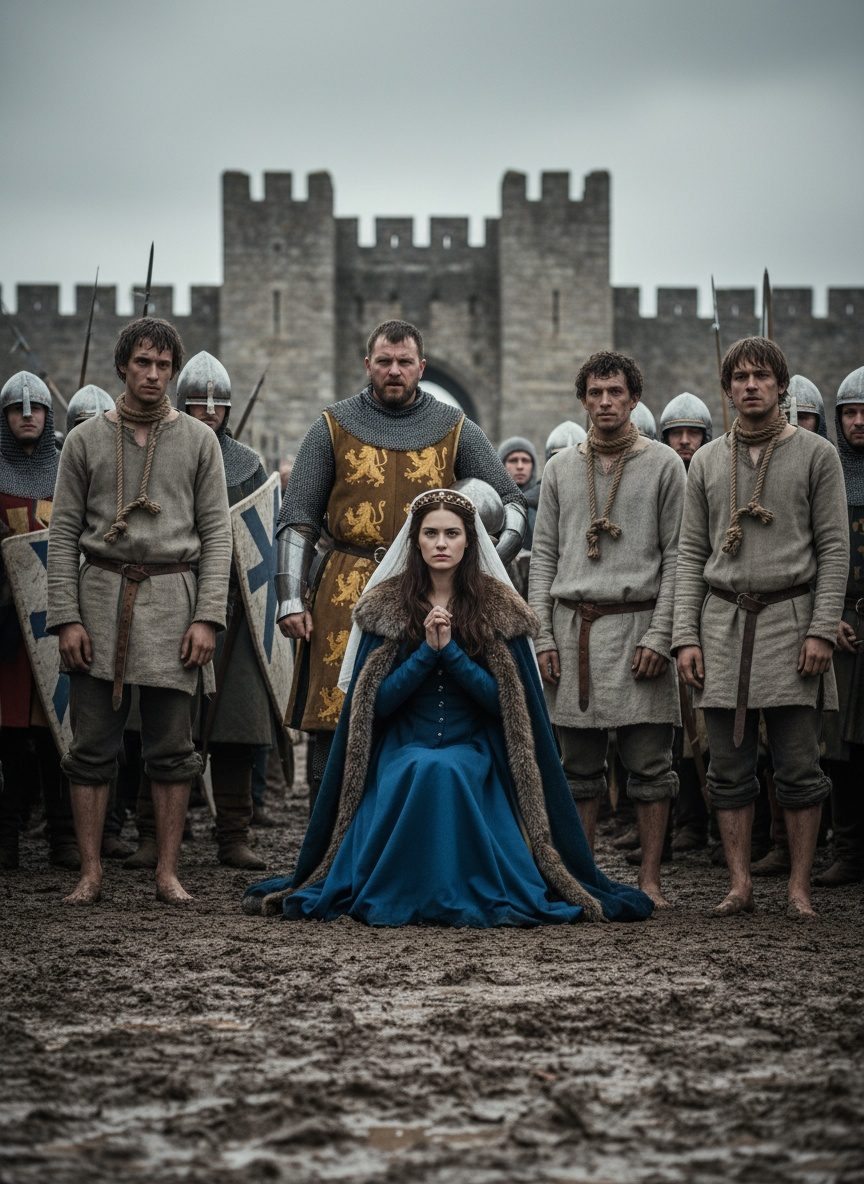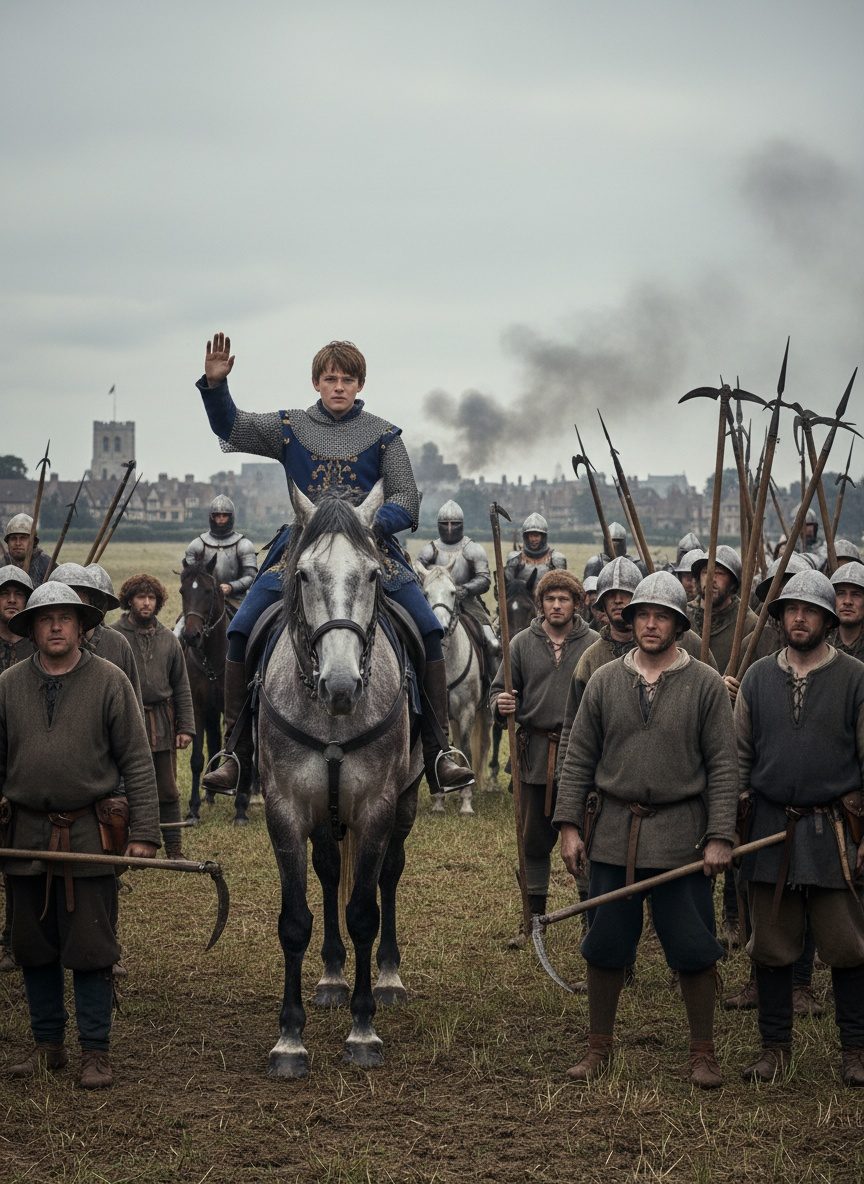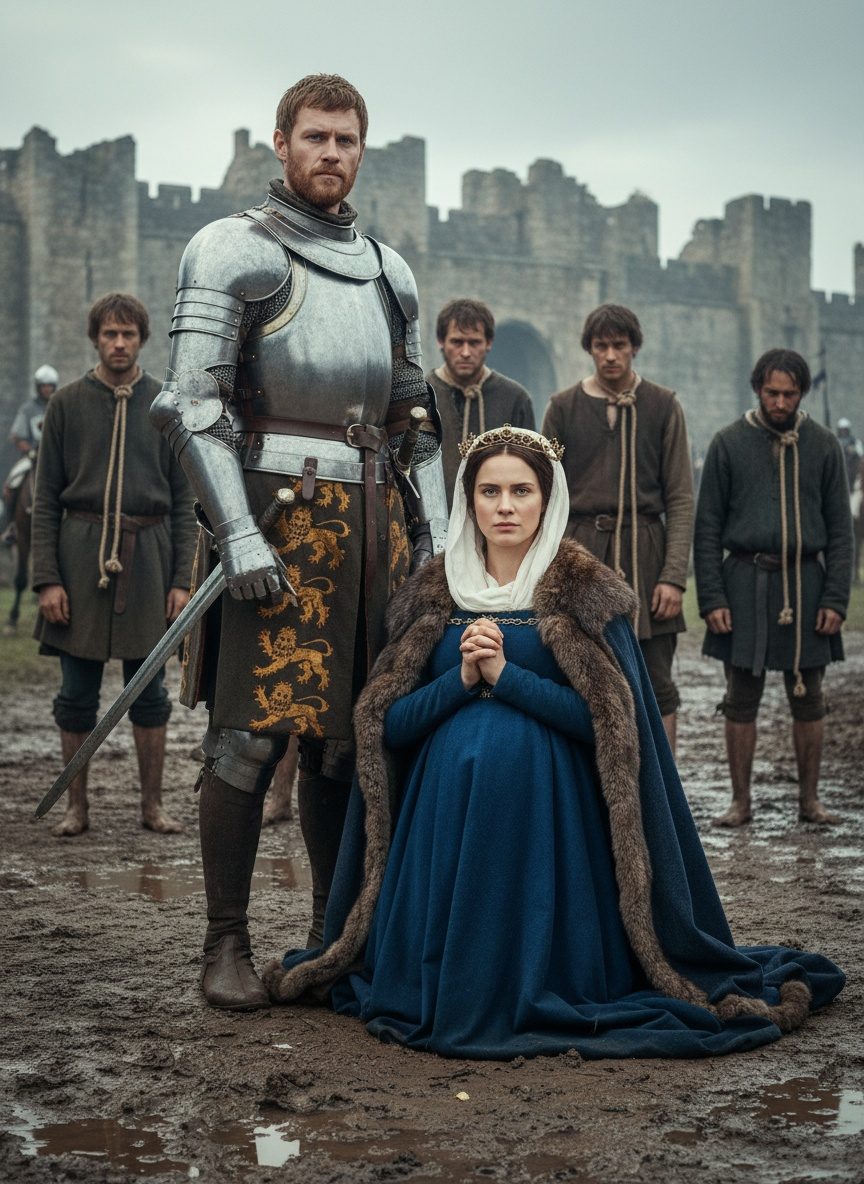
August 26, 1346. The sky stretched vast and clear above the fields of Crécy.
The Storm Before the Storm
The day began with a tense stillness hanging over the landscape, as if the very earth held its breath. Near the village of Crécy-en-Ponthieu in northern France, a battle was brewing—a clash destined to echo through the annals of history. The English army, commanded by King Edward III, lay poised and ready. Remarkably, amongst their ranks stood a mere boy, the King's son, the sixteen-year-old Prince of Wales, later known as the Black Prince. Facing them was the formidable might of King Philip VI’s French army, numbering far more than the English with its 30,000 men arrayed for battle.
As the sun rose, glinting off the armour and the banners fluttering in the wind, the English took strategic positions. They were outnumbered, but Edward's forces were seasoned veterans, battle-hardened from the campaigns across France. Edward himself, despite the enormity of the challenge they faced, was confident. His men were well-drilled in the art of the English longbow, a weapon that would soon show its devastating power.
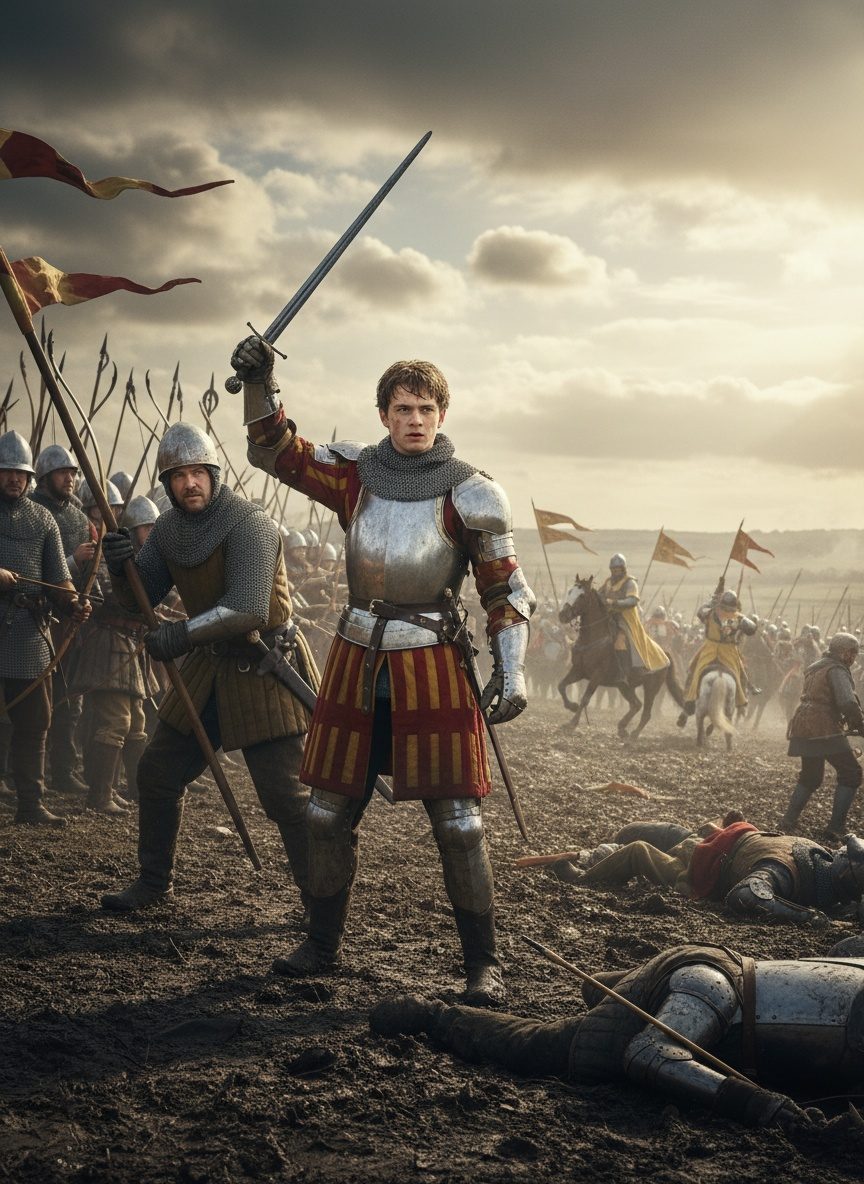
For the young Prince, this was to be his first taste of real warfare, a baptism by fire. His standard, now torn and beaten down, fluttered defiantly as the French vanguard advanced. The chivalric heart of medieval Europe was about to witness an unlikely yet pivotal test—not merely of military strategy but of individual courage and fortitude.
Read next: The Day an English King Drowned an Army in a Marsh
A Lesson in Leadership
As battle commenced, the French charged uphill, a furious ocean of knights and soldiers advancing with intent to smash the English lines. The Prince of Wales found himself at the eye of this tempest, his line of defense faltering under the pressure. Cries of alarm and the sound of clashing arms filled the air as his knights turned desperate eyes toward the windmill, where King Edward III watched the unfolding drama.
From this vantage point, Edward’s eyes remained steady, his demeanor calm as messengers came forth beseeching reinforcements for his beleaguered heir. These knights implored the King to send support, fearing ruin and rout. But Edward asked a singular question: was his son dead? The answer, "no," saw his resolve remain unchanged. Refusing to engage further forces, he dismissed pleas for intervention, asserting that the young Prince needed to earn his spurs on his own merit.
This calculated stoicism was not detachment but a father's unsentimental confidence in his son's ability to rise to the challenge. Galvanized by necessity and observing his father's trust, the Prince drew deeply on reserves of burgeoning leadership. Rallied by their youthful commander's determination, the English line stiffened. Drawing back and releasing in unison, English longbowmen exploited their beloved yew bows, laying down a lethal rain of arrows that shattered the French advance.
The storm broke upon the English position, and as the day grew older, battle raged with undiminished fury. But the Prince stood firm, his father’s unyielding trust a shield against both doubt and defeat.
The Making of a Legend
The devastation was total. Under the hammer-strike of English arrows and disciplined resilience, French chivalry cracked. With each passing hour, what appeared to be superiority of numbers waned before English steadfastness and tactical ingenuity. By the time the sun dipped low, the French forces were in retreat, an unplanned and chaotic withdrawal marked by heavy losses.
The battlefield of Crécy was strewn with the abandoned arms and scattered standards of the mightiest army in Europe—29,000 or more dead or dying. Amongst the squalor of victory, a young Prince emerged, his armour battered, his face smeared with the grime and toil of battle yet alight with something new—a hard-won understanding of leadership and valour.
King Edward finally descended from his windmill to greet his victorious warriors. The Prince had indeed earned his spurs, having met the worst of the French onslaught with courage and astute command. From this day forth, the boy would grow into a man revered for military prowess, known to posterity as the Black Prince. This singular decision by Edward III—to hold back aid—was a gamble, a teaching moment writ large on the fields of battle, yet the rewards were etched in the making of an historic warrior-prince.
The story of Crécy teaches of trust, of forging strength through trial. It reminds us that sometimes stepping back as a guide can shape potent paths of self-reliance and resilience. As history often does, it reflects the timeless tension between nurture and challenge—an enduring tale worthy of both reflection and applause.