The fields of Flanders lay shrouded in the eerie glow of dusk, silent but for the distant rumble of artillery that resonated like a thunderstorm. Shadows stretched long on the winding roads outside Antwerp, where wounded men, mere silhouettes against the twilight, lay scattered like so many autumn leaves. October 1914 was a month that carved its grim echoes across the chronicles of war—a frenzied retreat from Antwerp was underway, a vital maneuver shrouded in chaos and bloodshed. Amidst this turbulent sea of history, one figure emerged, illuminated by both courage and compassion.
Arthur Martin-Leake was no stranger to the infernal theatre of war. Decorated with the Victoria Cross for valor in the Boer War, he stood as a paragon of medical bravery. Yet, the turmoil of the First World War was a different beast. As the Germans piled relentless pressure on Allied forces, the retreat from Antwerp had become a desperate scramble for survival. Roads once meant for commerce bore witness instead to the harrowing march of humanity, wounded and frail. Yet amidst this tableau of despair, Martin-Leake revealed a different narrative, one of defiance in the face of death’s inevitability.
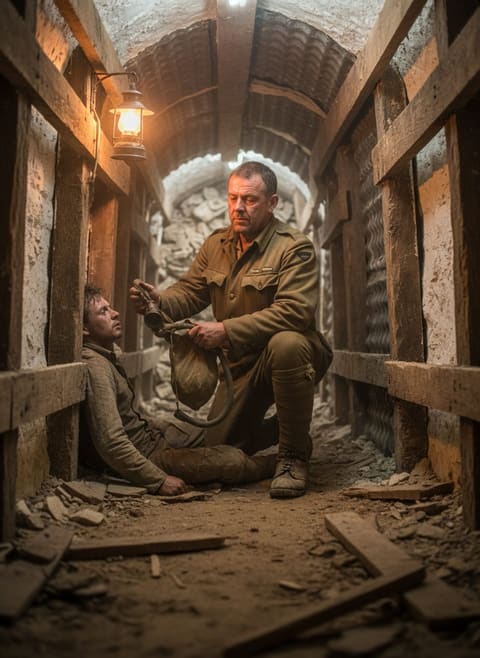
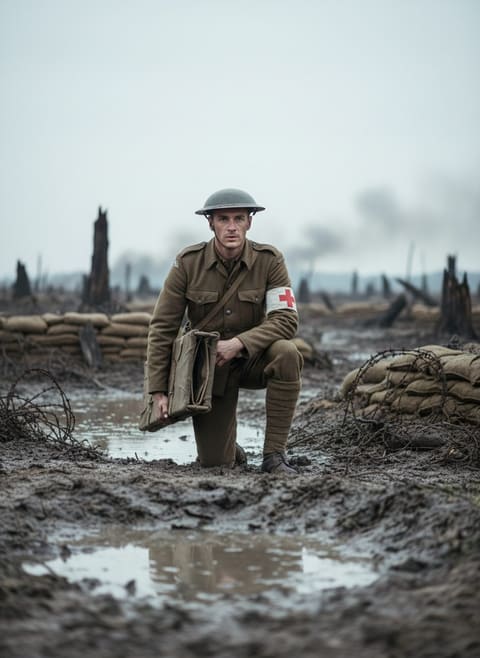
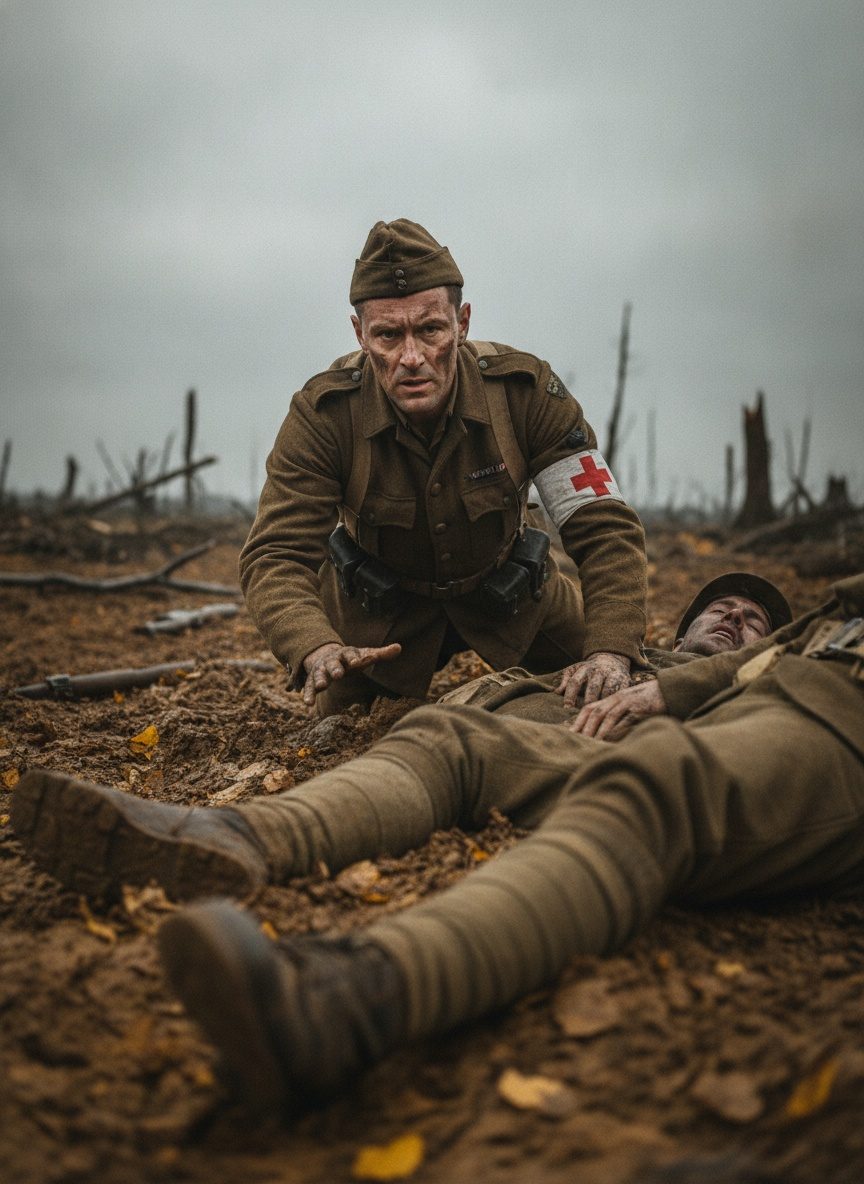
The retreat was not just a strategic withdrawal but a testing ground for human endurance and mettle. The streets were choked with soldiers and refugees, each step towards safety a challenge laced with danger. On the front lines, under the indifferent gaze of machine guns, Martin-Leake embodied the very spirit of the Hippocratic oath. Armed only with his medical kit and an indomitable will, he crawled through mud and bullets to reach the fallen. There was no hesitation, only an unyielding resolve to save lives regardless of the odds.
Many knew the risks, but few dared to defy them. Arthur Martin-Leake, however, was undeterred by the barrage of gunfire that punctuated each heartbeat. He crawled repeatedly into the open fields, where death lay waiting in the guise of German snipers and shell fragments. Each journey was perilous, a literal crawl to life as he rescued men from the claws of the battlefield. This was not obedience to duty alone but an act of readiness to sacrifice for the sake of another’s life. It was such indefatigable courage that earned him a second Victoria Cross, a feat unprecedented in British military history.
Read next: The Day a British Stretcher-Bearer Refused an Order to Save Lives
The symphony of war controls many destinies, yet in Martin-Leake’s refusal to let the wounded die, there existed a counterpoint—a quiet, stubborn melody of hope. Every soldier carried off to safety was a victory snatched from the jaws of despair. Time and again, Martin-Leake denied death its claim. His actions spoke of a deep-rooted belief in the sanctity of life, a reverence that saw no division in the chaos of national flags. He wasn't just a man saving British lives; he was a humanist on the battlefield of nations.
What drove this exceptional man to risk his life repeatedly? His early years might provide some insight. Educated in medicine, Martin-Leake was always ready to offer aid where it was needed the most. Before the outbreak of the First World War, his service in the South African Howitzer Brigade laid a sturdy foundation for his surgical prowess in extreme conditions. His deeds in South Africa, taut with tales of unseen heroism, had already etched his name in the annals of courage. Yet, Belgium carved a different legacy—one where urgency and altruism stood hand in hand amidst the cacophony of chaos.
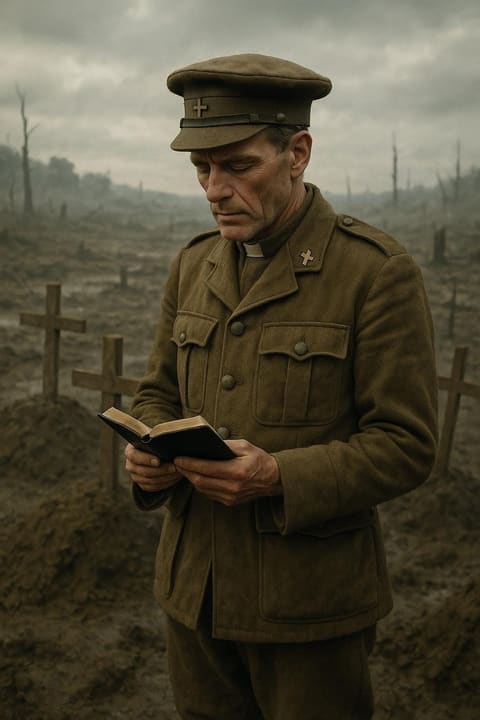
Read next: The Day a Army Chaplain Gave His Coat to a Dying Stranger
Even amid the relentless advance of German troops and the subsequent retreat, hospitals on the front lines faltered under the sheer volume of incoming casualties. The world learned a harsh lesson about the inadequacies of preparation in the face of modern warfare. But individuals like Martin-Leake pointed the spotlight on the human capacity for courage under fire. The roads upon which he dragged the injured out of anonymity—a battleground to most—were compass points of valiance to him.
October 1914 remains marked by the service of those whose dedication went far beyond calls of duty, in a compassionate rebellion against the attrition of war. Martin-Leake’s narrative addresses that hushed discourse of heroism—a dialogue often eclipsed by grander tales of military strategy and politics. His two Victoria Crosses are emblems of an enduring bravery that transcended the battlefield, wove itself into the wider mosaic of human struggle, and testified to the indomitability of the human spirit.
Now, as we look back on the shadowy lanes of old Flanders and the clinical corridors once occupied by mobile field units staffed by medics like Arthur Martin-Leake, we are reminded of the silent battles fought in personal arenas far from artillery’s deafening roar. While the textbooks distill history into neat conquests and failures, it is the untold tales that breathe life into the past—stories like those of a surgeon who refused to relegate the wounded to forgotten names on a ledger of war. His story matters because it champions those moments of humanity that illuminate the darkest hours, revealing the quiet revolutions within the storm.