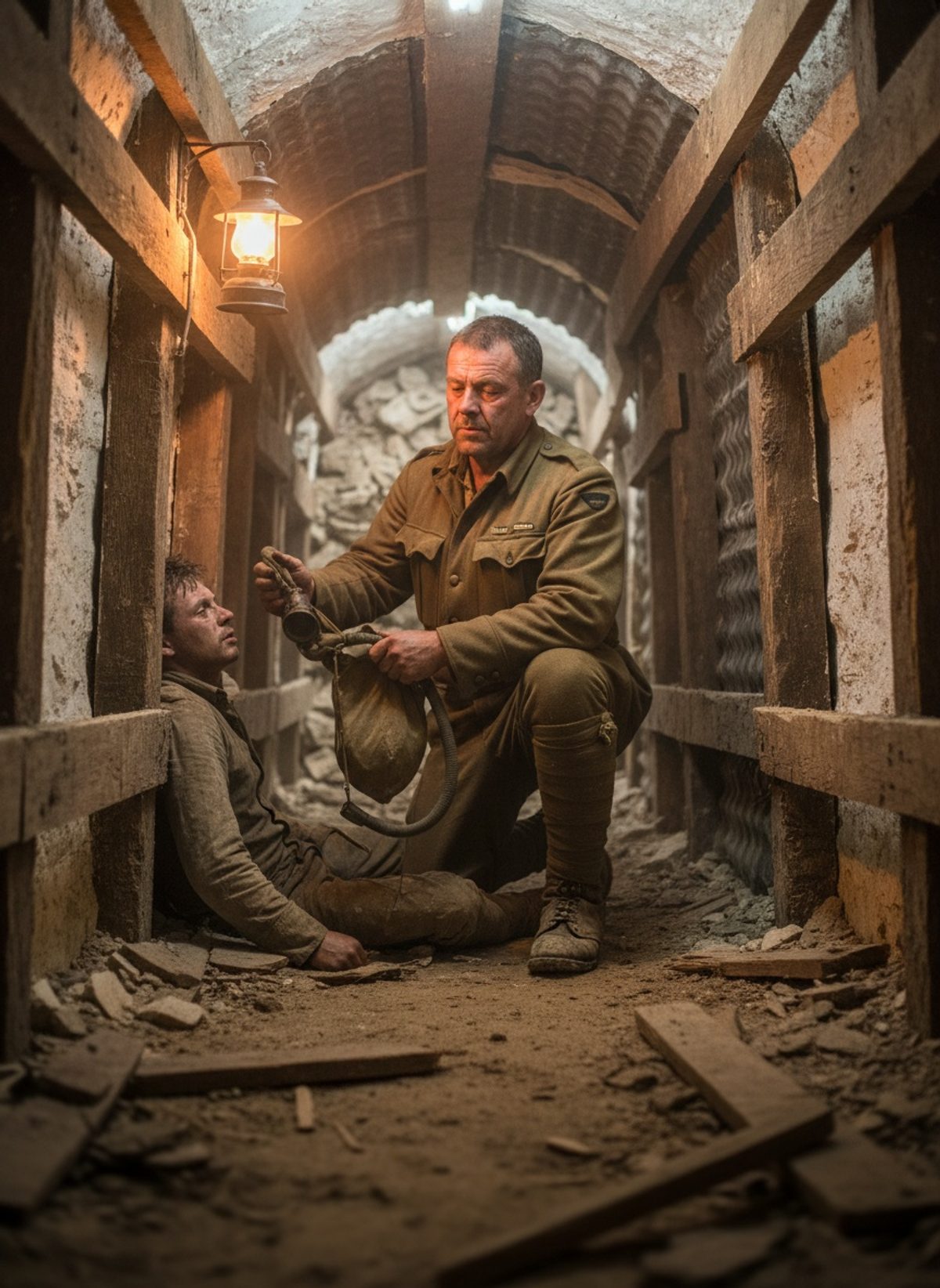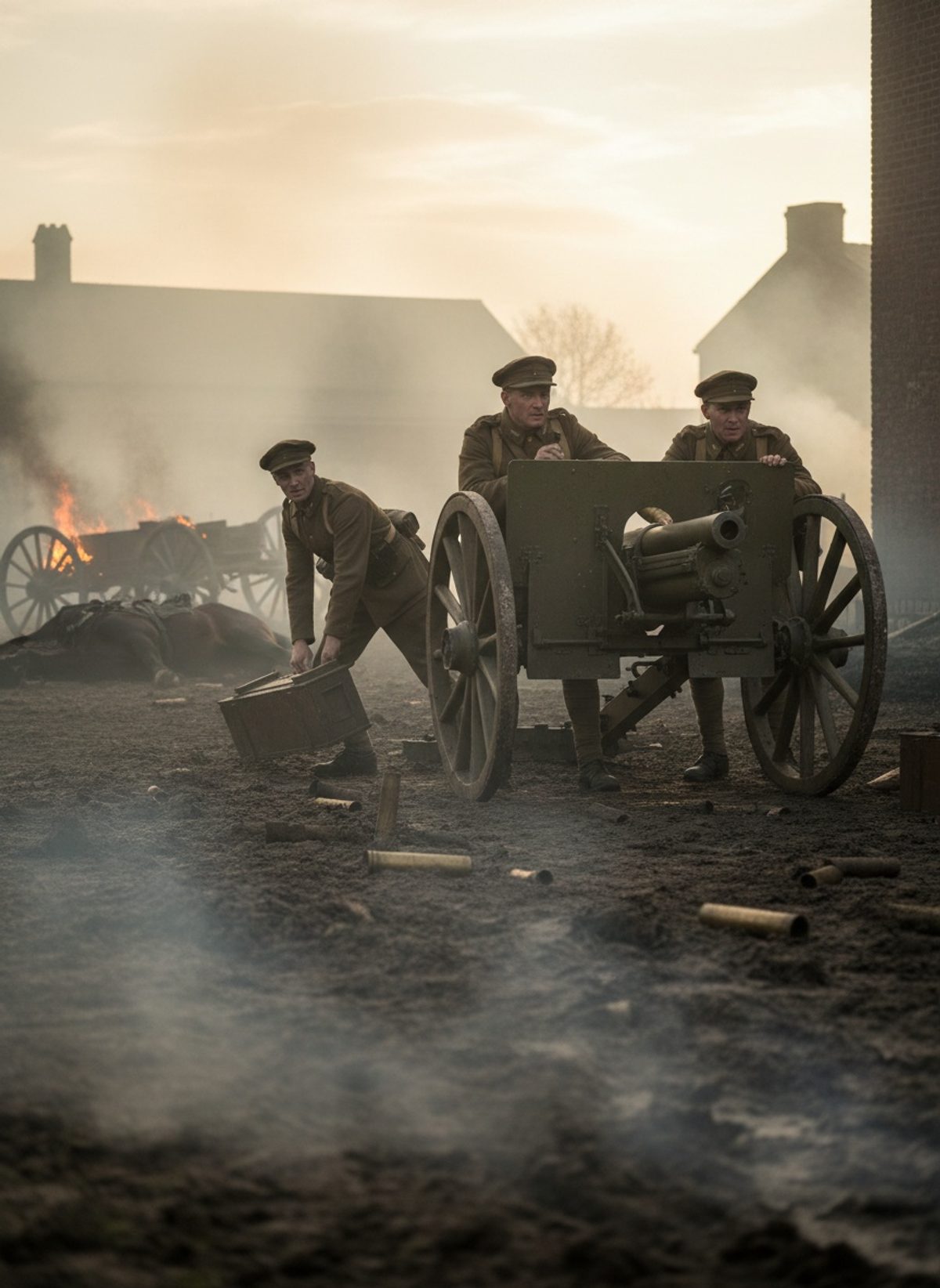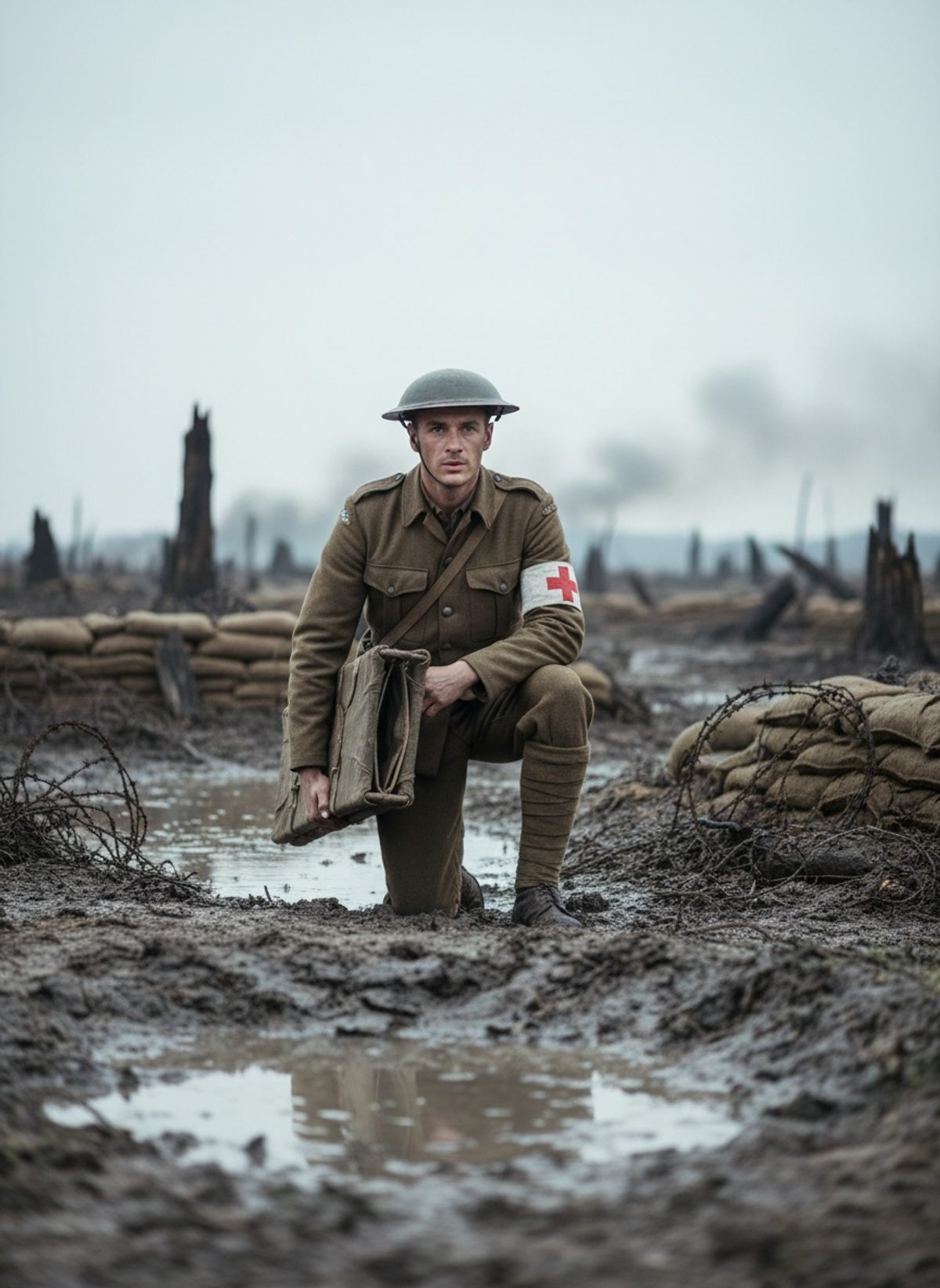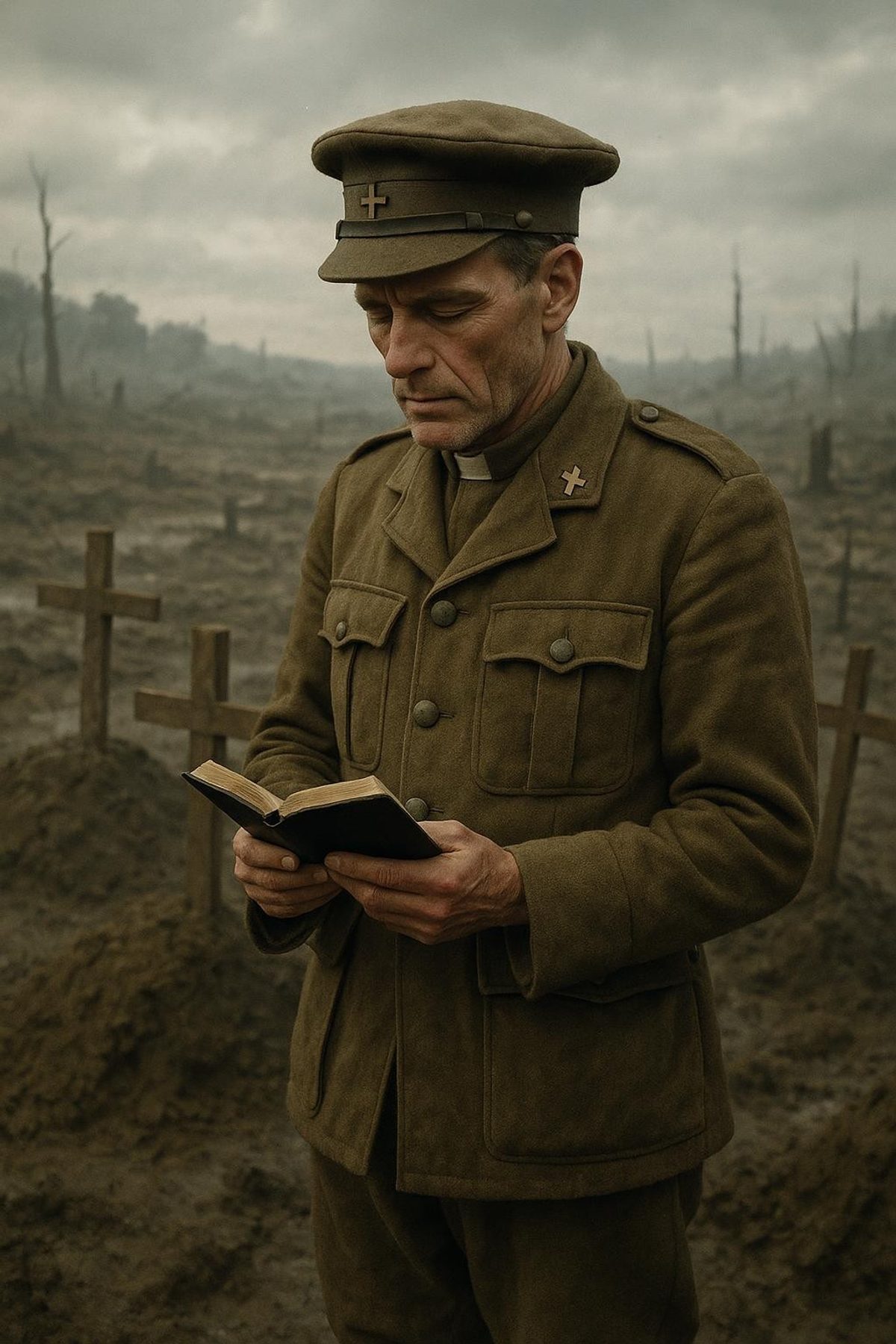
He couldn't fire a rifle or pilot an aircraft. Padre David Railton preferred words to weapons. In the heart of World War One, amidst the cacophony of crashing shells and rattle of machine guns, Railton, a British chaplain, performed an act of humanity that transcended the divisions of nationality and conflict.
In 1917, on a muddy battlefield in France, a scene unfolded that the scorched and scarred earth had rarely witnessed. The rain-pooled craters and sodden trenches were littered with the remnants of so many dreams and futures. Amidst the chaos of war's most harrowing chapter, the land was studded with the fallen; men who had forsaken youth and hope for a cause that seemed to swallow them whole. Yet in this barren chaos, Padre Railton saw beyond the tattered uniforms and still bodies.
This was a time when animosity between the Allies and the Central Powers seemed insurmountable. The very air was charged with enmity, combusted daily into the firestorms of artillery. Yet, where others saw enemies, Railton saw only men. Men that, like their adversaries, had mothers and sweethearts waiting for a letter. Men who deserved dignity in death, just as much as they had sought purpose in life.
It was not uncommon for the victors of a skirmish to leave the opposing dead where they lay, deemed too perilous to retrieve or too hated to warrant respect. The mud-soaked fields bore silent witness to human reluctance and necessity's cold pragmatism. However, Padre Railton refused to let such disdain define his service. With a heart steeled by compassion rather than anger, he walked alone into the no-man’s-land, the neutral ground that was paradoxically never neutral but teeming with the impartial arbiters of fate.
Read next: The Day a Grandmother's Kitchen Fed a Nation at War
The sight was solemn. Strewn across the desolate field were the bodies of German soldiers, abandoned by retreating comrades. Their faces, though tinged with the pallor of death, seemed to whisper stories from vibrant pasts cut tragically short. Here was where Railton’s heart overruled any directive, any bias of war. Alone in this bleak theater, he bent down, his hands less sure than his heart, to begin the arduous task confronting him: to grant these enemies a semblance of their lost dignity.
It took hours that stretched into an eternity. Railton first gathered them, one by one, paying no heed to the mud that clung to him, nor to the echoes of war that hummed all around. Each soldier was lifted with the care of a father cradling an injured child. As the skies brooded with impending rain, Padre Railton conducted a service that was both poignant and simple, echoing the words he had spoken over so many of his own compatriots.
Despite the solitude of his ceremony, Railton’s prayers seemed to unite the disparate souls—the living with the dead, friend with foe. His calm voice, though alone, reached beyond the sound of distant volleys and whispering winds. In whispered Latin passages, the names of those whose lives ended far too soon floated softly into the French air. It was not merely a tribute to fallen adversaries; it was a eulogy to the lost essence of humanity amid the vengeance of war.
When it was over, the earth closed over them with gentle inevitability. For Railton, this act of respect and fraternity transcended the century-old pragmatism of military doctrine. Many soldiers have etched their names in the annals of history with acts of valor or tactical genius. Yet here was a testament to courage of a rarer kind—the quiet courage of acknowledging our shared fragility, our common fate.
Railton’s solitary deed underlines a profound truth too often left to obscurity in the grand retelling of war narratives: that beneath the soot of conflict, there remains a shared humanity that no amount of rhetoric can truly obliterate. These somber acts whisper of peace in the language of deeds, asking the unspoken question that forever lingers: in the face of such darkness, can we not light a path with the fires of compassion?
Long after the guns finally fell silent, the war's story continued to pool in the minds and hearts of those left to tread the land, marked forever by the scars of its passing. Padre Railton's story, though ineffable in textbook annals, remains a beacon—an untold legend of the quietest sort of bravery. It compels us to recall that the borders which divide us crumble away before the inevitable recognition of our shared mortal journeys.