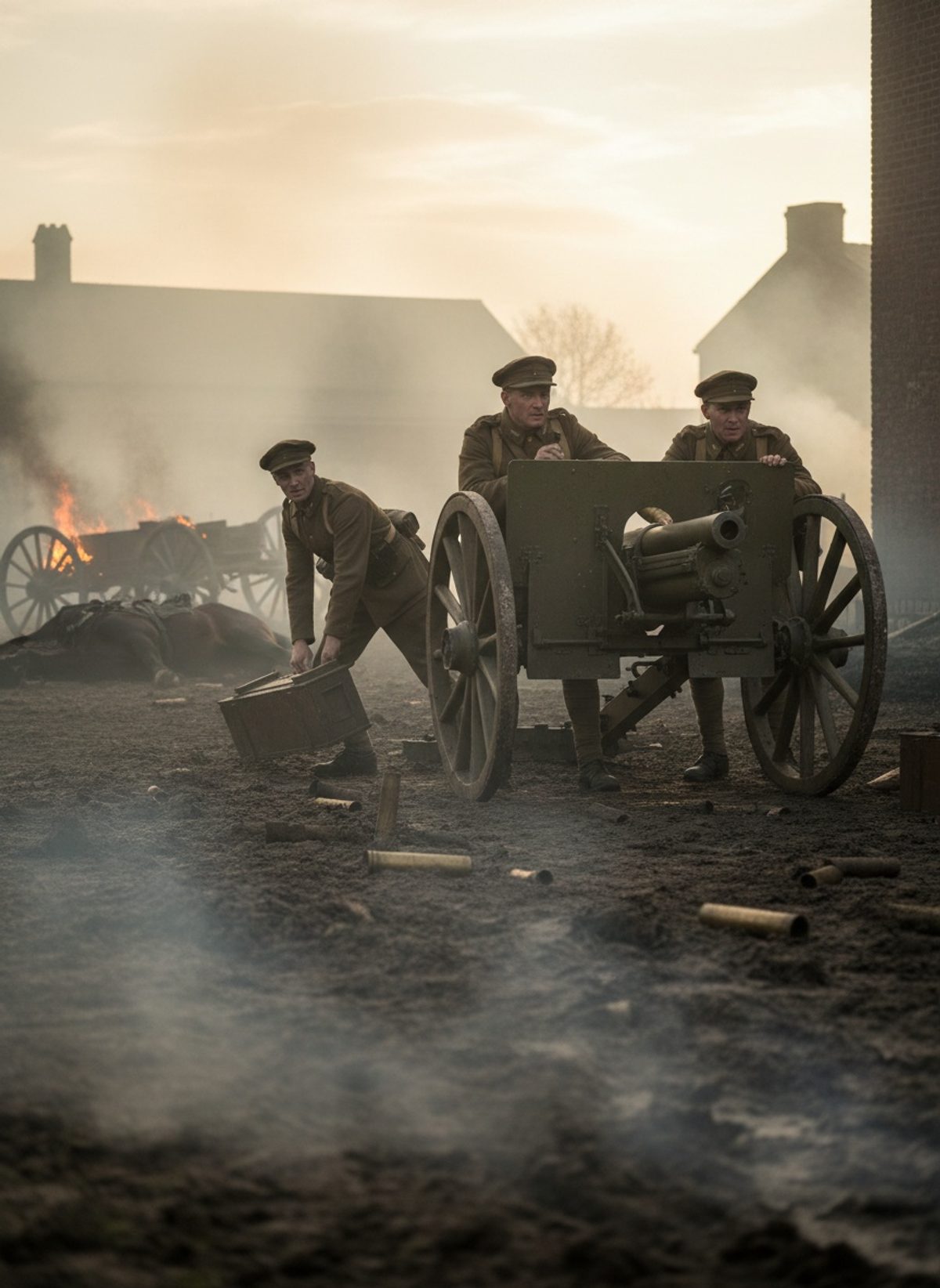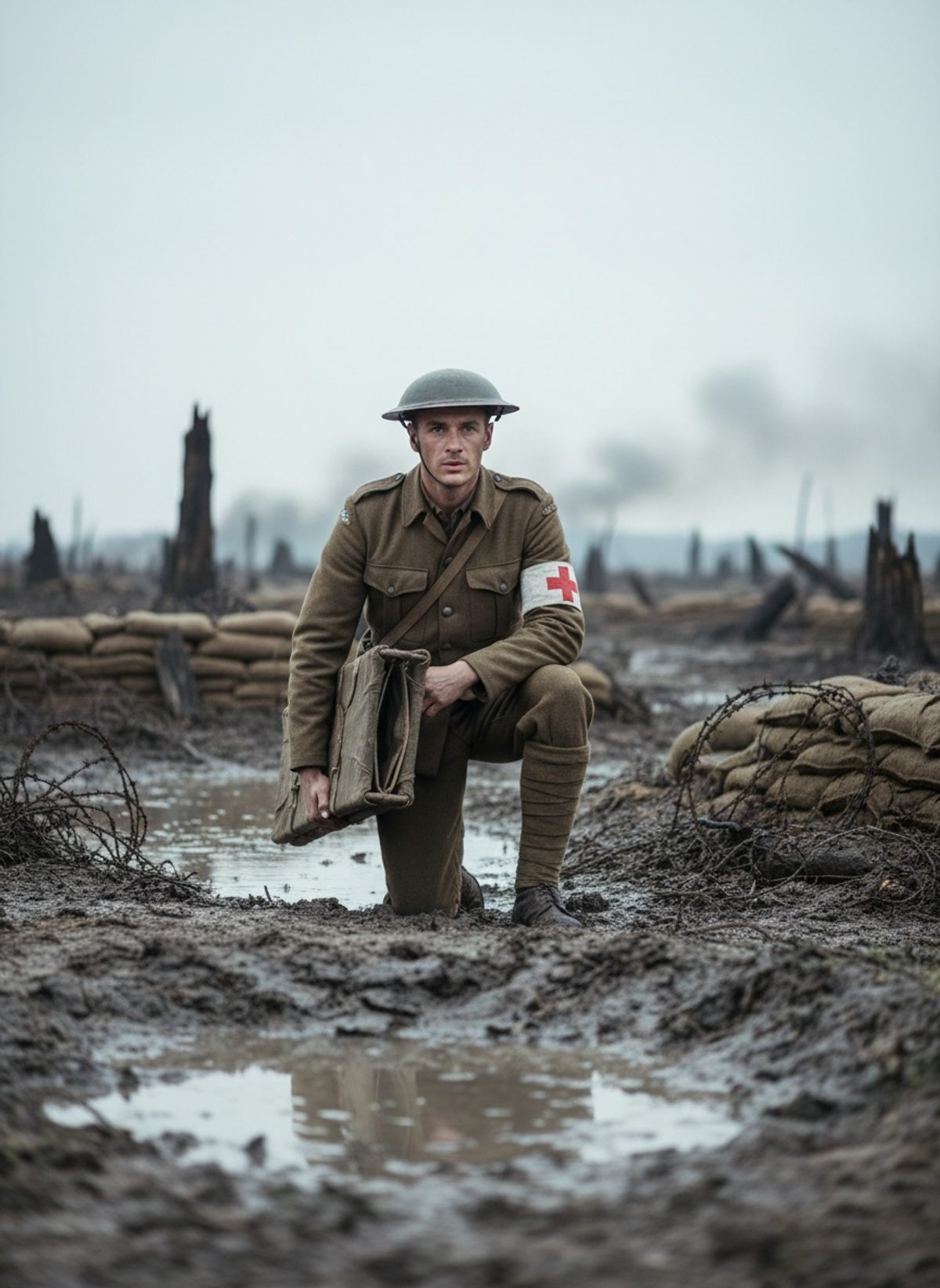
In the muddy tapestry of Northern France, the village of Arras lay shrouded in a grim, perpetual gloom. Rain dripped from the sky like a broken metronome, pattering softly on the earth. The mud was endless, relentless, a swamp of mire and muck that dragged at the boots of soldiers and horses alike. Beneath the soggy fields, hidden from silent artillery shells and machine-gun chatter, was a world of murky shadows and whispered breaths. This was the war under the war, where Britain’s tunnellers worked tirelessly in honeycombed depths, inching towards German lines in the deafening silence of the underground. In April 1917, with the tremors of a distant barrage above, Sapper William Hackett would face a decision that tested the boundaries of human courage.
The Hidden Battlefield: Underground Warfare at Arras
As the Great War raged above ground, a different kind of battle unfolded below. The earth beneath Arras was a labyrinthine expanse of clay and chalk, where miners turned military men and. With pickaxe and shovel in hand, they fought not for land or trenches but for dominion over the dark confines of the tunnels. These were the tunnellers, often called the "moles" of the army, whose work was veiled in secrecy yet brimming with peril.
Their tasks were daunting—digging towards enemy positions, placing explosive charges, countering German tunnels with counter-mines of their own. The risk of a cave-in or a gas leak was ever-present, a specter lurking in the subterranean dusk. Arras in 1917 was at the crux of this underground warfare, and it was here that bravery took on a new form, one only appreciated by those who ventured into the shadowy depths.
A Moment of Crisis: The Catastrophe
Amidst the thrum of conflict, an ominous echo suddenly reverberated through the tunnels beneath Arras. A German counter-mine exploded with monstrous force, collapsing a section of the tunnel and sending shockwaves of earth and debris cascading into the air. Panic set in—men scrambled for the exits as conditions rapidly deteriorated. Dust filled the already thick air, choking and blinding those who struggled to breathe. Fear clawed at the hearts of the men trapped within these subterranean corridors.
Read next: The Day a British Padre Carried the Dying From No Man's Land
Above ground, orders were clear. The tunnel was compromised, and everyone above was commanded to pull back, to leave behind those who could not be accounted for. But in the chaos, five men were known to be trapped, one of them William Hackett, the steadfast miner turned soldier from Nottinghamshire.
The Extraordinarily Ordinary Man: William Hackett
William Hackett didn't look like a hero by conventional standards. He was a middle-aged father, more accustomed to coal faces than battlefields. Yet his life underground had endowed him with a resilience few possessed. Hackett was no stranger to the suffocating confines of earth-closed spaces, but his bravery lay not only in his ability to endure physical hardship but in his unwavering loyalty to his comrades.
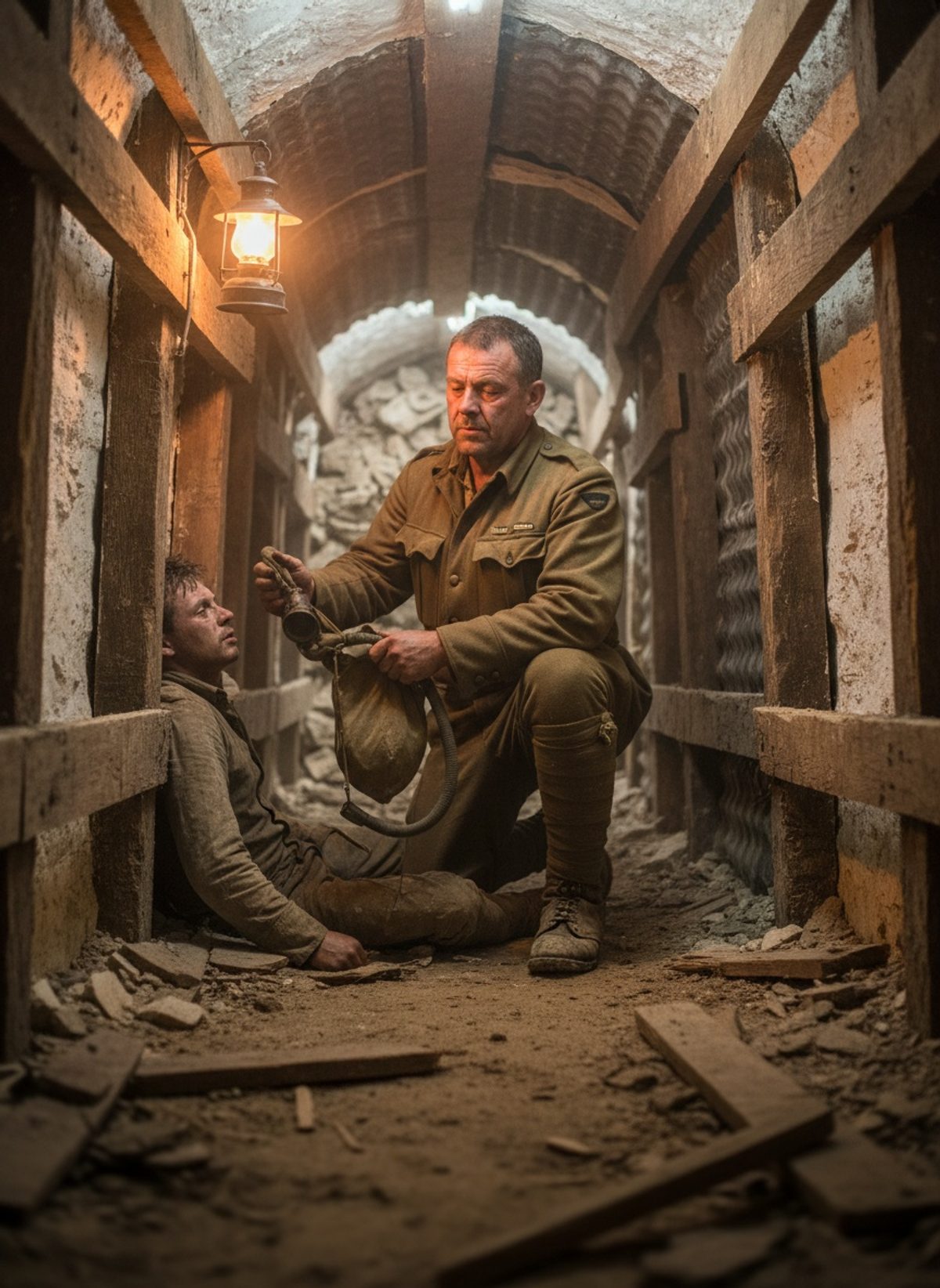
As other survivors pushed towards safety, Hackett made a choice few would brave: to stay with his men. With poisonous gas threading its way through the collapsed tunnel, Hackett spied a wounded comrade struggling to breathe. Without hesitation, he offered the stricken man his own rebreather, knowing full well it was his lifeline. Hackett's gesture was not the triumphant flourish of cinematic gallantry but the quiet resolve of a man unwilling to abandon those in need.
A Legacy Forged Underground: Honoring Courage
Three days after the catastrophic collapse, British forces managed to drive the Germans back enough to return to the fallen tunnel. Amongst the debris and the silence, Hackett and his men were finally found, his brave resolve immortalized in the stone that became his tomb. Hackett's actions spoke more than medals or accolades ever could, yet he received recognition that resonated far above and below the trenches.
In the postwar recounting of heroism, William Hackett was awarded the Victoria Cross, the kingdom’s highest military honor, and the only one ever given to a tunneller. His story, etched in the annals of military valour, exemplified the ethos of comradeship and sacrifice that the tunnellers embodied on a daily basis. It was a testament not just to his loyalty, but to the hidden ordeals of those who fought an unsung war beneath the Western Front.
Beneath the Surface: Why Hackett’s Stand Endures
The story of William Hackett is a rare illumination of courage in a forgotten theatre of war. His narrative does not speak loudly of battlefield glory or grand strategems. Instead, it whispers of quiet heroism rooted in the clay and dust of a war fought in secret. Hackett's decision to remain with his wounded comrades reveals the fundamental humanity that persists even amidst the bleakest of circumstances. It challenges the often superficial understanding of bravery by drawing attention to the tragic solitude and fierce loyalty that defined these subterranean soldiers.
Arras, now a place of remembrance, cradles Hackett's memory as part of its legacy—a symbol of the sacrifice that occurred not just in the fields of poppy but in the unseen confines of earth itself. In telling his story, we honor not just the hero within but the countless unnamed who toiled alongside him, hidden yet not forgotten. William Hackett's enduring legacy reminds us that true valor transcends the surface, lying deeply not just beneath the fields of battle but within the hearts of those who fought their quiet battles underground.