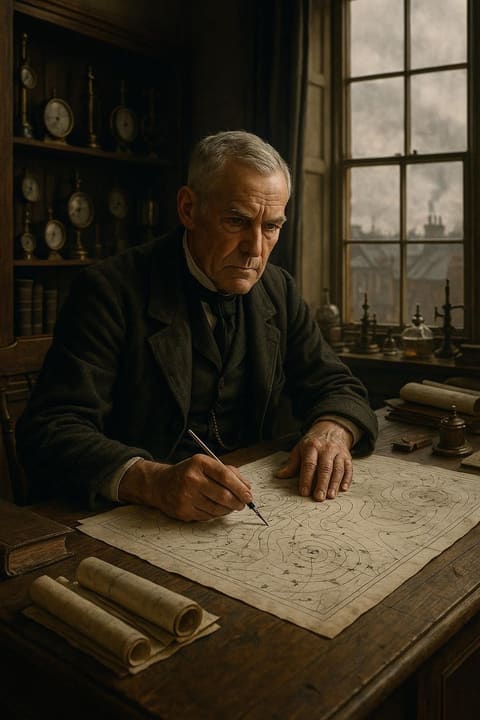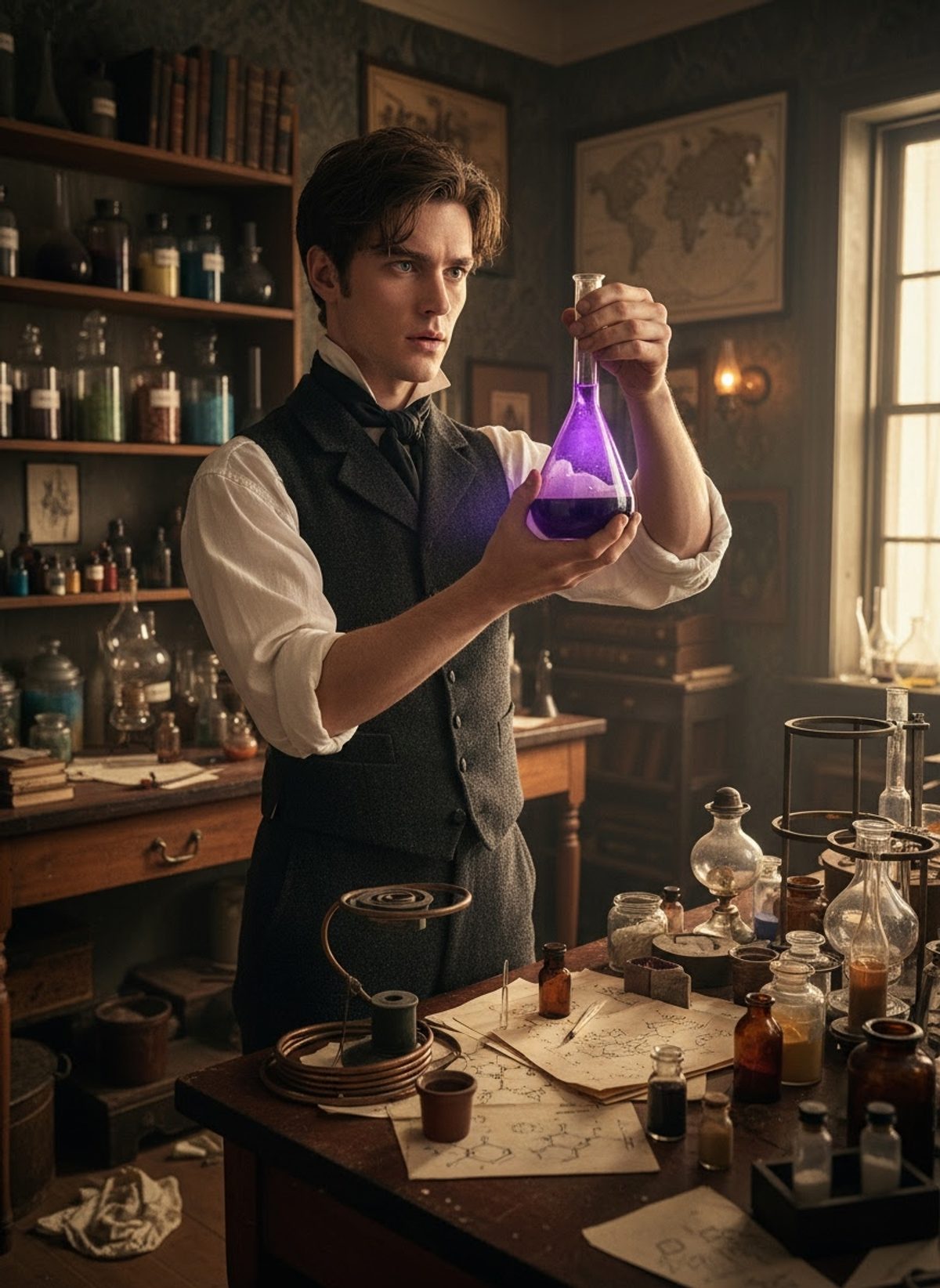
He was only eighteen years old. Yet, the unassuming William Perkin was on the brink of changing the world from his small laboratory in East London. In a quest to combat malaria, Perkin, a young chemistry student, stumbled upon something entirely unexpected: a vivid purple stain that would eventually become the first synthetic dye, mauve.
This discovery would spark a revolution that transformed the textile industry and left a colourful imprint on society, one vibrant hue at a time. It's a tale not of medicinal breakthrough, but of a serendipitous detour that painted the Victorian world anew.
The Aspiring Chemist and His Unintended Odyssey
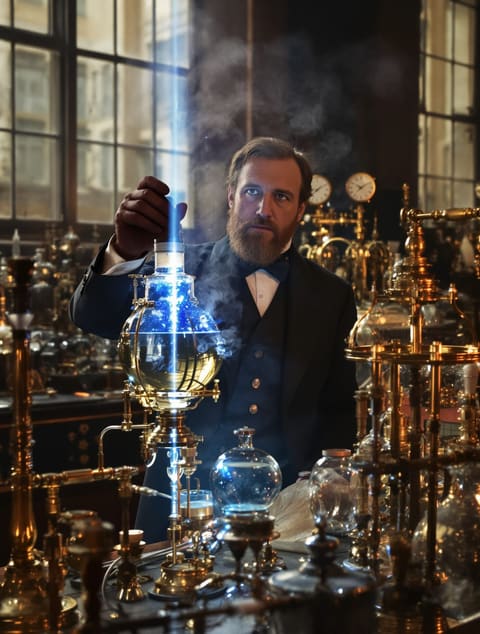
In 1856, the fight against malaria was a high-stakes battle. William Perkin, under the guidance of his mentor August Wilhelm von Hofmann, sought a synthetic route to quinine, the only known treatment for this devastating disease. Hunched over his makeshift laboratory in the family attic, Perkin toiled relentlessly. Yet, instead of the life-saving alkaloid, his efforts yielded a peculiar residue that tainted his labware a striking purplish hue.
Intrigued rather than discouraged, Perkin's curiosity about this unexpected concoction piqued. The young chemist sensed potential, a vision perhaps clearer to someone unjaded by numerous failed experiments. Rather than discard the creation as an error, he saw an opportunity to explore the vibrant stain further. It wasn't the quinine he had aimed for, but its brilliance was undeniable.
Read next: The Day a Scottish Weaver's Son Gave the World Its Rainbow
From Chemistry Crisis to Textile Triumph
The Victorian era was a time of profound transformation. The Industrial Revolution had set the scene for rapid advancements, and the textile industry stood eager to embrace the change. Fabric dyes had long relied on natural sources—often laborious, inconsistent, and expensive. Perkin's mauve offered a solution. With its rich, enduring tint, it promised not only a fresh palette but an efficient production process that could be replicated to scale.
Perkin immediately recognized the commercial potential of his discovery. Abandoning his original medicinal mission, he set his sights on the fashion world. In collaboration with his brother Thomas and friend Arthur Church, Perkin established a dye works in Greenford, London. The trio faced initial skepticism, but the allure of a stable, vibrant dye quickly captured the imagination of fabric manufacturers.
Mauve Mania: Fashion Embraces the New Palette
The introduction of mauve dye coincided with a period hungry for innovation. The rich hue adorned the garments of Victorian ladies, swiftly becoming a fashion staple. Even Queen Victoria herself was seen wearing mauve lace to the Royal Exhibition of 1862, cementing its status as the era's colour of elegance and modernity.
This sudden indulgence in mauve wasn't merely a fleeting trend. It signaled a paradigm shift—the dawn of synthetic chemicals transforming industries far beyond clothing. Perfumes, paints, and inks would all eventually derive from synthetic origins, a path first illuminated by Perkin's accidental find. The dye created not just new shades for garments but forged a bridge to modern chemistry's vast capabilities.
Read next: The Day a Colour-Blind Man Gave the World Colour Science
A Millionaire Before Maturity
William Perkin's foresight at such a nascent age was nothing short of remarkable. Before he turned twenty-one, he had amassed a fortune, securing not just wealth, but a legacy intertwined with the broader spectrum of scientific discovery. His early success was a testament to the rich dividends of curiosity coupled with innovative thinking.
Perkin's story is one of youthful ambition finding unexpected purpose. His success in monetizing mauve set the precedent for chemical entrepreneurship, an industry that would define much of the subsequent century. The wealth he accrued was less a reward for remedied malaria, but a testament to how mistaken pursuits can lead to splendid destinations.
The Ripple Across Time: Colour and Consequence
William Perkin's accidental discovery did more than brighten wardrobes of the Victorian era—it painted a broader stroke across future industries. The synthetic dye industry burgeoned into an influential arena in the chemical sector, fuelling further research and innovations. It played a pivotal role in the development of modern conveniences, from medical diagnostics to vibrant plastics.
The tale of mauve's creation speaks to the power of the unexpected and the beauty in the unintended. In a quest for curing disease, Perkin painted history in the multicolour hues of progress. His life and work are reminders that sometimes the failures along our chosen path can lead us to destinations far beyond our original dreams, expanding the possibilities of what human innovation can achieve.