Robert FitzRoy was an influential figure in Victorian science. Yet, few today know of the crucial impact he made—something that saved countless lives.
The Man Who Talked to the Skies
When we think of weather forecasting today, sophisticated radar technology and satellite imagery come to mind. However, in August 1861, an entirely different vision emerged from a man more familiar with the decks of ships than the clouds above. Robert FitzRoy, a British naval officer, dared to declare what seemed impossible at the time: predicting the weather could be done, and it could save lives.
FitzRoy was no stranger to confronting nature's whims. He served as the captain of the HMS Beagle, famously accompanying Charles Darwin on his transformative voyage. Where Darwin saw the wonders of evolution, FitzRoy saw the brutal capriciousness of the sea. It was a sea that had claimed the lives of many mariners who lacked warning of impending storms.
A jack-of-all-trades, FitzRoy had a deep appreciation for the burgeoning fields of meteorology and barometry. Armed with a fleet of instruments and an inquisitive mind, he pressed on where others scoffed. In 1861, in an era that still saw scientific exploration as enlightenment’s wild frontier, FitzRoy made a bold move. He issued a public weather forecast to warn fishermen of an oncoming storm.
Read next: The Day a Potter's Son Gave the World Clean Water
To understand the audacity of FitzRoy’s actions, we must envision the zeitgeist of the Victorian era. England was a land rooted in tradition, suspicious of change. The concept of weather prediction was akin to fortune-telling, more the domain of charlatans than naval officers. Yet, FitzRoy’s sense of purpose stemmed from an earnest desire to protect lives.
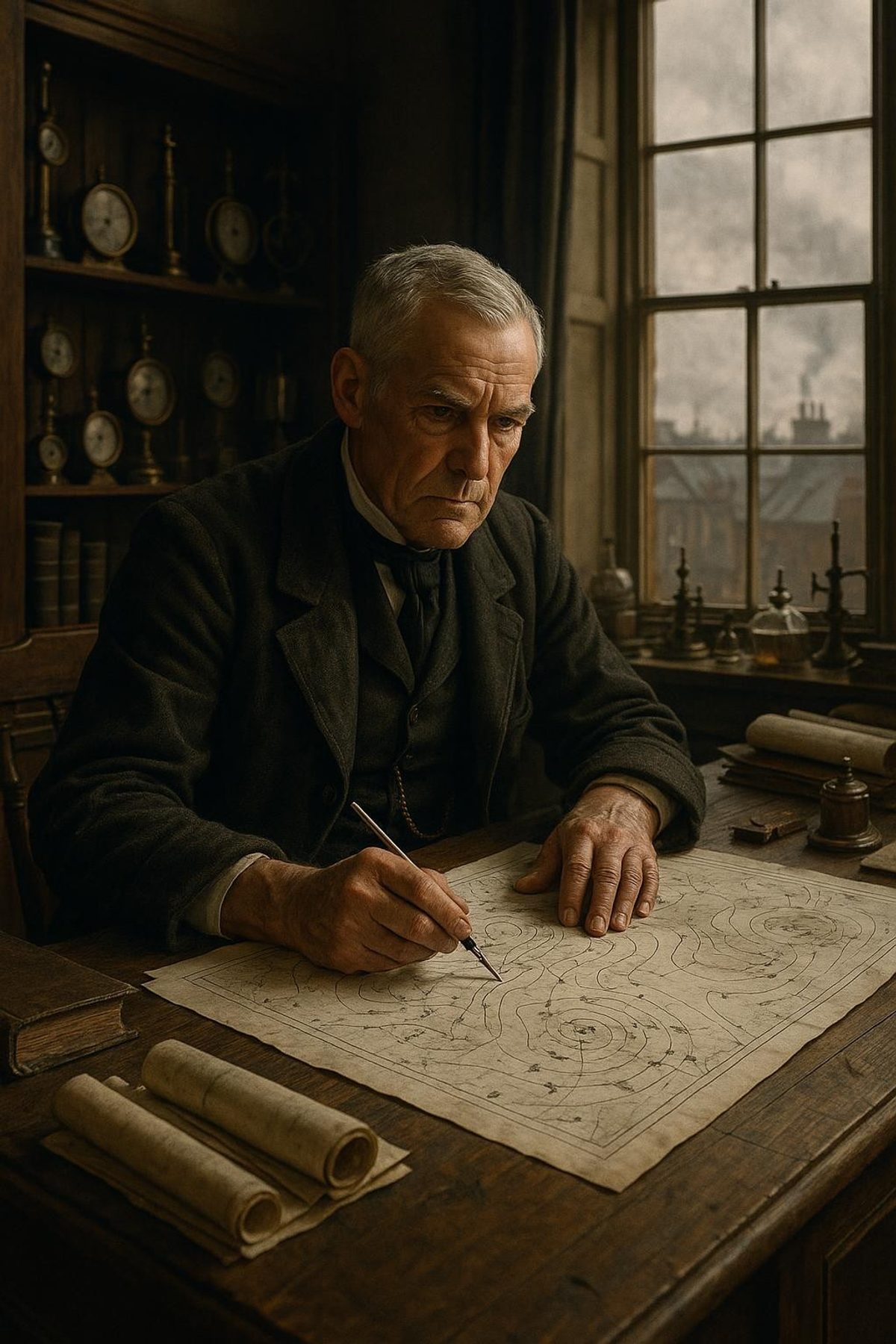
Armed with nothing more than barometers, wind gauges, and the emerging techniques of synoptic charts, FitzRoy constructed a forecast and disseminated it—a first in recorded history. Heeding his call, fishermen stayed in harbour. The tempest ravaged the English Channel, but the lives of those cautious fisherman were spared, a testament to the power of foresight.
The Storm in Scientific Circles
The meteorological world was anything but welcoming for FitzRoy. Some scientists were intrigued, yet many derided his pursuits, calling his forecasts little more than educated guesswork. While his methods lacked the scientific rigidity we expect today, FitzRoy was laying the groundwork for a discipline that would become indispensable. His critics, however, weren’t just questioning his methods—they were challenging the very notion that such prediction was scientifically feasible.
Meanwhile, Victorian newspapers found amusement in his efforts. The caricature of FitzRoy, the “weatherman,” conjured images of eccentric inventors predicting rain from looking at snails. Yet, under the biting satire lay a deeper unease—FitzRoy’s work suggested humanity could gain mastery over some aspects of nature through science. Such thought was both thrilling and unsettling to a society just coming to grips with the implications of Darwinian theory.
FitzRoy persisted. While some chose to mock, he focused on refining his approach. He developed a systematic method for evaluating atmospheric conditions, taking reports from various locations to build a broader picture—a proto-network that would underpin future meteorological models. Despite the lack of public acclaim, his contributions did not go unnoticed. His founding of what would eventually become the UK Met Office demonstrated how far his theories had pushed the boundaries.
His relentless pursuit of this groundbreaking science came at a great personal cost. FitzRoy faced immense pressure both from within the scientific community and from the government officials who held the purse strings. Struggling with financial difficulties and the huge burden of his work, FitzRoy’s mental health began to deteriorate. Though he fought tirelessly for the validation of his methods, he found little respite.
The Legacy Written in the Clouds
In assembling and persisting with his forecasts, Robert FitzRoy was not merely saving lives; he was writing the manifesto for modern meteorology. However, his contributions extend beyond a single storm warning in 1861. He carved a path for those who dared to imagine that scientific principles could be applied to predict a future not yet written in stone.
The storm prompted changes beyond the realm of science. It drew attention to the invaluable nature of weather prediction, transforming how nations approached climate and safety. By issuing that first forecast, FitzRoy gave birth to a new type of public service—one that married the mind of the scientist with the heart of the humanitarian.
Today, we take weather forecasts for granted. Our phones ping with updates about storms, rain, and sunshine with almost astonishing precision. Yet, as we glance absently at these predictions, it’s worth recognizing the seismic shift initiated by a gardener's son from a modest background. FitzRoy's story, while occasionally overshadowed by his association with Darwin and forgotten amidst the complexity of Victorian scientific expansion, is one of innovation, resilience, and courage. His life reminds us that revolutionary ideas often spark from the humblest of origins, championed by those willing to brave the scorn of their contemporaries. At its heart, FitzRoy's narrative is a clarion call for perseverance against the stormiest of odds. Let us not forget that once, not so long ago, a brave soul whispered to the winds and was heard.