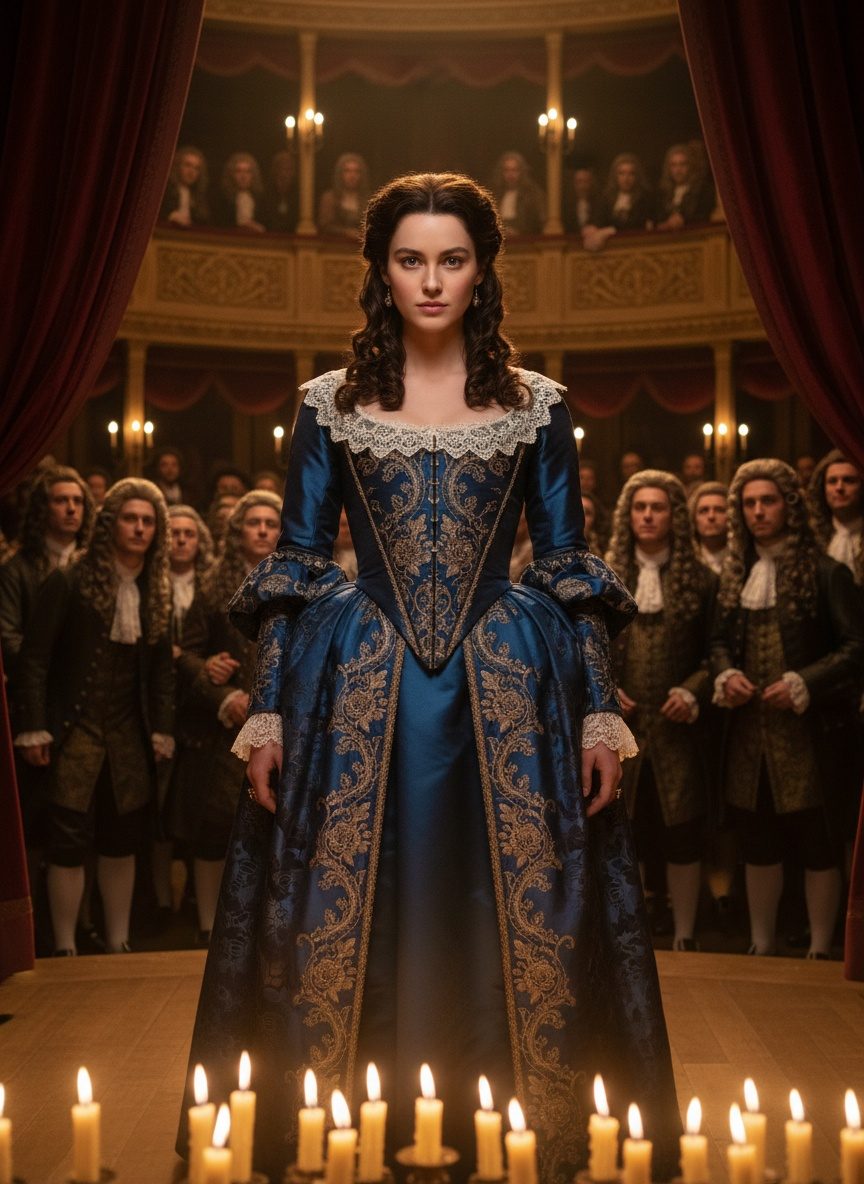
January 3, 1661. Candlelight flickered against the cold, stone walls of the London theatre.
The King's Return and The Theatrical Revolution
After more than a decade of Puritan austerity, theatres in England had fallen silent. The revelry and raw human emotion found on stage were deemed sinful and extravagant, and the actors who once captured the imaginations of audiences were sidelined. But everything changed with the Restoration of the Monarchy. The year 1660 marked the return of Charles II after years of exile, and with him, a resurgence of all things joyous and theatrical. The prodigal king, fond of the arts from his time in the lively courts of France, reopened theatres shuttered since 1642. A blanket of anticipation covered London, curling through cobblestone streets into the hearts of actors, playwrights, and audiences eager for the curtain's rise. Yet, an even more revolutionary change was afoot.
Up until then, the stage was a domain solely for men. Women were forbidden from acting, their roles instead performed by high-pitched young boys trained to simulate femininity. This long-standing tradition seemed unshakeable. Then, quietly, yet profoundly, Charles II tore apart the fabric of convention. In an edict as progressive as it was unexpected, women were granted the right to tread the boards. It was a decision that would forever shape the arts, beginning a cultural phenomenon that saw women as the vivid, dynamic subject of plays, not merely the secondary muse controlled by pen and phallus.
At center stage of this transformative era was Margaret Hughes, the woman who would become the first professional actress. Little is known about Margaret’s early life; she seemed to spring forth from the very shadows backstage into the warm glow of theatre lamps, filling a void audiences had not even realized lingered. Her debut dispelled preconceived notions of what theatre could be. A woman playing a woman—her presence was a revolutionary act, one that captivatingly blurred the lines of theatre’s illusion with tangible reality. It changed not just theatre but the ways women were seen and heard.
Read next: The Day a Tudor Chancellor Chose Death Over a Royal Lie
The Performance That Redefined English Theatre
Margaret Hughes’s historic debut on January 3, 1661, did not simply mark a milestone; it was a seismic cultural shift. Picture the day: the audience, a mix of affluent Restoration society bedecked in the finest silks and furs, seated among the draughty seats, their eyes mirroring the glitter of the chandeliers. The seasoned theatre-goers of London arrived expecting another reinterpretation of Shakespeare's tales by its talented male actors; instead, they left in the grip of a new heroine.
On that landmark evening at the Vere Street Theatre, Margaret Hughes stepped beneath the arches into the limelight. Her role, thought to be Desdemona from "Othello," presented before the audience a real woman crafted from flesh and emotion, rather than the ersatz presentation delivered by adolescent boys in elaborate costumes. The transition was striking, and the facing of this first woman’s performance created ripples—both excitement and controversies surged around her shoulders, like the waves of the Thames against the riverbanks.
Her presence was more than mere novelty; it lent authenticity and a profound emotional depth to the role. The way Hughes delivered Desdemona’s tender lines bridged the gap between the play’s intrinsic narrative and the audience's lived experience. It was a performance rich with a blossoming recognition that theatre should reflect society's life in all its multifaceted wonder. The lines Hughes spoke, familiar from hundreds of stagings by male actors, felt reborn in her voice. Her performance reimagined a city and a nation's cultural identity, making people from “proper society” begin to interrogate old prejudices and values.
Read next: The Day a Tudor Bishop Refused to Crown a Usurper
Margaret Hughes: A Trailblazer’s Legacy
The ramifications of Margaret Hughes's appearance as the first actress on the public stage in England resonated far beyond the evening's performance. Women could finally lay claim to the theatrical stage—a physical manifestation of equality and diversity. Though her career held many roles, none was perhaps as significant as that first historic walk upon the boards. Her courage inspired fellow women to pursue acting, leading to the flourishing careers of contemporaries like Nell Gwyn and Elizabeth Barry. These women became not just actresses but beloved celebrities, wielding new social influence once reserved only for men.
However, Hughes's theatrical triumphs also underscored the ongoing tension between societal progress and entrenched traditions. Her inclusion in theatre did not immediately convert English society into one of gender equality. Rather, it was the start of a slow, inexorable change that course-corrected centuries of exclusion. As audiences flocked to these new theatre presentations featuring women, they also witnessed the transformation of social norms, where talent and individuality began to shine more brightly than birthright or conformity.
Margaret Hughes's audacity in defying tradition lives on as a powerful reminder of the energy unleashed when barriers are broken and new paths are forged. Her story reveals how a single courageous act can ignite a cultural revolution, inviting a society to look at itself anew, questioning long-held beliefs and embracing fresh possibilities. In Margaret Hughes's footsteps, we find a tale of resilience and creativity that continues to ripple through time, urging us to champion bold spirits who transform not just their own lives, but the very world in which they live.