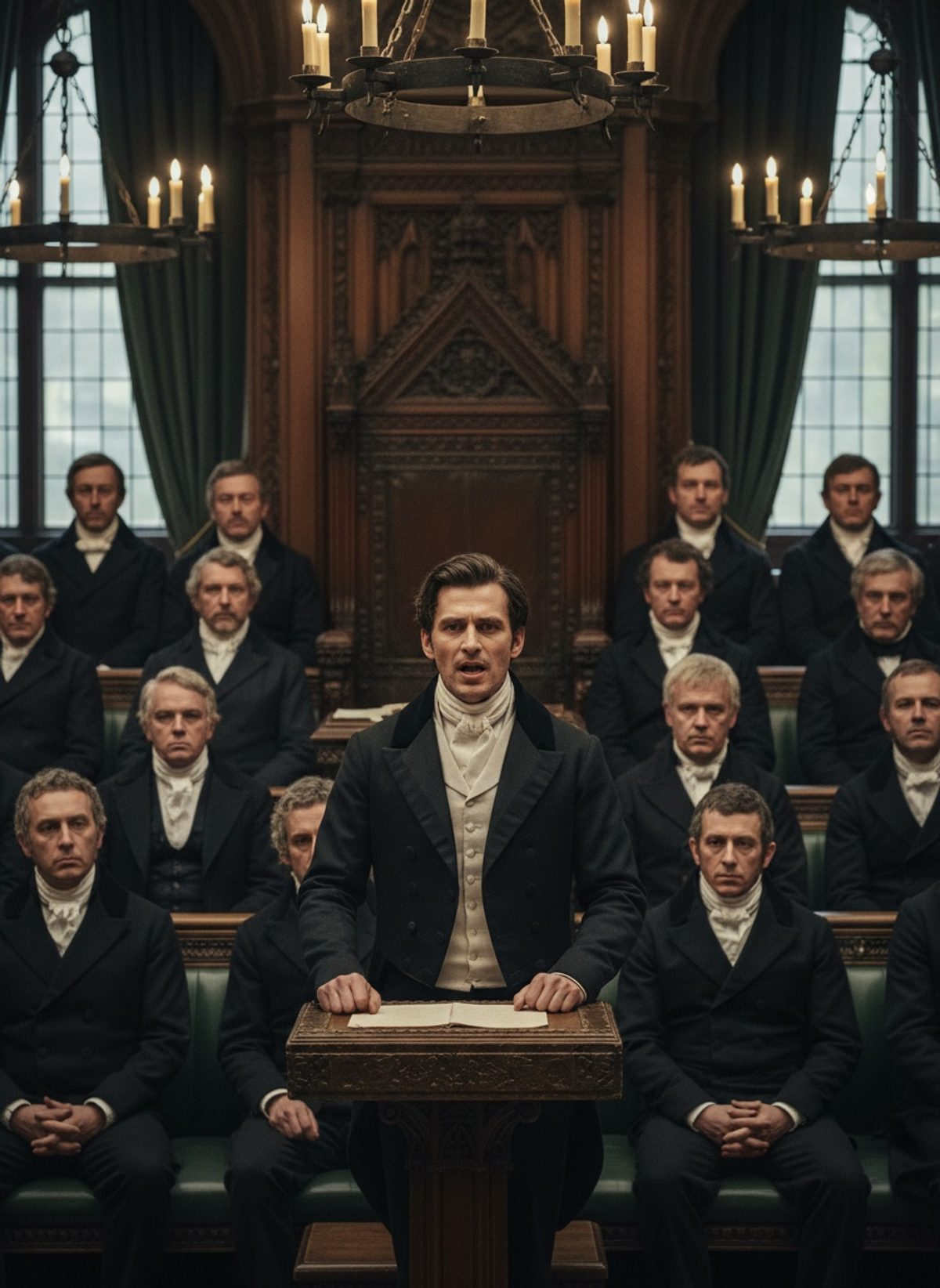
Jonas Hanway was not a lawyer. But in 1765, he spoke more powerfully than those who were.
The Dark Side of Georgian London
In the bustling streets of 1765 London, the scent of progress and prosperity intermingled with the harsh realities of poverty. The city was booming, and with it, the need for cheap labor was insatiable. Nowhere was this exploitation more pronounced than in the chimney sweeping trade, where the soot and smoke of industrial growth cast long shadows over society's youngest and most vulnerable.
The tale of the dying chimney sweep's apprentice is a grim reflection of these dark days. Boys as young as four were often sold into servitude, disappearing into a life of hardship and danger. Inside the narrow flues and chimneys, they were tasked with cleaning the soot that would choke a grown man. Many never made it out alive, suffocated by the very task assigned to them. It was a common enough tragedy that the boys were often referred to simply as "climbing boys"—their names as easily lost as the lives they led.
The Merchant With a Cause
Enter Jonas Hanway, a man whose distinctive appearance—often seen in a robe or 'great coat'—made him a familiar figure to the people of London. Born in Portsmouth in 1712, Hanway had built a successful career in trade and commerce, and he used his wealth and influence in ways that most merchants of his time would not. He was driven by a sense of moral responsibility that extended beyond mere philanthropy; he cared deeply about social reform. Perhaps it was his travels, witnessing the conditions of others across borders, that imbued him with a broader understanding and empathy for those less fortunate.
Read next: The Day a London Clerk Walked Into a Slave Auction and Bought a Man Free
In 1765, Hanway's attention was drawn to the plight of a particularly pitiable climbing boy—a young apprentice left to die with no advocate in the heart of one of the world's wealthiest cities. Moved by this injustice, Hanway did what was almost unthinkable for a man of his standing. He stepped into the courtroom to challenge the status quo, to demand justice for a child who had none.
Defying the Odds
When Hanway walked into that Georgian courtroom, he did so without legal training, without official standing, and without any formal obligation. What he carried instead was a deep sense of right and wrong, and the courage to speak out in a society prone to turning a blind eye. The courtroom was a world unto itself, governed by ancient ritual and an unyielding adherence to the law. But Hanway's sheer presence, combined with his eloquent plea, cut through the formalities and reached the human heart of the matter.
Details of Hanway's speech have largely been lost to history, yet the impact remains clear. By speaking for the anonymous boy whose story might have evaporated like so many nameless others, Hanway lit a spark in a murky judicial system that often left the poorest with no recourse. Though he was one man, his words weighed with the gravity of a public conscience awakened.
The Law That Turned the Tide
The tide-change instigated by Hanway's courageous stand did not occur in isolation. It set forth a campaign that, over time, gathered momentum and forced the legislative hand. The public was stirred from its slumber, unable to ignore the suffering of children pressed into horrific circumstances.
This moment helped lead to legislative shifts that would eventually culminate in the Chimney Sweepers Act of 1788. This was the first legal recognition of the horrors endured by young apprentices and a landmark move toward regulation. It made it illegal for masters to allow climbing boys to ascend and descend chimneys without safety precautions—an initial but crucial step toward safeguarding vulnerable workers. Still, real and lasting change was gradual, with additional amendments implemented over subsequent decades.
Why It Matters
In a society too often stratified by class and privilege, Hanway's stand for the chimney sweeps is a reminder of what can shift when moral urgency meets courage. It's easy to be daunted by systems larger than oneself, to believe that institutional change is a task for politicians and powerful lobbyists. But Hanway's act of humanity demonstrates that change often begins with a single voice—a testimony to the power of one person's decision to look steadfastly at injustice and refuse to look away.
Hanway’s story is more than a mere footnote in the annals of history; it’s a call to action for every bystander. It asks us to consider: in today’s world, how many voices go unheard? And who among us will choose to step into a courtroom for the voiceless? His legacy reminds us that true heroism doesn’t require authority or titles, only a heart resolved to do what is right.