The river Thames snaked under a sky of iron grey, its waters churning with rebellious energy as the salty breeze carried whispers of an impending storm. Ahead lay Tilbury, a fortress outpost standing vigilant against the threat rolling in from the Channel. In the summer of 1588, the air thrummed with tension. The greatest naval force ever assembled — the Spanish Armada — threatened the very heart of England. Just beyond the horizon, ships massed with the intent to conquer. It was a time for retreat, but one figure stood resolute, choosing instead to meet the storm head-on. Elizabeth I, the Virgin Queen, would not be shuffled away to safety. Instead, she would don armor and stand amongst her soldiers, wielding words as her weapon.
Into the Eye of the Storm
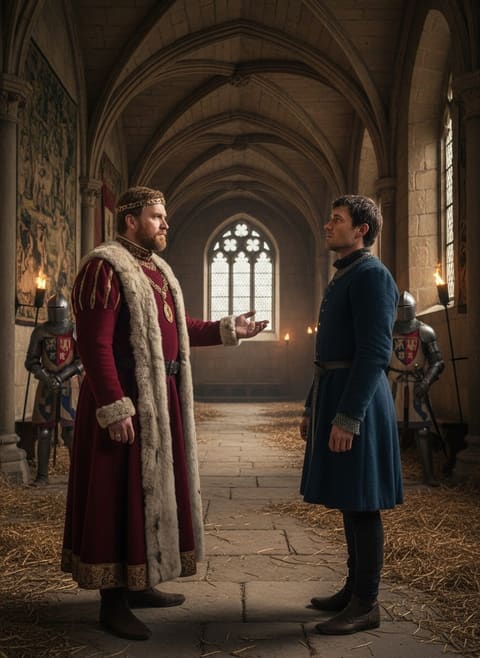
August 1588 was a month teetering on a knife's edge. The sky hung low over England, promising rain, yet Elizabeth’s spirit seemed unaffected by the looming threat. Every detail at Tilbury was underscored by urgency. Soldiers from across the kingdom gathered on muddy fields rimmed by the river, their eyes drawn upwards to the skies and southward to the horizon. They stood in clusters, whispers punctuated by the clang of armor and the distant calls of marsh birds. Here, on this windswept cusp of land, Elizabeth decided to face her fate. Her councillors, not privy to her inner resolve, urged her to retreat north to safety. They advocated for caution, for ensuring the continuity of Tudor rule elsewhere. Yet, Elizabeth’s reply was one of remarkable defiance. She saw retreat, not as security, but as defeat.
A Queen's Unyielding Presence
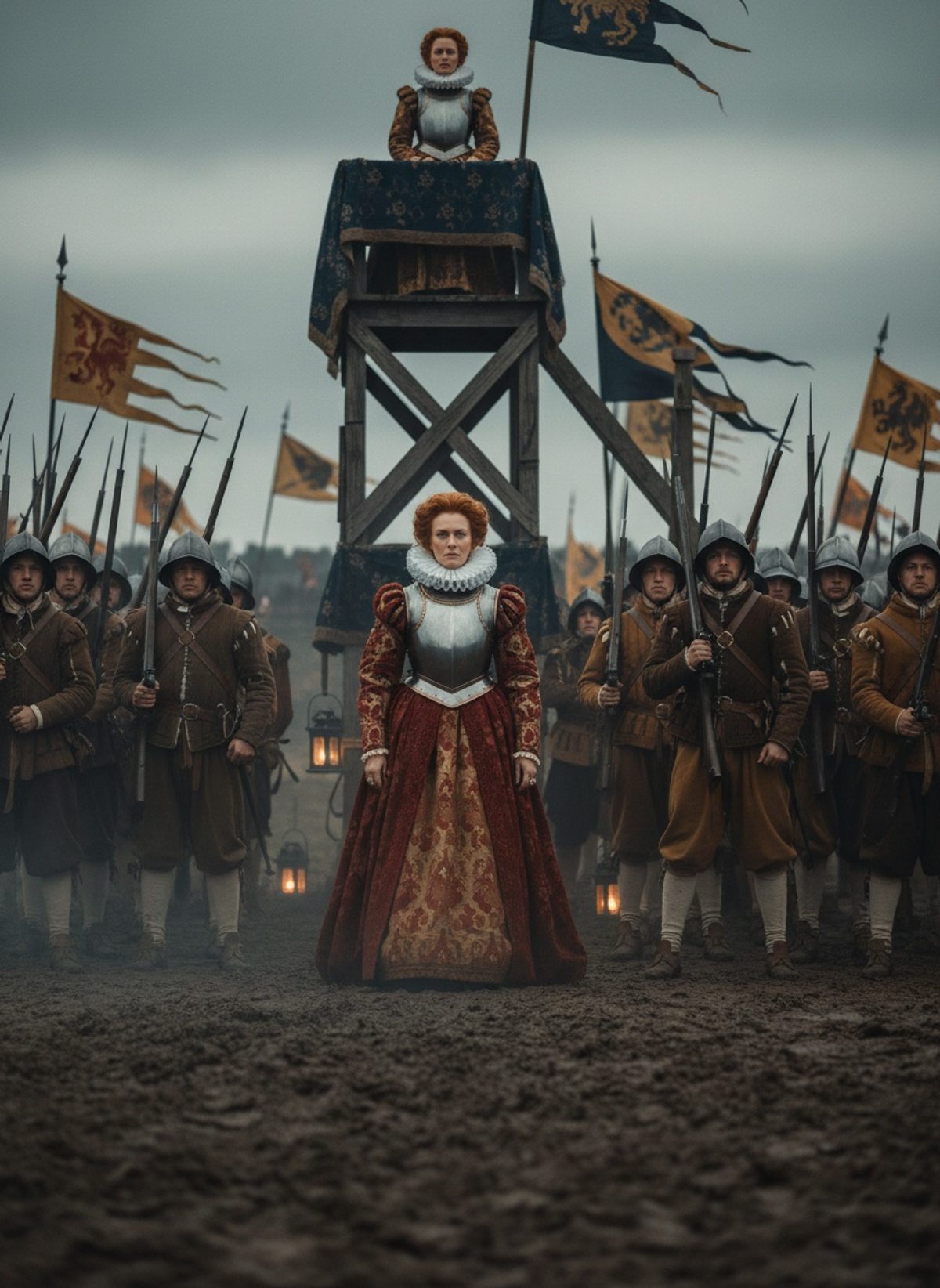
Amidst the tumultuous backdrop, Elizabeth I arrived at Tilbury, not as a queen bound by courtly robes, but as a warrior. Wearing a gleaming suit of armor rather than the usual finery of the court, she cut through the tension with her sheer presence. The murmurings of soldiers subsided as she mounted her charger, the leather creaking as she settled into the saddle. The day was brightened by her resilience, casting off doubt as clouds parted momentarily to reveal the sun. Her intention was clear — this was not a queen to be hidden away, but one who stood with her subjects, leading from the front. She rode among her assembled troops, observing not merely with the aloof gaze of royalty but with the assessing eye of a commander.
The Power of Words in a World of War
In this world teetering between attack and defense, Elizabeth’s strength lay in her mastery of words — a weapon more potent than any blade. Her speech at Tilbury became the stuff of legend, an enduring testament to her indomitable will. Facing her soldiers, she spoke with a voice clear and firm, crafted with the precision of a master orator. "My loving people," she began, her words weaving through the crowd like a binding spell. She acknowledged her status as a woman, but not with shame or retreat. Instead, she declared that she had "the heart and stomach of a king." The rapt attention of her audience was a testament to her ability to galvanize the spirit, to transform potential defeat into the promise of victory. She spoke of faith, courage, and a shared destiny, igniting a fire of unity that was to burn through history.
Read next: The Day a Queen Rode Alone Into a Mutinous Army
At the Brink of Reversal
With Elizabeth’s speech echoing in their ears, her forces found new resolve. The peril of the Spanish Armada lay just beyond the visible world, and yet, it was England’s own resolve that stood as an impenetrable wall. While the Armada might have been a physical threat, the real combat was one of souls and beliefs. The support of her people was not something Elizabeth demanded; it was earned through shared struggle and the intangible alchemy of words and deeds. England’s naval and martial response, steeled by the queen’s defiance, would soon be commended for its bravery. Untiring perseverance married with favorable winds scattered the Armada, preventing what many feared was inevitable.
The Legacy of a Stand, Not Simply Words
Elizabeth's stand at Tilbury transcends a mere moment in time; it serves as a vivid portrayal of leadership under pressure. Her decision to be not just a ruler but also a participant in her nation's defense is emblematic of a broader courage that would mark her reign. In resisting the impulse to abandon the fray, she demonstrated that the true measure of power lies not in safety, but in bonded courage shared with one's people. Her voice still echoes over the years, a reminder that no matter the tempest, the steadfast spirit of leadership can illuminate the path through any storm. What Elizabeth achieved was beyond tactics or strategy; it was a forging of a national soul that would endure even as the winds and tides of history continued to change.