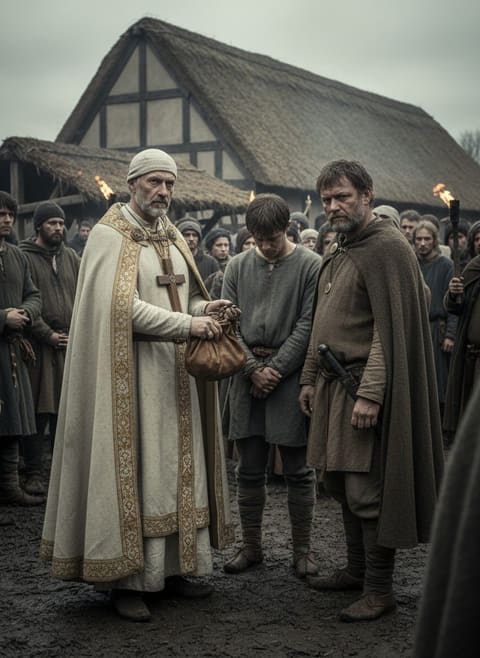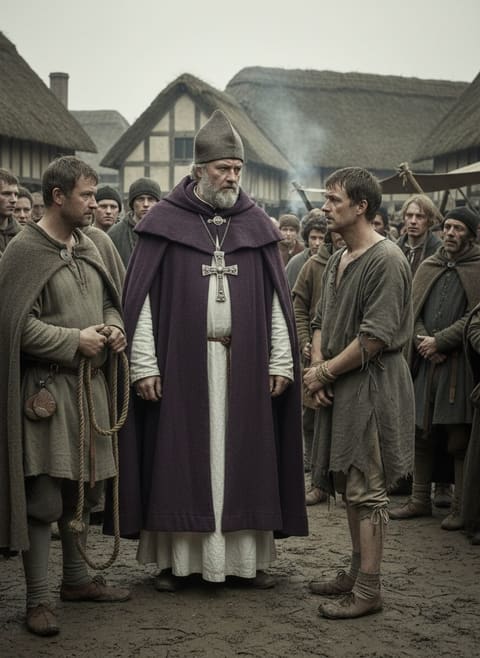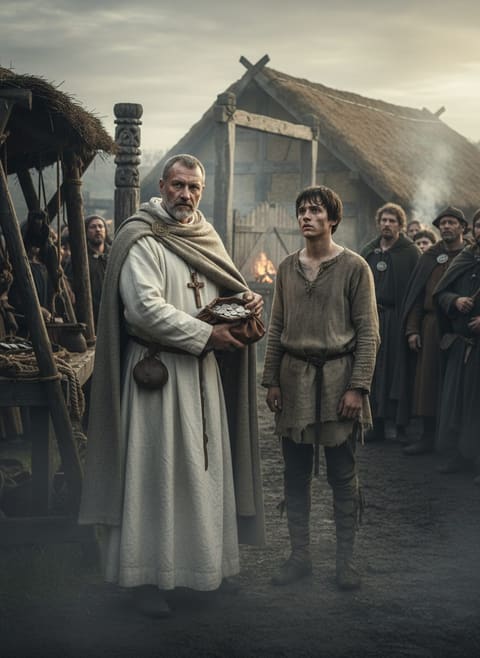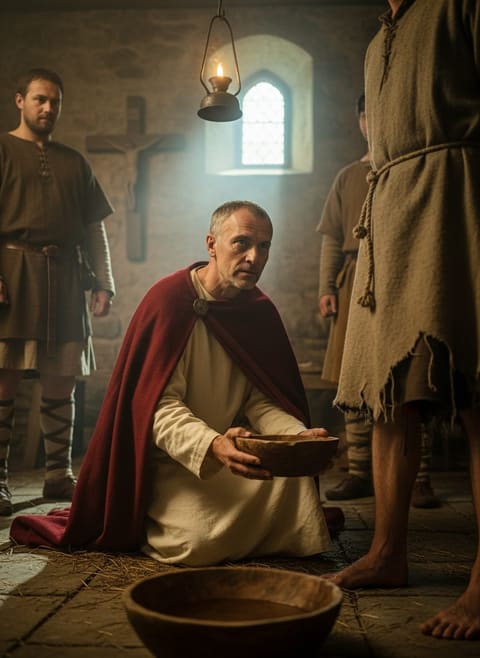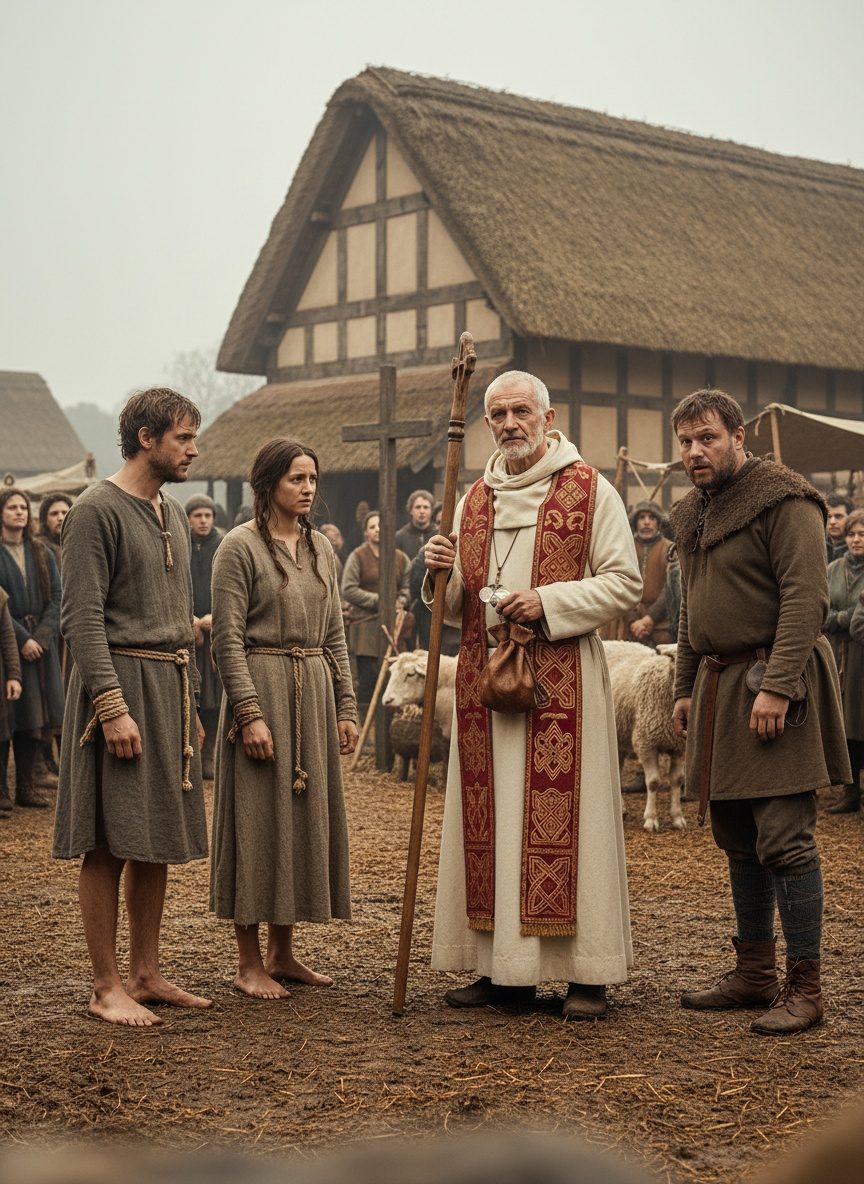
He was an Archbishop, a renowned figure in the ecclesiastical hierarchy. Yet, Archbishop Wulfstan of York found his true calling away from the pulpit, in the dirt and chaos of the slave markets.
The Marketplace of Human Currency
York, around the year 1000 AD, was a bustling city under the rule of the Anglo-Saxon kings. Its cobbled streets buzzed with the chatter of traders, the clinking of coins, and unfortunately, the cries of human souls condemned to chains. The slave trade, sanctioned by the law of the land, flourished with stark indifference. Markets brimmed with livestock, produce, and people; human lives were bought and sold like sacks of grain. This grim facet of Anglo-Saxon commerce was as lucrative as it was heartless.
On any given market day, ropes bitten deep into wrists and ankles, as chained lines of men, women, and children shuffled forward, their expressions vacant, hope worn thin. The air, redolent with the mingled scents of spices and despair, thickened as the crowd haggled over prices like traders bartering for mundane wares. Yet amid this callous exchange, a solitary figure moved against the grain. Archbishop Wulfstan, descending from his ecclesiastical throne, opened the cinched neck of his purse and paid the price of freedom.
Wulfstan: A Shepherd Beyond the Church Walls
Wulfstan—the man of both cloth and compassion—understood more deeply than many that every coin handed over for a human life pulled a thread from the very tapestry of oppression. This conviction clashed with the era's prevailing norms, seeping into the very marrow of his sermons. Positioned as the moral compass of York, Wulfstan preached fervently, declaring from the pulpit that every soul bore equal weight before the eyes of God. Such egalitarian ideals were revolutionary, not just spiritually but socially within an England deeply stratified by hierarchy and servitude.
Read next: The Day a Saxon Abbess Stood Between a King and His Rage
His philosophy was more than holy rhetoric; it was action incarnate. Wulfstan's appearances at the market became emblematic, his stature a beacon of unexpected salvation. To those freed from shackles by his hand, he was no mere cleric but a saint stepping from stained glass into their reality. Yet, for Wulfstan, this was not sainthood but stewardship—an earthly duty to shepherd his flock no matter how scattered or downtrodden they might be.
A Freedom Unchained: The Quiet Exodus
Once purchased, the liberated slaves embarked on a journey far more significant than the short walk to St. Peter’s Church, where freedom was ceremoniously given, and consecrated by the will of one man’s compassion. Wulfstan's quiet rebellions were powerful acts with a resonance that reached far beyond York's stone walls. Each bought freedom was not simply an act of charity but a silent protest against societal conventions. Every freed person carried forth not just the hope of a new beginning but the whisper of God's grace bestowed through human means.
Read next: The Day a Small Island's Language Conquered the World
The church doors came to symbolize not a sanctuary but a gateway—anointed thresholds through which every former slave stepped, unshackled by both iron and fear. Wulfstan understood too that freedom itself was not merely physical; it was spiritual, cultural, and ultimately ennobling. His continuous efforts to turn the market into a place of emancipation—where humanity regained its squandered dignity—were extraordinary for his time.
Beyond the Market: The Echoes of Wulfstan's Actions
Wulfstan's actions reverberated throughout the culture and history of Anglo-Saxon England, planting seeds of doubt about the moral footing of legalized slavery. His sermons and acts of liberation demonstrated a potent blend of faith put into practice, weaving ecclesiastical teachings into the lived realities of ordinary people. Straining against the chains of established norms, he prefigured a broader Christian ethic that would challenge the very roots of slavery for centuries to come.
The moral choices of one man in a small English city stand out brightly against the medieval backdrop of feudalism and subjugation. Wulfstan's vision—a tapestry knitted with threads of equality and compassion—carved out a fragment of hope in an era defined by the brutalities of the marketplace. This narrative, untold in textbooks but living in the whispers of history, compels us to confront uncomfortable truths about our collective past while inspiring us to embrace a continual quest for justice and dignity in the present. In Wulfstan's story, we find a reminder not just of what we were, but of what we have the potential to become.