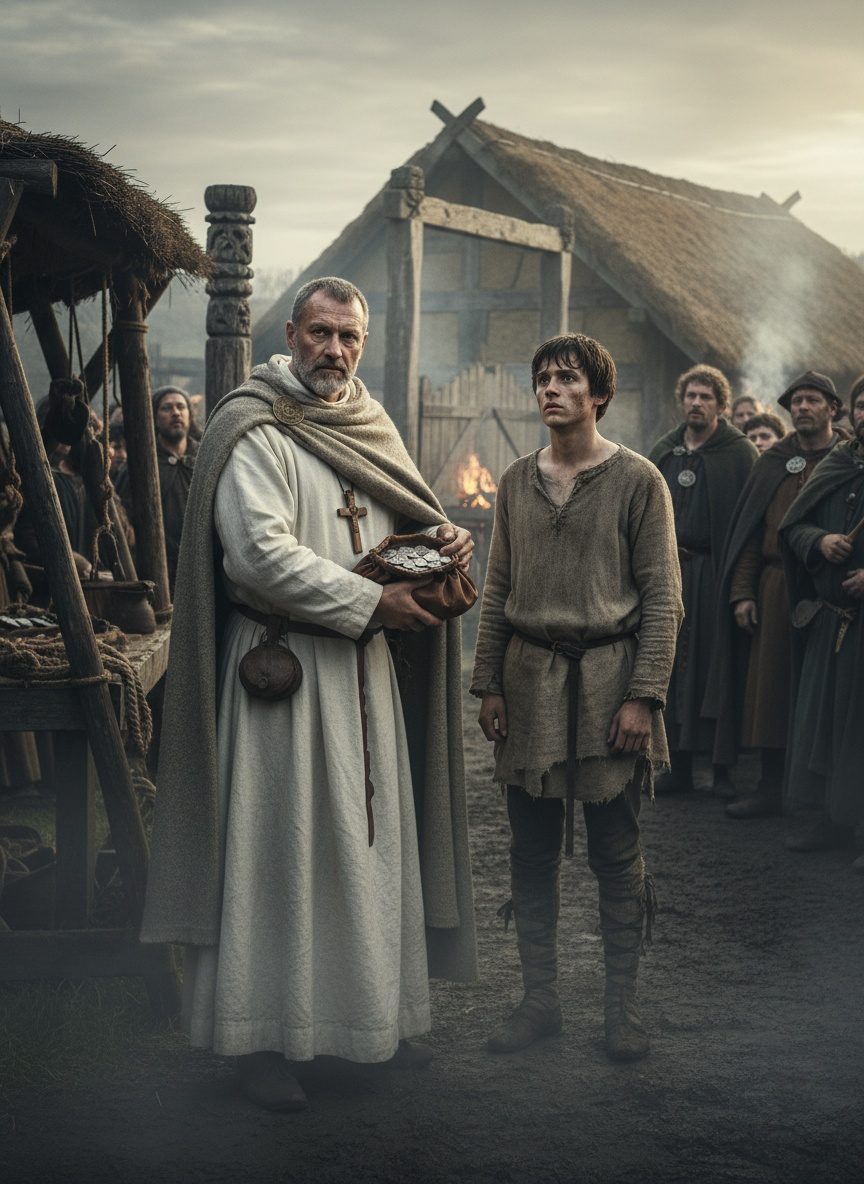
Late 7th century. The cobblestones were slick with morning dew, reflecting the faint light of dawn as the city of York awoke to the clamor of voices and the heavy drone of the slave market.
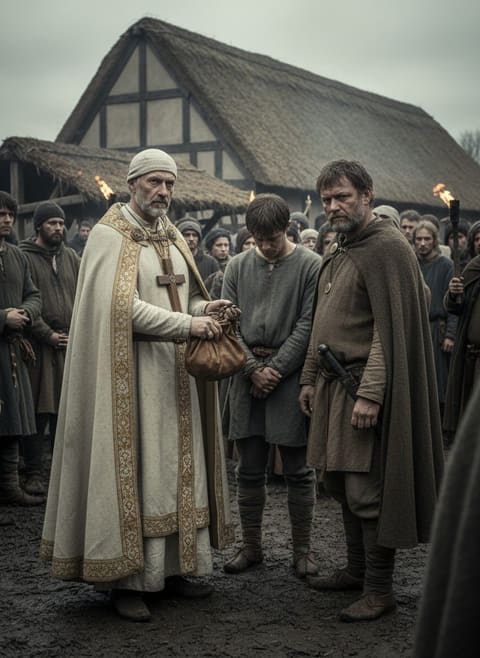
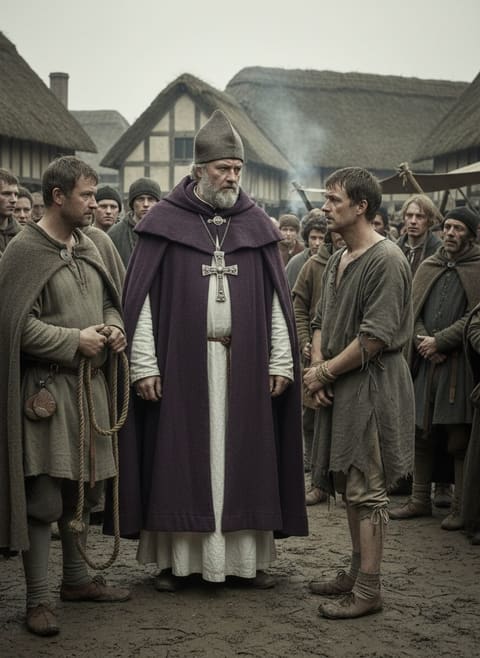
The marketplace, teeming with traders, buyers, and the unfortunate souls caught in the brutal web of human commerce, was a cacophony of barter and bidding. Amongst this din walked a solitary figure, one whose purpose was not to profit but to liberate. Clad in modest robes, with the simple cross of a bishop hanging from his neck, Wilfrid of Hexham moved through the throng. His eyes, sharp and resolute, scanned the rows of huddled human lives awaiting a future determined by others.
Bishop Wilfrid was no stranger to adversity. Born in Northumbria, Wilfrid had risen to become one of the most influential clerics of his time. Yet it was not power that drove him; rather, it was an unyielding sense of duty and compassion. As he surveyed the scene, the weight of a world riven by bondage pressed against his heart. He could not change the world overnight, but he could make a difference for those standing before him.
Wilfrid moved with determination, his fingers grazing the silver coins hidden within his garment. This wealth, a blend of his own resources and donations from those who shared his vision, was meant for a singular purpose. As he approached the auction block, murmurs of recognition passed through the crowd. Some whispered of his generosity, others of his naiveté—but none questioned his resolve.
Read next: The Day a Saxon Abbess Stood Between a King and His Rage
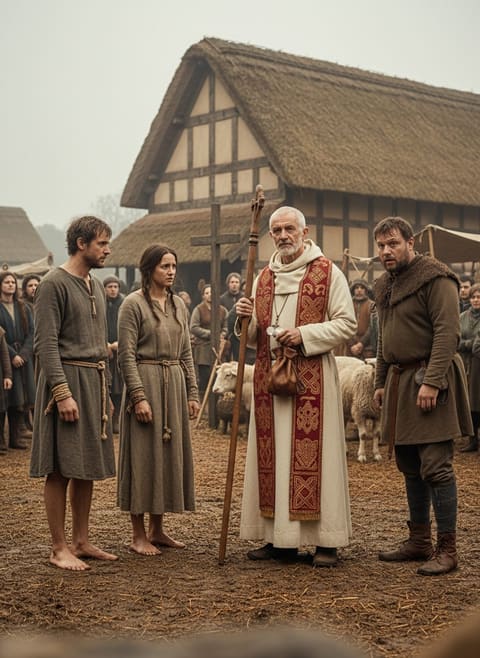
The process was both simple and profound. One by one, he approached the traders, exchanged silver for the freedom of the enslaved. A few coins for a man, a handful more for a family. To some, it seemed a futile gesture, a drop in the ocean of human suffering. But to those he released, it was nothing short of a miracle. They were no longer assets or possessions; they were free men and women, blessed by a bishop's benevolence.
Wilfrid's actions were driven by his deep-seated belief in the intrinsic value of every human soul. In the rigid hierarchy of Anglo-Saxon society, where status often dictated fate, Wilfrid saw only the equal children of God. His interpretations of Christian teachings were not just theoretical; they were actionable, tangible efforts that challenged the moral fabric of his time.
The impact of his deeds rippled through the region. Word traveled beyond the confines of the market, across towns and villages, carried by merchants and wayfarers. His actions ignited discussions, inspired others to question the status quo. If one man could challenge the institution of slavery, perhaps others could too. It was a radical notion, one that chipped away at the foundations of a societal norm that many considered unchangeable.
Yet, Wilfrid's mission was not without its detractors. There were those who viewed his interference as a disruption to the economic stability, those who eyed his actions with suspicion. But Wilfrid's faith was unwavering. Each life he freed was a testament to the strength of conviction and the power of change, however gradual and small it might seem.
Read next: The Day a Small Island's Language Conquered the World
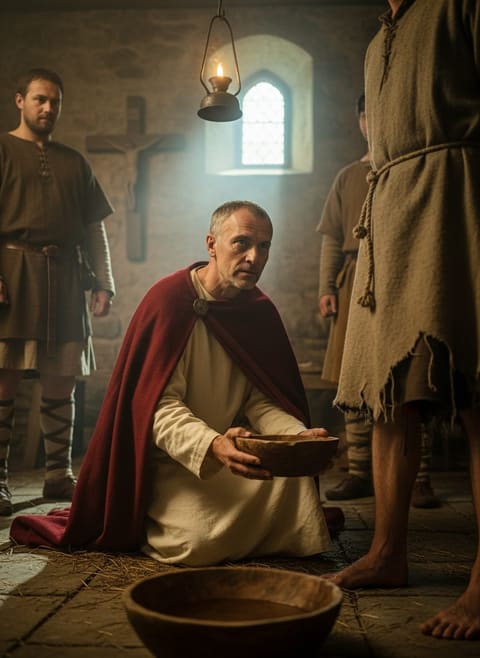
Over the years, Wilfrid continued his quiet crusade, liberating hundreds from the shackles of slavery. His church became a beacon of hope for the disenfranchised and downtrodden. It served not just as a place of worship, but as a sanctuary where those he redeemed could start anew, reintegrating into a world that had so casually discarded them.
Wilfrid's legacy is remembered today not just in church annals or stained glass windows but in the quiet notion that each act of charity, each ripple of kindness, can change the course of history. Amidst the grandeur of battles and the solemnity of treaties, it’s easy to overlook the individual acts of grace that silently shift the tides.
In the hustle and swirl of history, Wilfrid of Hexham stands as an unlikely hero—one who walked into a crowded market and chose compassion over currency, humanity over hierarchy. His story reminds us of the perennial power held by those who dare to act differently, of the profound change a single person can manifest through steadfast faith and unrelenting resolve.
Today, in a world still struggling with its own forms of bondage and inequality, there lies a simple lesson in Wilfrid’s journey. By daring to see the humanity in others and acting with empathy, we wield the silent, enduring strength to transform the darkest of markets. Like the Bishop of Hexham, the impact of our actions may not be immediately visible, but they possess the potential to alter the very fabric of society.