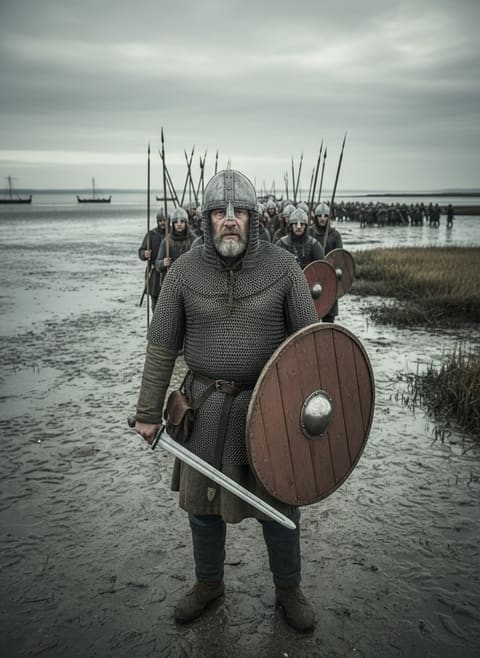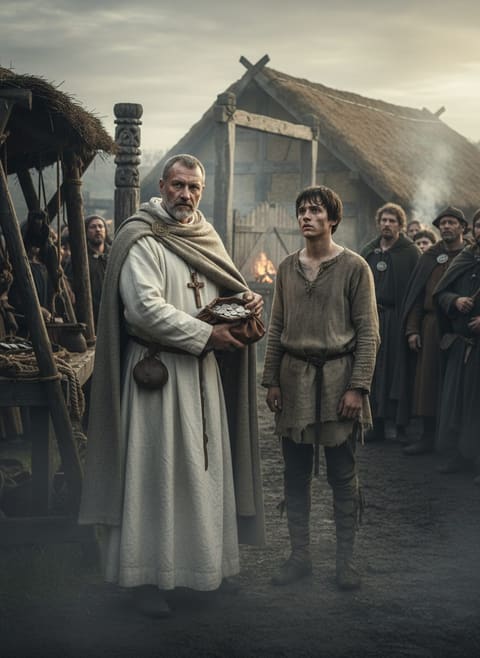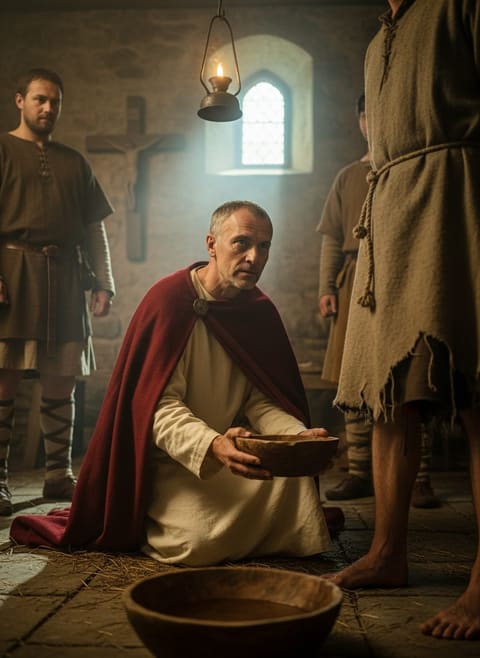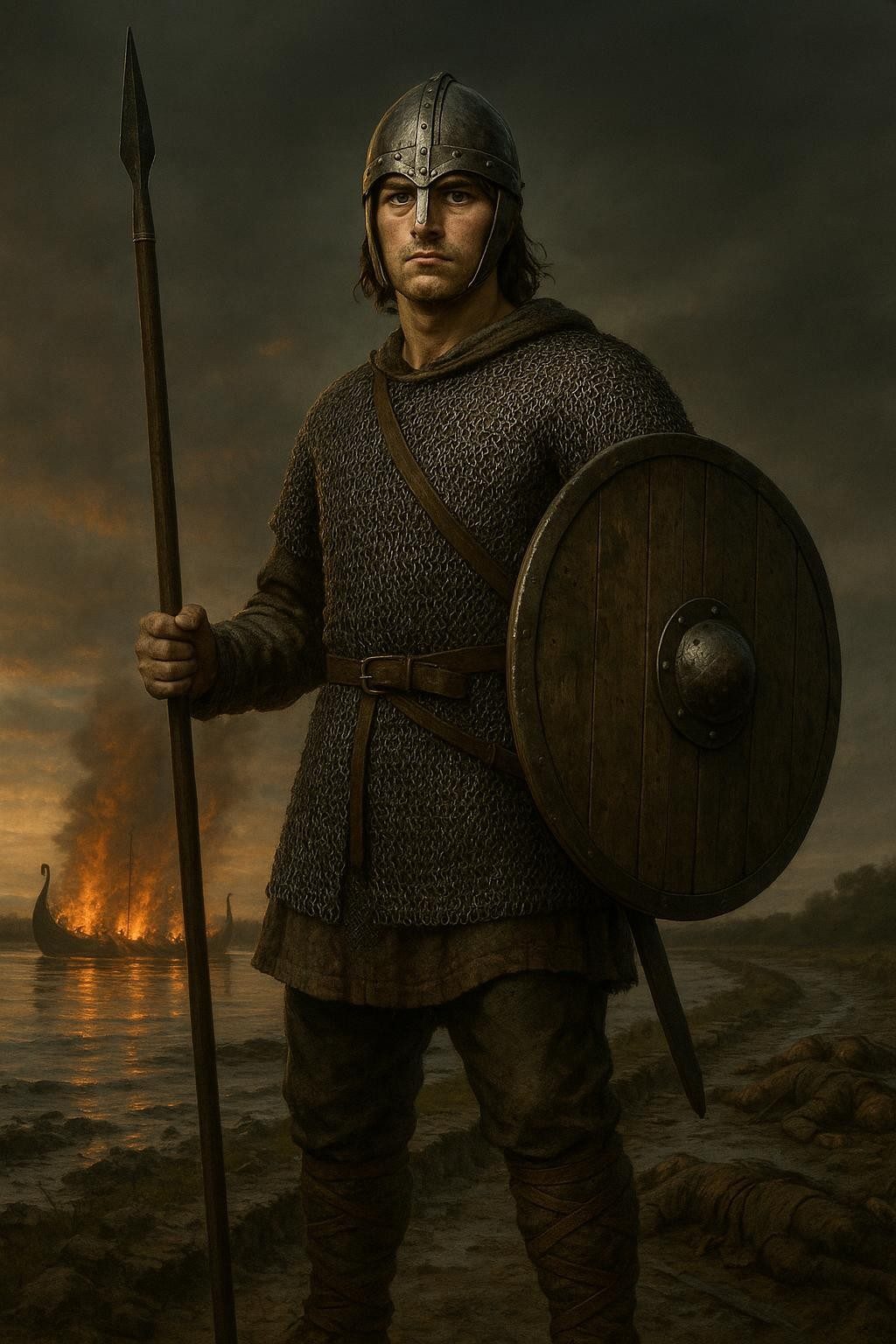
Through the morning mists that lay thick over the Essex marshes, the chill air hummed quietly as seawater lapped against the riverbanks. It was August 991 CE, and the winds carried a foreboding scent of salt and blood. As a pale sun struggled to pierce the overcast sky, shadows of ships emerged on the horizon—sleek Viking longboats, their curved prows rising impossibly high like ancient sea monsters come to life. Amid the looming threat, England faced an enemy as fierce as the North Sea.
The Breaking of the Shieldwall
The air was tense at Maldon, where the English had taken their stand. Byrhtnoth, the valiant ealdorman of Essex, had summoned his forces to the banks of the River Blackwater to intercept the Viking invasion. The thunderous clashing of shields and swords echoed through the desolate fields, a cacophony of human desperation and steel. Yet as the Norsemen surged forward, seeking plunder and glory, a fateful moment shattered the fragile equilibrium. Byrhtnoth, leading his men with an unwavering spirit, fell under the vicious onslaught. The riverbank turned into a frenzied scene of chaos as leaderless warriors saw the grandeur of their defiance dissolve into a desperate scramble for survival.
In the wake of the ealdorman's demise, morale plummeted like a stone dropped into deep water. Panic spread through the ranks, and as the shieldwall fragmented, many men broke and ran, arms flailing in search of safety. The noon sun gleamed menacingly off Viking axes, and all seemed lost. Yet in this desperate hour, when the battle seemed irredeemably tipped in favor of the invaders, an unexpected spark of courage flared into life—one young warrior, imbued with a fierce loyalty that defied commonsense flight, refused to retreat.
A Stand Against the Tide
Amidst the brutality and bedlam, a Saxon youth, name lost to history, emerged as an unlikely bulwark. Alongside him stood a handful of resolute warriors, bound not just by fealty but by a shared oath deeper than words. Each knew that their efforts were likely to end in death, but the principles instilled by their fallen leader demanded this final stand. Shoulder to shoulder, these men formed a new, makeshift shieldwall, resolute as England's last defense.
Read next: The Day a Saxon Abbess Stood Between a King and His Rage
The crash of Viking shields grew louder, each impact reverberating through bones, yet they held firm. The smell of fear mixed with the tang of blood, yet their spirits did not waiver. The youth, though barely a man by the standards of his time, exhibited a valor that belied his years. With a sword hugged like a tethered lightning bolt within his grip, he became the embodiment of Saxon resistance, determined to extract a cost from the invaders greater than they were prepared to endure.
The Price of Loyalty
In the face of stark reality, the young warrior and his compatriots embraced the fight not only as a defense of land but as a matter of honor. Each parry and thrust became part of an epic spectacle, etched indelibly into the annals of memory. The Vikings, battle-hardened and innumerable, had not anticipated such reckless abandon. For every step forward, they paid in yards of bloodied sand and fell bodies.
Read next: The Day a Small Island's Language Conquered the World
Though inevitable, the youth's fall came with neither whimper nor retreat. His death—hard and unfaltering—echoed a silent message across the land. With every Saxon that lay dead upon that field, the Vikings might claim a victory, yet every fallen Saxon became a testament to courage in defiance of despair. While their numbers could not hold against the fearsome surge, the depth of their determination invoked an unspoken bond that would resonate long after the battle was lost.
The Ripples of History
The Battle of Maldon ended in defeat, but its legend transcended the grim finality of its outcome. Passed from tongue to ear in hearthside retellings, the tale of the Saxon youth and his unwavering comrades captured more than merely a futile defense against conquest. In a realm forever on the brink of succumbing to chaos, these tales of heroism became reminders of the potential for indomitable spirit even amid abject defeat.
Such acts of audacious fidelity to principle ignite still the embers of inspiration, whispered like secrets across time. They confront us with the essence of humanity—not the absence of fear, but the ability to contend with it bravely. As the Northmen razed the lands they briefly held, the legacy that endured was not of pillage and fire, but of raw, undiluted human tenacity. And so, the Saxon boy who stood unflinching becomes, in every sense, a shield for all of England—not merely of steel and timber, but of courage that swells the heart.