The hills of early medieval Scotland rose grey and green against an unpredictable sky, a tableau caught between dazzling sunlight and sudden squalls. The air was crisp and carried with it a bite of salty sea and fresh heather, as unpredictable as the clan politics that ebbed and flowed across this rugged land. It was in this volatile climate of dispute and allegiance that a humble blacksmith’s decision to name his son would ripple across the years, echoing in the tales and tragedies of kings and commoners alike.
Forging Identity in Iron and Name
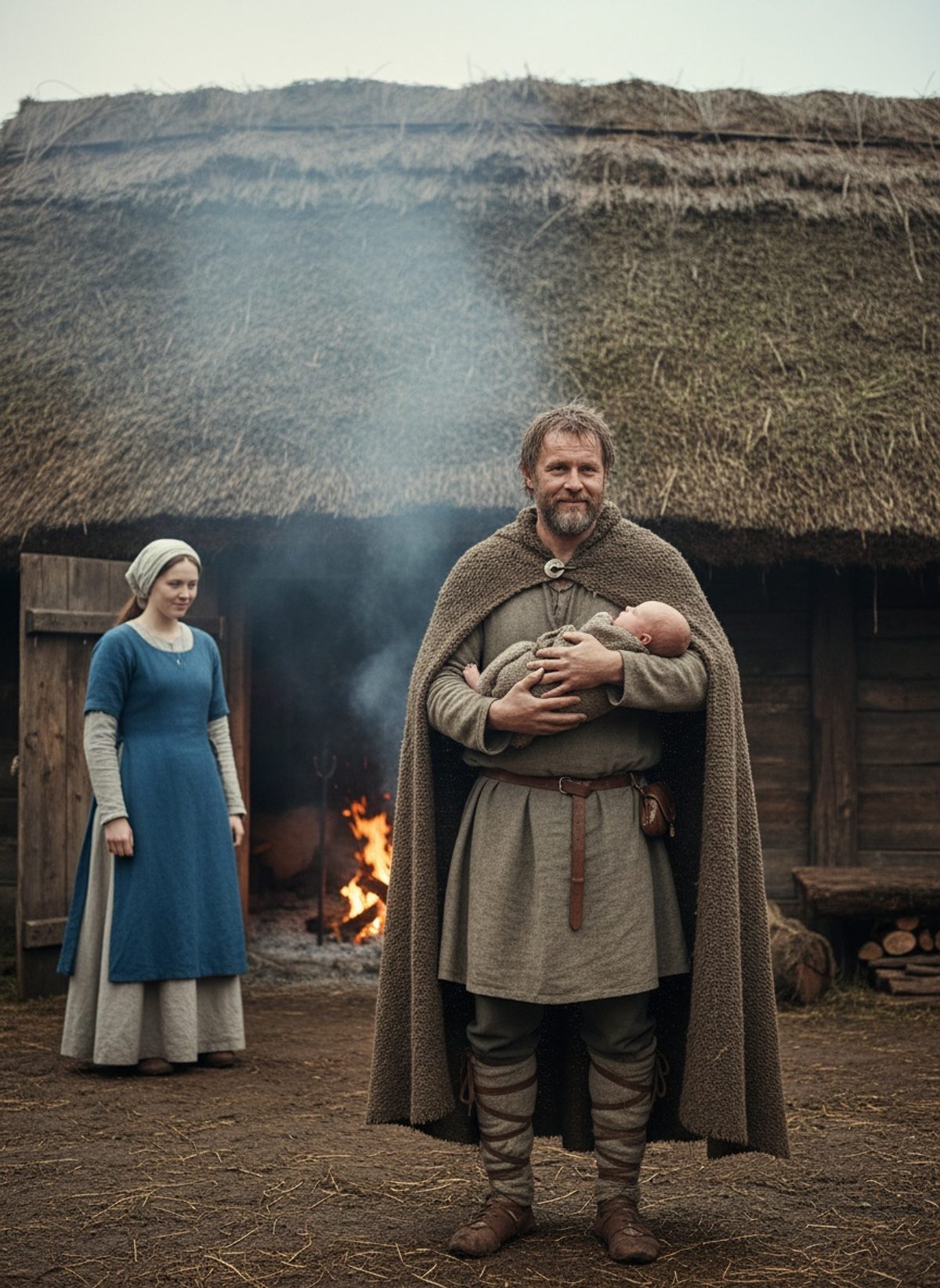
In a village nestled amid the craggy landscape and jagged coastlines of our story's setting, a blacksmith drew his sustenance from the earth and iron. His forge was a cacophony of clangs and heat, every strike on the anvil a stark, ringing harmony between man and metal. Here, as he hammered the raw, glowing iron into tool and weapon, so too did he shape something far less tangible: his family’s future.
The early medieval era in Scotland was one of clan dominance, where kinship ties were more powerful than blood. Names were a vital instrument in these ancestral chess games, often carefully crafted to withstand, or navigate, the intricate web of loyalty and enmity that determined one's place. A name bore stories, whispered like wind through the heather, of alliances and betrayals.
This blacksmith, seasoned by both his trade and the turbulent history surrounding him, knew well the import of naming. As the clang of his hammer was carried by the wind, he chose to name his son not for his forefathers as tradition might dictate, but for a king. This singular decision was not made out of hubris but strategy, an alignment of his family with the nascent power of royalty in a land where kingship was an uneasy crown.
Read next: The Day a Tiny Bridge Broke England's Grip on Scotland
Names were maps that traced the contours of power, and the blacksmith's choice marked his son with a destiny intertwined with those who wore the crown—not merely as a subject but as a partner in the weaving of Scotland’s tapestry. Such strategic naming could offer protection or invite peril, with one leading edge as sharp as the other.
Legend Born of the Anvil
As his son grew, inheriting his father's strength and mettle, word of his name spread through villages like sparks from a hearth. This was a boy who wore a king's name like a mantle, unyielding to the whims of fate. The whisper passed from lip to ear, crackling with the energy of something destined to expand beyond its humble origin.
In the darkened halls of castles and the flickering shadows of campsites, speculation fed the minds of those who held power. This subtle challenge—an ordinary man bestowing upon his son the highest of names—not only reflected the blacksmith’s audacity but posed a symbolic challenge to the status quo. Who was the true architect of these lands if not the ordinary, those who toiled and shed blood for hearth and home?
The boy, named for a king, was neither noble nor knighted, yet his very existence suggested the elasticity of destiny. As he grew, stories of his adventures, courage, and generosity wove into fabric more than legend, inspiring whispered tales and clandestine admiration from the lay and loyal alike.
In choosing a king's name, the blacksmith symbolically set before his son a grand stage, where everyday heroism met the potential for greatness. The name, crafted with the precision of a smith’s hammer, articulated a vision of shared future and possibility—a subtly defiant statement in a world bound by birthright and ancient lore.
Ripples Across the Ages
Time turned its wheel, grinding the past into the dust of forgotten days. Yet the blacksmith’s choice, struck like a spark from cold steel, left a lasting imprint. The tales of his son, baptized in the fires of ambition and tempered by the forge of the age, entered the lore of the land and became more than mere anecdote. They shaped narratives whispered by firesides, a testament to the bonds of identity not shackled by serendipity but forged by will.
Names in medieval Scotland were swords as much as shields, defining and defending as much as they opened pathways. This choice, this name—a name bestowed for a monarch, not unlike carved runes that spoke of gods or feared giants—suggested a bond that bound the peasant and the potentate. And yet, as the centuries unraveled, what remained was not the power of the king but the power of the story, the testimony to courage beneath common skin.
The story of the blacksmith and his son serves as a robust reminder that destiny is not always the domain of the mighty. Ordinary men and women, wielding nothing more substantial than a name, a belief, can carve their own pathways into history. In this, lies the potent and peculiar alchemy of names—wherein a child named for a king walks not only in the shadow of majesty but along a line of defiance, crested by the traditions and turbulence of a land forever on the cusp of change.