November 10, 1778. Frost nipped at the cobblestones of Edinburgh as dawn broke bleak and chilly.
The Unyielding Voice in the Courtroom
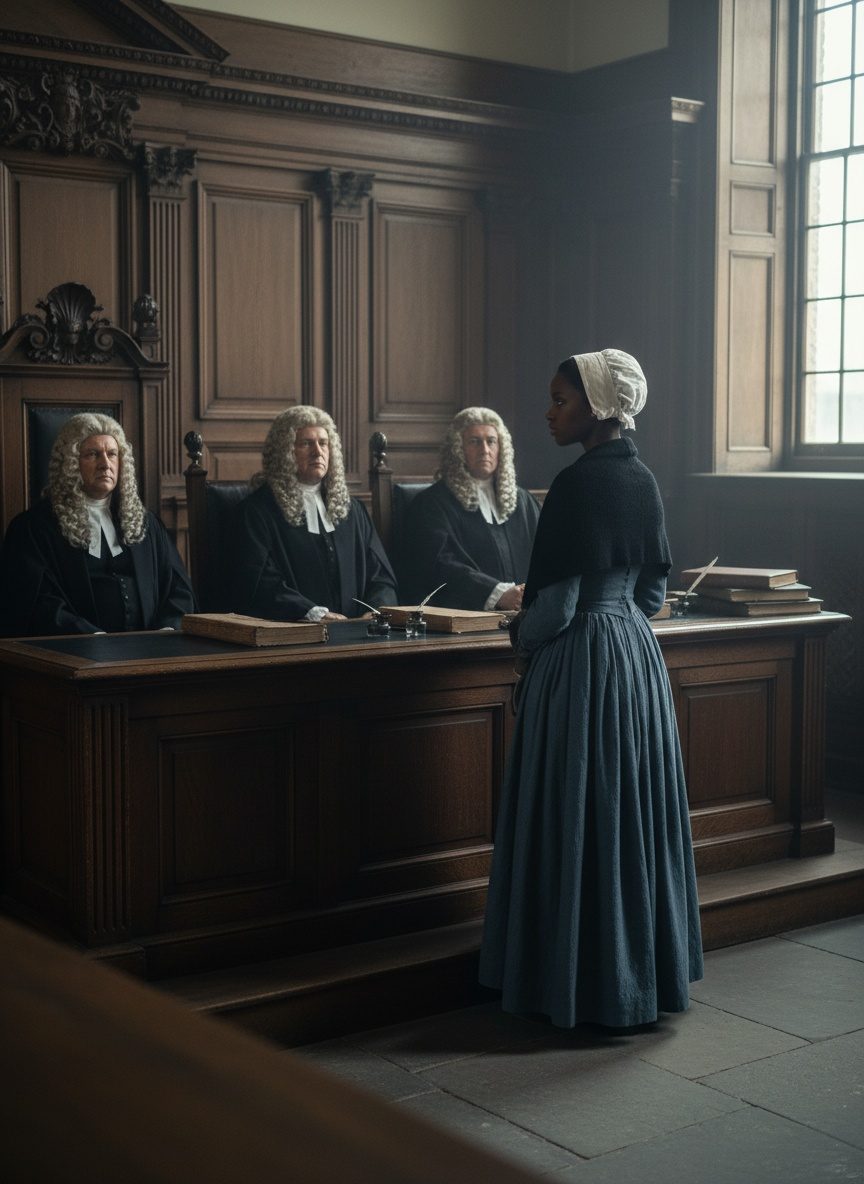
Amidst the cold morning air, the Court of Session, the supreme civil court in Scotland, prepared to hear a case that was already whispered about in both respectable drawing rooms and dimly-lit taverns. The usual oppressiveness of the court seemed even heavier as a slender Scots girl, barely a woman, stepped up to present her case. This was not the usual procedure. Generally, someone in her position would be represented by a lawyer, or perhaps a sympathetic patron. But not today. This young woman stood alone, devoid of legal support, except for the sheer strength of her conviction and the fervent power of her words. In 1778, such a sight was not just unusual—it was revolutionary.
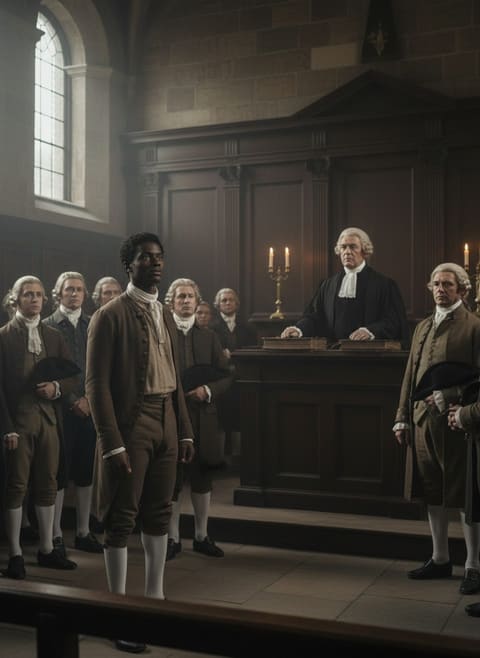
For most in attendance, the name Joseph Knight had held courtroom precedence in discussions of freedom. Known for successfully legally challenging his enslaved status, Knight’s battle resounded as a pioneering case for liberty in Scotland. However, Knight's wife remained in the shadows, bound in her own chains, intangible but real. There she stood—within the solemn halls of Scotland's legal beacon—grasping for a freedom that most assumed was beyond reach.
The Burden of Chains and Tradition
In 1778, Georgian Scotland was still wrestling with the realities of its expanding empire, including the grim cadences of the slave trade. Though not as deeply entrenched as in other parts of Britain, slavery's legacy still cast a long shadow over Scottish life. Men and women like Joseph Knight had been brought from African shores, their liberties exchanged for servitude. While legal precedents were shifting globally, with America earnestly debating the morality of the institution, in Scotland, the case of Joseph Knight had set a new course, yet left many questions about the practice unresolved.
Read next: The Day a Scots Weaver's Son Freed the Kirk From a King
The young Scots woman in court seemed an unlikely champion to confront this weighty issue. Yet, she was armed with a singular weapon barely seen in such legal machinations: truth. Eschewing prepared notes or grandstanding rhetoric, her testimony unfurled like a heartfelt plea tracing the contours of humanity. The room was thick with tension, eyes focused intently on her lone figure, as she recounted not just the injustices wrought upon her mother, but a fierce yearning to overturn these unjust shackles.
A System Not Ready for Change
The courtroom was accustomed to decorum, stage-managed by an elite few—the judge, lawyers, and clerks deciding the fates of those brought before them. Yet on this day, that calculated routine met a vibrant disruption. The girl spoke with a clarity and conviction that defied her simple, modest dress. She drew upon the universal right to freedom, challenging the courtroom to look beyond the parameters of the law to the very essence of justice itself. It was as though the spirit of John Locke himself had been channeled through her youthful voice—a burning call for individual liberty and equality that silenced detractors and emboldened believers.
The presiding judge, a man whose demeanor was notoriously inscrutable, sat poised in attentive silence. His expression flickered, betraying a rare human moment in the midst of somber formality. As her speech concluded, there was no immediate reaction—a collective breath held throughout the court. More than just an argument, it was a heartfelt summons to what was right, intangible yet as undeniable as the biting chill outside. For his part, the judge understood the severity and precedence of this case; the decision he faced would ripple through Scottish society with monumental consequences.
Read next: The Day a Highland Clan Turned a Massacre Into a Legend
Liberty in a New Light
The courtroom was silent as the judge finally stood. Beneath the rich robes and the powdered wig, there lay a complexity of thought and responsibility. As he began to speak, his voice was tempered with the gravity of the moment. It was more than a verdict he was delivering—it was a manifesto for change. A startled hush enveloped the room as the words escaped his lips: just as Joseph Knight had been ruled free, so too was his wife to be liberated from the chains of servitude that bound her, and by extension, the young woman's mother.
In that instant, the atmosphere shifted palpably from tension to tentative joy. This ruling reverberated far beyond the courtroom walls, reaching far into the social conscience of Edinburgh and beyond. It was a testament to a single, unwavering voice—a voice that, on that frosty November day, helped to redefine the landscape of legal proceedings in Scotland. It was a new dawn for those who longed for a world where freedom was an unalienable birthright, irrespective of race or heritage. The young Scots girl had not only altered the course of her own family’s history but also sparked a vital shift in the annals of Scottish law.
Her courageous stand served as a profound reminder that justice, while often mediated through oppressive structures, ultimately finds its greatest champions among those with the least power. This pivotal moment in Georgian Scotland challenges our modern perceptions, urging a continued vigilance against the lingering shadows of oppression and reminding us of the relentless spirit required to break its chains. As history teaches us, it is often in the quiet resolve of individuals like her that the future finds its most enduring light.