1306. A chill hung in the air, whispering through the walls of a humble barn in Perth, Scotland.
The Night of Danger
The year 1306 was fraught with tumult as Scotland found itself embroiled in a brutal struggle for independence. All over the land, noble aspirations clashed with ruthless ambitions, painting the Scottish landscape with uncertainty. In the stillness of night, cloaked in shadows, one of the most pivotal moments in Scottish history was unfolding quietly in a barn used by Robert the Bruce himself.
Bruce, a fugitive King newly proclaimed and seeking to cement his right to the Scottish throne, was deeply embroiled in his quest for a unified Scotland free of English yoke. Yet, even a king could not escape the peril that loomed around him. Tired from constant hiding and battle, Bruce was likely in a deep sleep. But danger stirred beyond the humble wooden walls. English soldiers, aware of his refuge, stealthily closed in, their swords ready to end the Scottish rebellion with one lethal stroke.
A Courageous Soul
In this dire moment, a young Scottish woman named Catherine Douglas found herself caught in the tendrils of fate. A loyalist and true-hearted, she perhaps worked in the manor or was a member of Bruce's retinue, but her loyalty transcended her station. When she heard the unmistakable clank of armor approaching, she realized the desperate urgency of the situation.
Read next: The Day a Scots Weaver's Son Freed the Kirk From a King
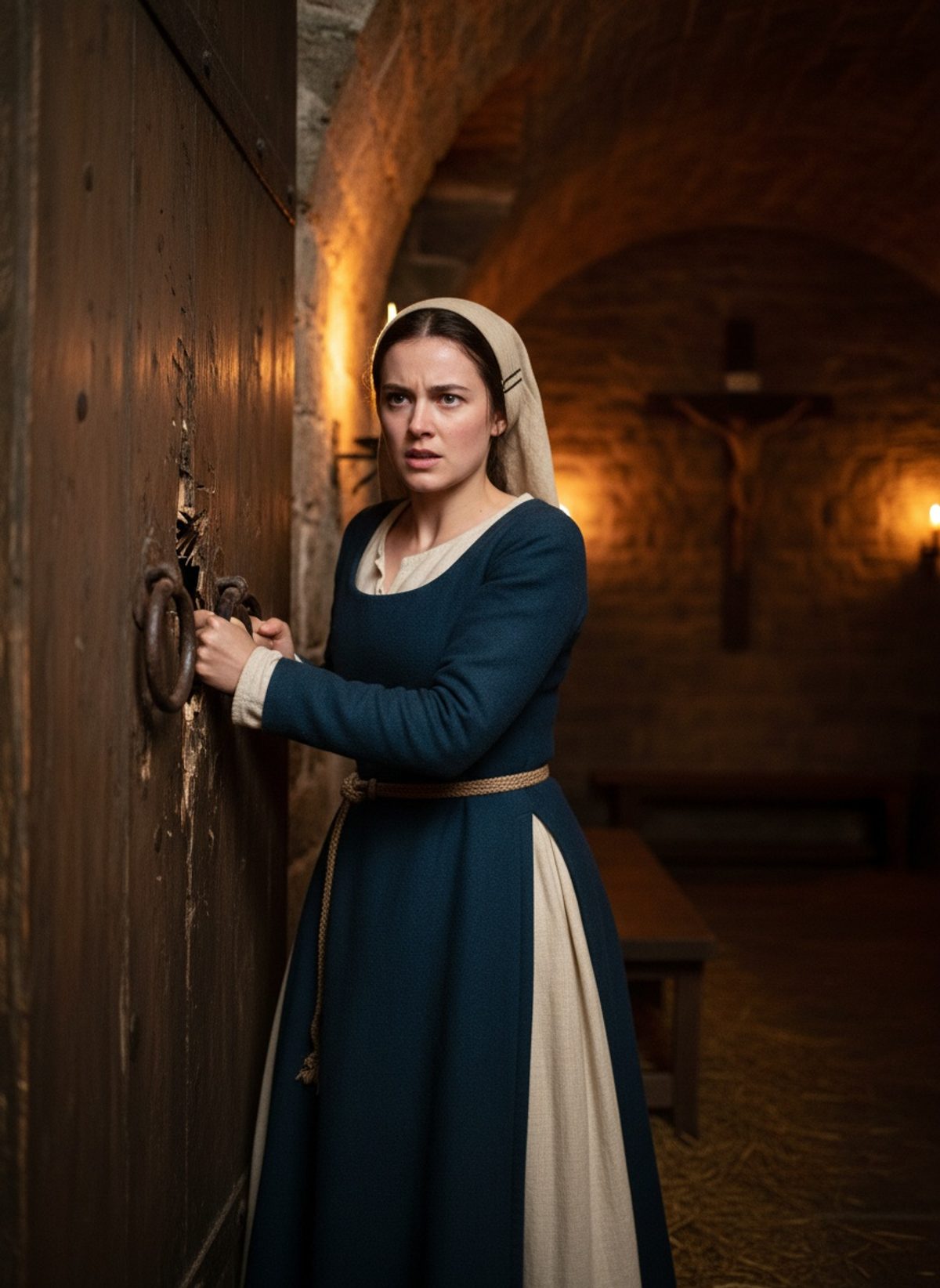
The barn door, a simple construct, lacked the strength of a lock to stave off the incoming threat. Without a bolt to secure it, Catherine turned to her own flesh and blood for the solution, demonstrating a fervent bravery that few could muster. Without hesitation, she thrust her slender arm through the iron staple of the door.
This act of defiance was not just a physical barricade but a testament to her fierce spirit and determination to protect her king. It was the only thing standing between Robert the Bruce and his imminent capture.
The Cost of Valor
Catherine's choice, wrought of desperation and resolve, could not hold back the soldiers for long. Her makeshift barricade, mortal in essence, was met with the relentless force of seasoned soldiers intent on carrying out their mission. With the clamor of men seizing the door, her arm bore the brunt of their assault.
The English broke through, her arm enduring the agonizing snap of bone and the tearing of skin—a cruel price for the brief yet invaluable moments she provided Bruce. These precious seconds gave Bruce the chance to stir from slumber, grasp the gravity of his peril, and slip through to safety. It was an act that saved not only a man, but the hope of a nation.
Read next: The Day a Highland Clan Turned a Massacre Into a Legend
Whispered into Legend
The tale of Catherine's bravery was carried through the corridors of time, whispered among the Scots with reverence, as stories of valiant deeds often are. Her willingness to sacrifice, forged from the core of unwavering loyalty, became emblematic of a country's fierce desire for freedom and self-rule. While official chronicles of Scotland's tumultuous past often forget to mention her name, Scottish lore immortalized her valor.
In every darkening shadow of history, such acts of personal heroism illuminate the path to independence, challenging the mightiest of oppressors. Catherine Douglas becomes more than a historical footnote; she is an indelible part of Scotland's narrative tapestry.
A Legacy Beyond the Night
The night Catherine Douglas gave arm to fate marked more than the dalliance with danger. It encapsulated the kind of courage that rolls through history, compelling men and women alike to take heart and take a stand, even against insuperable odds. That barn in 1306 became a furnace where Scottish resolve was forged anew.
Why does her story matter today? It reminds us that often, it is the selfless courage of the forgotten, not crowned kings or celebrated warriors, that alters the course of history. Her bravery reverberates because it was not a deed done for glory, but born of something far purer—loyalty, love, and the simple yet profound hope of keeping alive a dream of freedom. It teaches us that sometimes, the greatest victories are won not on the fields of battle, but in the silent, unnoticed moments, where a single arm holds the lines against an entire empire.