February 1437 was just another winter month in Perth. But for King James I, it became the backdrop of betrayal and blood.
A Chilling Night at the Blackfriars
The winter nights in Perth were notorious for their biting chill, with the icy winds sweeping through the city from the north. However, on February 20th, 1437, an entirely different dread filled the air within the royal lodgings of the Blackfriars monastery. This wasn't the icy fingers of winter pinching those inside but a more sinister cold — the cold of treachery.
Perth, then a hub of political intrigue and power games, was the temporary seat of King James I of Scotland, a king whose reign was marked by attempts to consolidate power and restore royal authority. Yet, his passionate reforms bred enmity within some quarters of the Scottish nobility, most notably with Sir Robert Graham and the Earl of Atholl, conspirators who plotted to end his life.
No one in the household could have guessed the horror lying just beyond their doors as the night unfurled. The conspirators, armed with swords and a fearsome resolve, crept through the icy corridors with one goal in mind: to assassinate the king before dawn.
Read next: The Day a Scots Weaver's Son Freed the Kirk From a King
The Courage of Catherine Douglas
Within the lavish, candle-lit warmth of the lady’s chambers, among the many who served in the royal household, was a brave young lady-in-waiting named Catherine Douglas. Known for her loyalty, Catherine was a glowing ember of resilience amidst the royal entourage. Her life was marked by devotion to her sovereign, a devotion that would soon be etched into legend.
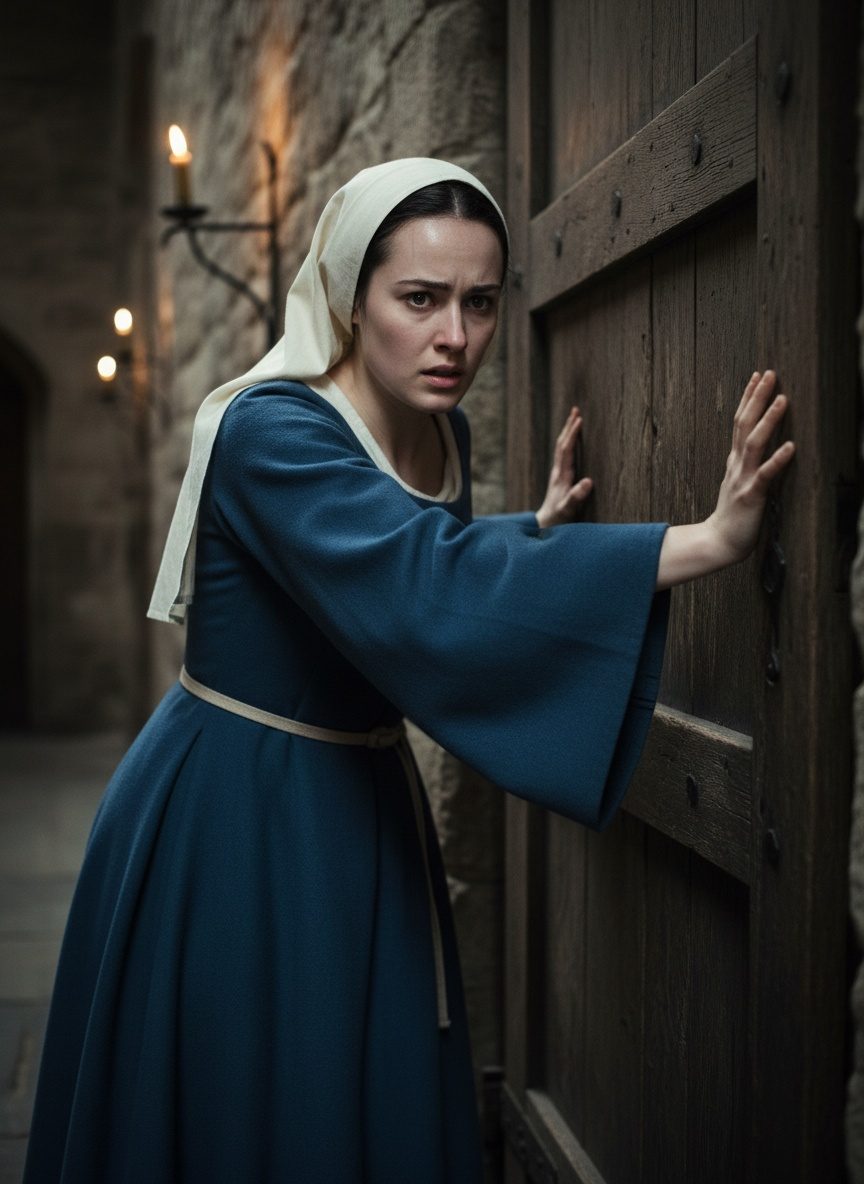
The moment of truth arrived when the sound of approaching feet turned into the unmistakable clatter of hurried advance. James and his court, feeling the urgency of the situation, attempted to secure the door with its sturdy bar. Horror unfolded as they discovered the bar was missing — betrayed by fate or design.
What happened next was a moment of instinct and valor. Catherine, with no time to consider her options, did the unthinkable. In a heroic attempt to stall the intruders, she placed her own arm through the iron loops meant for the absent bar. Her body became a living barrier between safety and calamity. The invading murderers forced their way through. The door gave way, and Catherine’s arm was cruelly crushed, but not her resolve. This act was forever remembered in the annals of Scottish history.
The Tragic Collapse of the King
Inside the royal chambers, chaos reigned supreme as shouts of panic filled the air. King James I, cornered and desperate, sought refuge through the labyrinthine passages of the monastery he had thought a safe retreat. James had been a poet, a musician, and a man of intellect; yet at that moment, even these noble pursuits were far from his mind. He was a king under siege with enemies at his heels.
Despite Catherine’s valiant attempt, Graham and his cohorts burst into the room with rage and steel gleaming in the flickering light. In the ensuing struggle, the King was eventually tracked down to his hiding place — a sewer entry beneath the floorboards. There, assassins struck him down in a ruthless melee, fulfilling their dark mission amidst the damp, fetid shadows of the palace's underbelly.
Read next: The Day a Highland Clan Turned a Massacre Into a Legend
James I's end was brutal, but the significance of his reforms and their implications on the safeguard of the Scottish kingdom lingered in memory. The murder, both treacherous and cataclysmic, foreshadowed an era of complex political shifts — pressure for reformation was harshly met in what was often then a brutal landscape.
The Legacy of a Broken Arm
Catherine Douglas’ storied bravery, and her willingness to substitute her very flesh as a barrier against heavily armed assassins, has not faded into obscurity. Instead, her name was immortalized in legend, passed from generation to generation. In centuries to come, her sacrificial courage would be hailed as a paragon of loyalty and devotion to the crown. She earned the nickname "Kate Barlass," a recognition forever linking her to that stark, gallant night when she stood defiant in the face of imminent doom.
Her act, while it could not avert the tragedy of the king's murder, underscored the profound impact individuals can have in the grand tapestry of history. The strength within the fragility of her broken arm served as a vivid reminder of the human spirit's indomitable resilience. That night etched the narrative of duty beyond mere protocol and deep into the bedrock of moral fortitude.
Catherine's story resonates with us today, not just as a tale of loyalty, but as a discourse on the timeless struggle between human will and dire adversity. It is a challenge passed down the corridors of time, urging modern generations to reflect on the sacrifices of the past. In her resolute defense of her sovereign, in defiance of fate, Catherine Douglas became more than a figure in Scottish history; she embodied an eternal testament to courage that transcends the ages.