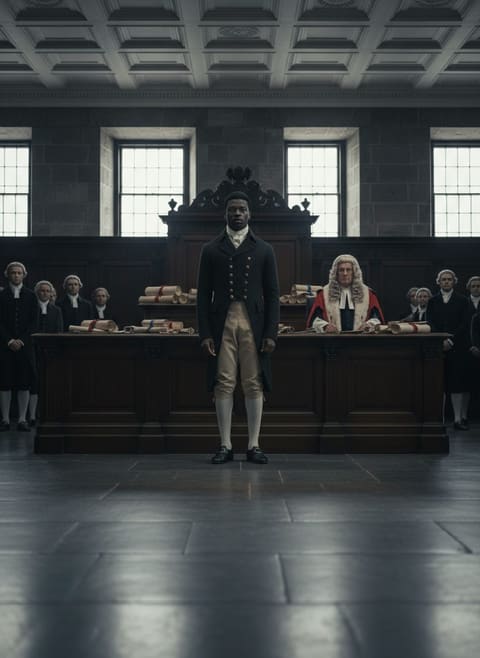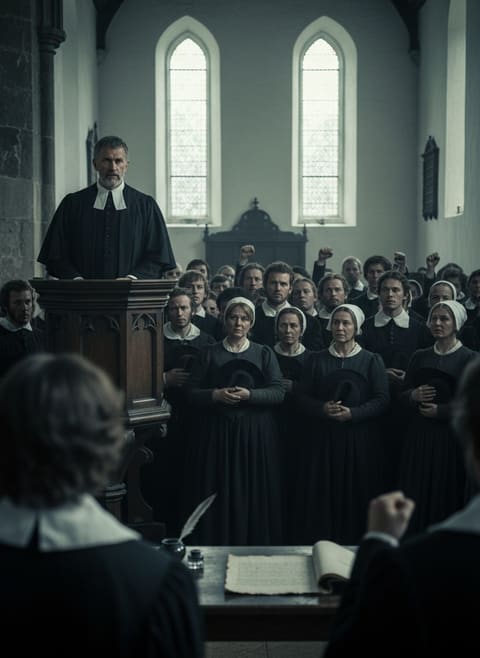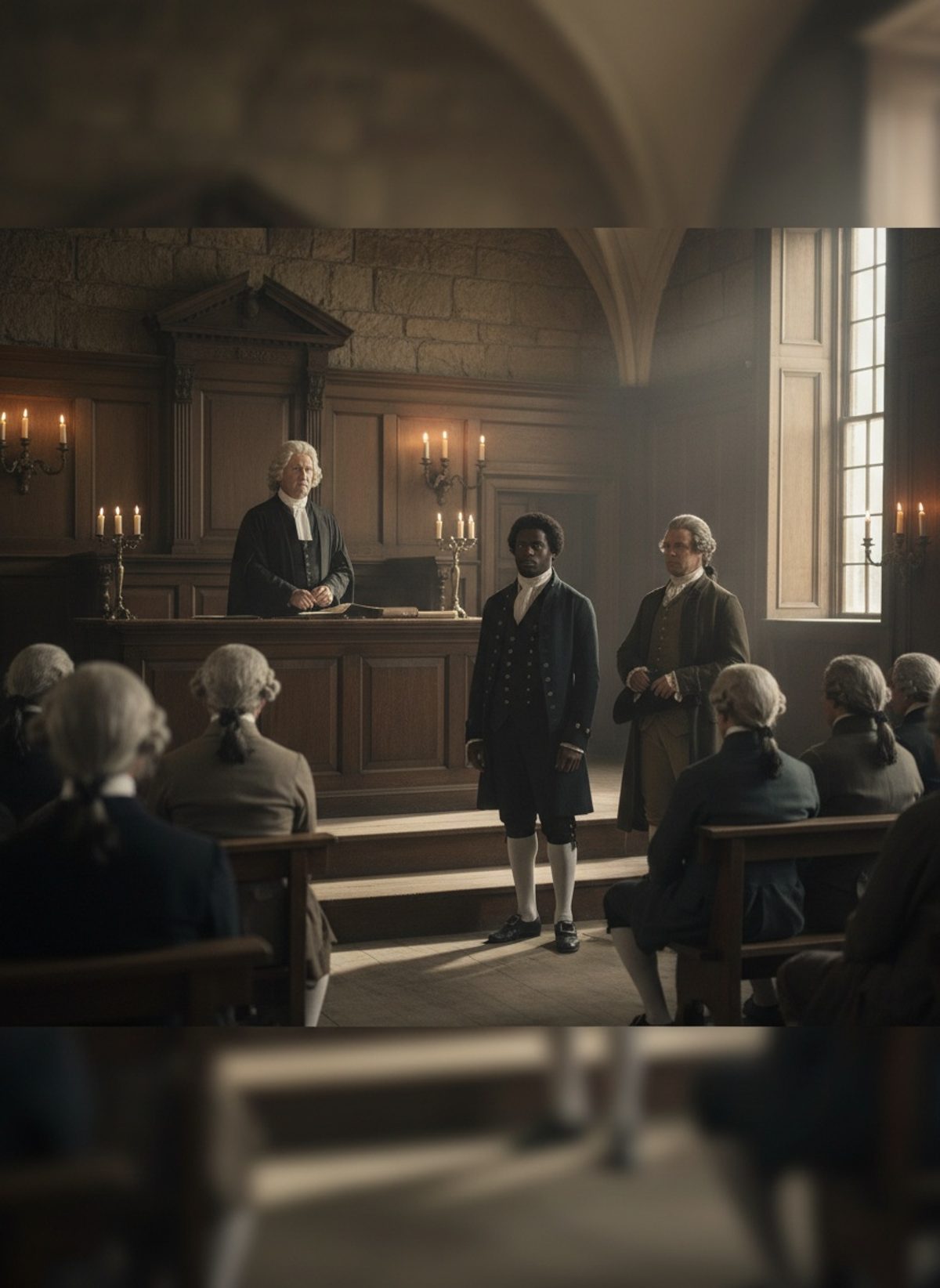
The gavel struck wood with an echo that hung in the air like a ghost refusing to depart. Lord Kames sat on the bench, his eyes locked on the figure standing in defiance before him. Joseph Knight, a man who had tasted both the bitterness of servitude and the sweet air of freedom, stood steadfast. The courtroom was a stage set for a battle of ideals, one that would unravel the very fabric of a society hesitant to acknowledge the truth staring at its face. The moment was fraught with tension, the murmur of onlookers hushed into an expectant silence. In the heart of Edinburgh, 1778, history paused to watch as a nation contemplated its soul.
The Man Who Ran: Joseph Knight's Journey
Joseph Knight wasn’t always a man known to leap into history books. Born in Africa, he was forcibly taken from his homeland and cast into a life of slavery in the sugarcane fields of Jamaica. Like many others, his life was initially marked by the chains of injustice. Purchased by the Scottish plantation owner John Wedderburn, Knight’s life was overturned yet again when he accompanied Wedderburn to Scotland, a land he hoped might harbor a different fate.
Unlike the hardships of Jamaican plantations, Scotland offered Joseph a taste of freedom he had never dared to dream of. Wedderburn, while still his master, granted him privileges unknown in the Caribbean—wages, for instance, and the right to depart his service when he chose. These tasted of freedom, inadvertently kindling a fire within Knight. He learned of the British case of James Somerset, another enslaved man whose legal battle in England had rattled the establishment. Inspired, Joseph resolved to assert his own independence in a court of law.
Determined to test the boundaries of his burgeoning autonomy, Knight fled Wedderburn’s service and sought the recognition of his freedom within the Scottish realm. It was a decision that would ignite legal debates and challenge the very notion of human bondage in a country priding itself on Enlightenment ideals.
Read next: The Clan That Was Declared Outlaw by Name Alone
The Lord on the Bench: Lord Kames and Law in the Enlightenment
Lord Kames, born Henry Home, presided over the court as a man firmly rooted in the ideals of the Scottish Enlightenment. By 1778, his reputation was that of an intellectual luminary cast in the mold of rational progress. He was more than a judge; he was a philosopher, an architect of progressive thought in a world often slow to embrace it.
His courtroom was his canvas, and he wielded the tools of reason and law with precision. The case of Joseph Knight presented him not merely with a question of legality but of morality—a challenge to the soul of Scotland itself. Would Scotland—an ancient land of rocky highlands and enduring traditions—embrace or repudiate the ownership of one human being by another?
The legal repercussions were immense. While English law had yet to fully dismantle the institution of slavery, Scotland’s laws operated in a subtly different framework, one that Lord Kames was ready to exploit for justice. With an audience keenly attuned, Lord Kames listened to the arguments from both sides. Wedderburn claimed proprietary rights over Knight as a piece of property; Knight, meanwhile, claimed nothing less than the rights to his existence.
Moments of Tension: The Courtroom Drama Unfolds
The courtroom was a tableau of human emotion and intellectual rigor. Spectators packed the gallery, their whispers dying down to silent breaths as the case progressed. Legal arguments volleyed back and forth, crafting a dramatic dialogue between entrenched wealth and emergent liberty.
Wedderburn’s counsel insisted upon Knight’s return, citing the legality of ownership upheld in the colonies. Yet every argument built on ancient foundations seemed to wobble under the daylight of Enlightenment thought, which had steadily permeated Scottish society. Kames listened intently, weighing each argument with the quiet patience of a man who knew the gravity of his coming decision.
The crux of the matter lay in simple human terms. Could a 'property' be a person? If Scotland was truly a land that valued freedom, could its soil abide the indignation of slavery?
Four Words That Shook Scotland: The Ruling
The courtroom was tense with anticipation when Lord Kames finally leaned forward to deliver his verdict. The room inhaled as a single entity, eyes fixed on the venerable judge whose thin lips framed the words that would echo through history. "Scotland has no slaves," he pronounced, a decree succinct enough to rival even the most stirring rhetoric of the age.
Read next: The Mountain Hollowed Out to Power a Nation's Lights
With those four words, Joseph Knight walked free. The room exhaled in quiet disbelief, the clarity of the ruling resounding with a simplicity that belied its complexity. Knight’s triumphant exit from the courthouse marked more than personal liberation; it was the dawn of an era where Scotland, at least, rejected the notion of human beings as proprietarial commodities.
This decision resonated beyond the chambers of the court, rippling through Scotland and ultimately influencing the broader British debates on slavery. Lord Kames had spoken not only for Joseph Knight, but for the soul of a nation wrestling with modernity and morality. His verdict didn’t dismantle global slavery, but it unraveled its façade within Scottish borders, setting a precedent and nurturing the seeds of abolitionist thought.
The Ripple Effect of a Simple Decree
The impact of Lord Kames’s ruling extended far beyond Edinburgh’s cobblestones. To the people of Scotland, it became a beacon of moral integrity, a reflection of Enlightenment ideals taking tangible form in the rule of law. In the narrative of human rights, this courtroom drama began writing the chapter of emancipation with an ink of hope and justice.
As a harbinger of change, Joseph Knight’s case marked the beginning of a dialogue that would eventually permeate the British Isles, contributing to the gradual dismantling of legalized slavery. While his victory did not dismantle the entire institution, it undeniably sowed seeds of doubt in the hearts and minds of those who witnessed or heard of it. Lord Kames’s ruling stands not as the final word, but as the opening sentence in Scotland’s rich narrative of freedom.
Tales of Joseph Knight and Lord Kames remain crucial, not just for their historical contributions, but for the questions they continue to pose about justice, morality, and our shared humanity. In a world where liberty’s bounds are often tested, the story of a Scots judge and a runaway man force us to confront our own judgments and the legacy of freedom we leave for generations to come.