He was a man of the cloth, and he had never brandished a weapon. Yet on that fateful night, he stood against armed men with the tenacity of a seasoned warrior.
A Night of Betrayal
The chilly air of March 1566 wrapped its spectral tendrils around Mary Queen of Scots’ Holyrood Palace. Inside, beyond the sturdy stone walls and flickering candlelight, tension simmered like a cauldron on the verge of boiling over. Mary, still new to the precarious role of monarch in a male-dominated realm, faced court intrigue and betrayal—a sinister tide that ebbed and flowed with the same constancy as the churning North Sea. Her secretary, David Rizzio, stood at the epicenter of this latest conspiracy. An Italian, trusted by the queen and resented by many Scottish nobles, Rizzio was the linchpin in a plot that entwined power, jealousy, and vengeance.
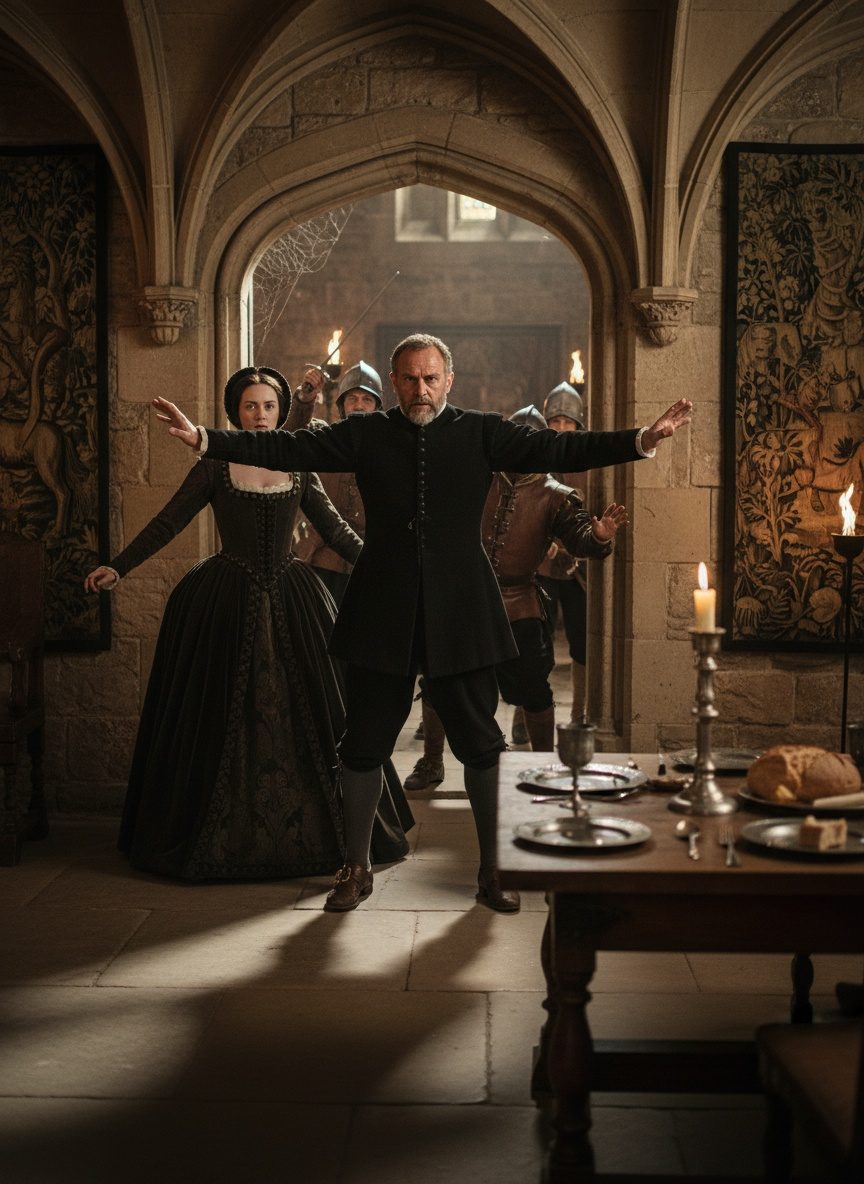
Long shadows stretched across the stone floors as evening cloaked the city. Without warning, those shadows deepened with the presence of armed men. They burst into the queen’s private chambers with a reckless zeal fueled by both ambition and animosity. Their eyes were set on one target: Rizzio. But there, in the path of their ferocious pursuit, stood a man they had not anticipated. His name remains a mystery to many, lost in the annals of tumultuous history, but his act of defiance shone brightly in the darkened room.
This Scots minister, a rival to the reformer John Knox, refused to step aside. His ecclesiastical robes flowed around him like the armor of a righteous guardian as he placed himself bodily between the queen and the marauders. His voice, firm and unwavering, carried the weight of conviction, even as the clamor of weapons clashed around him. Rizzio’s screams echoed like a dirge through the corridors, but the minister remained steadfast, his presence a formidable bulwark against impending violence. It was a night when alliances shifted like sand and courage was tested against the backdrop of treachery.
Read next: The Day a Scots Girl Thrust Her Arm Through a Door to Save a King
The Consequence of Loyalty
The chamber was a heart of chaos as the minister, guided by the dual duties of faith and allegiance, faced down the tempest that sought to rend the evening. The queen, though resilient, found herself ensnared in the intricate web of power plays and rivalries that had plagued her reign. With Rizzio pinned in their sights, the noblemen, driven by a toxic mix of fear, prejudice, and ambition, saw this not just as an assault on a man, but on what they perceived to be a foreign influence on Scottish sovereignty.
The minister's intervention was more than just the reflex of a man protective of his queen and remorseful of Rizzio’s imminent fate. It was a profound stand against a tide of turmoil that sought to drown Scotland in its wake. The queen, beset on all sides by challenges to her authority, found in him a singular moment of unwavering loyalty that illuminated the dimly lit room as if with the unwavering shine of truth. His courage left an indelible mark, though the wheels of fate continued their inexorable turning toward tragedy.
David Rizzio’s cries were ultimately silenced by the brutal steel of betrayal, and the echo of that night reverberated far beyond the walls of Holyrood. Yet the minister’s resistance, although unable to alter the course of events, had rippled through the consciousness of those present, adding a note of pathos to the chaotic symphony in which they all played a part. In shielding the queen and attempting to thwart the attack, he demonstrated that not all conflicts are fought with swords: some are fought with indomitable spirit and unyielding faith.
Wider Impacts of a Small Room
As the dust settled and the repercussions of that evening spread like wildfire, it became clear that the failed protection of Rizzio was as much a turning point for Mary as for her realm. The minister’s brave interposition was a poignant reminder that moments of courage often arise not from the halls of power but from those who, standing against the current, wield their moral authority. In this intricate tapestry of Stuart Scotland, every thread counted, and one man’s sacrifice helped bind the future with a filament of defiance.
The story of the minister's stand is replete with the complexities and contradictions of a world where politics and personal relationships were often indistinguishable. It serves as a reminder of the intricate interplay between those who wield power and those who wield influence. Beneath the surface of recorded history lies a myriad of untold stories, like this, echoing through time. They speak of individuals who, in moments of pivotal significance, chose honor over safety, integrity over fear.
Why does this tale matter today? Because it challenges us to re-evaluate the notion of heroism and leadership. It prompts reflection on the qualities that truly bolster the edifice of history. It endures as a testament to the silent guardians who, in the candlelit shadows of turbulent times, dared to stand firm against the relentless tides of ambition and betrayal.