Slavery has never really existed in Scotland. But one day in 1778, Joseph Knight would cast doubt on that certainty.
Joseph Knight: A Flame of Rebellion in Edinburgh
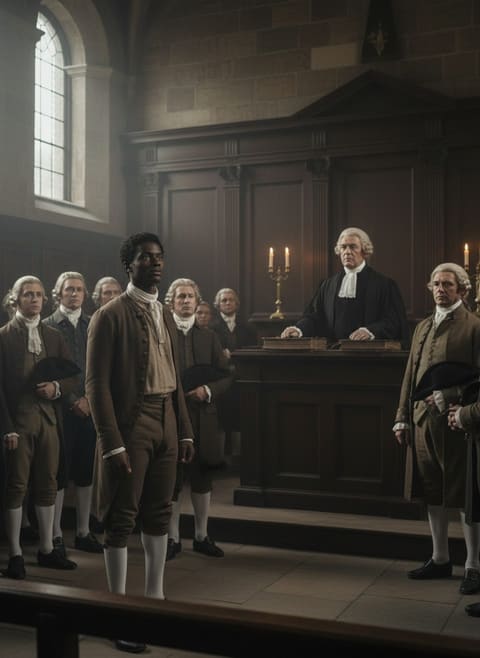
Edinburgh in the late 18th century was a city of intellectual ferment. The Scottish Enlightenment was in full swing, sparking fiery debates in the drawing rooms of New Town and dimly lit taverns of Old Town. Yet amid this intellectual revolution, a different kind of confrontation was brewing—one that would test the nation’s moral compass and legal fabric. Joseph Knight, an African man who had been brought to Scotland as a slave, refused to accept his status and demanded his freedom.
Knight was bound to John Wedderburn, a wealthy plantation owner from the West Indies. Knight’s defiance was more than personal rebellion; it was a public stand against the institution of slavery on Scottish soil. While his master sought to drag him back to servitude, Knight claimed something that in Edinburgh seemed radically new—the right to freedom as a human being.
The Silent Spectators and the Voiceless Outlaws
The courts of Scotland, still echoing with the dialects of Scotland and the vestiges of clannish allegiances, were not accustomed to such battles. Here stood Knight, not merely a man claiming his own liberty but a living, breathing challenge to deeply entrenched social norms. Knight’s remarkable statement resonated through the rights and awakenings of the era, but it wasn’t without peril. Much of society preferred to keep this unsettling conflict at arm’s length, viewing it as an inconvenient undercurrent amidst more genteel discourse of the Enlightenment.
Read next: The Day a Scots Weaver's Son Freed the Kirk From a King
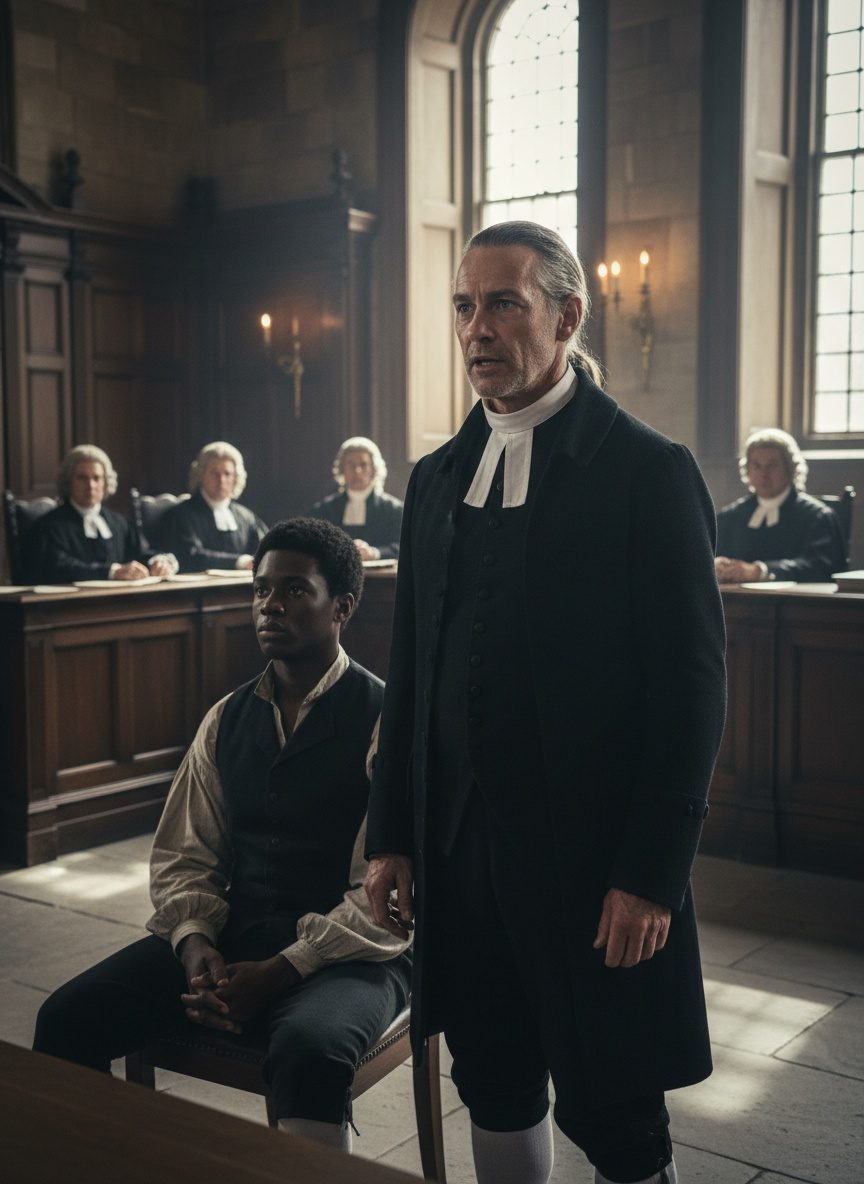
Against that backdrop of calculated silence, one figure emerged—a minister resolute with purpose. His presence transformed the courtroom into a battleground of ideas and morality. As the minister spoke, he verbalized an implicit conviction taking root across Scotland. Here was the argument that no man, no matter the color of his skin or origin, could be owned on this hallowed ground.
Reverberations in Court: The Unbowed Minister
The words of the minister did not just echo in the halls of justice; they pulsed through the very veins of Scottish society. What began as legal proceedings in one of Edinburgh’s esteemed courts transcended into a debate that questioned the moral bedrock of the nation. The minister’s bold proclamation first rang out like a distant bell but soon resonated like thunder across the valleys of Scotland.
The outcome of this legal struggle was more than just court records and legal precedent. It illuminated the pages of Scotland’s complex history with hope and humanity. As the minister passionately articulated the case for Joseph Knight, advocating for an innate human right to liberty, the judiciary was forced to confront its own alignment with moral righteousness or the sin of complacency.
Read next: The Day a Highland Clan Turned a Massacre Into a Legend
The Unforeseen Effects: A Scotland Awakened
The court's ultimate decision echoed centuries forward: Joseph Knight was declared free. It was a ruling that didn’t just redefine the lives of men like Knight but reshaped an ideological landscape. The implications were staggering; the ruling challenged the tacit acceptance of slavery and planted the seed of abolitionist sentiment across the entire nation.
Knight’s stand, enfolded with the courage of a minister, became more than a legal precedent. It sketched a poignant moral line that would be examined, redrawn, and used as a lens through which Scotland would examine its policies on slavery, justice, and human decorum. Scotland, long a nation priding itself on its integrity and passion, was permanently transformed by this confrontation from silence into dialogue.
In a time when many dared not question the established norms, the case of Joseph Knight and the moral bravery of a singular minister revealed a profound truth: that humanity's march toward justice cannot be silenced by walls of tradition. This episode from the annals of Edinburgh didn't just alter one man's fate—it unshackled a corner of the world to a new way of thinking. And if nothing else, history shows us this: that justice, when pursued with conviction, can ripple through time in ways unimaginable.