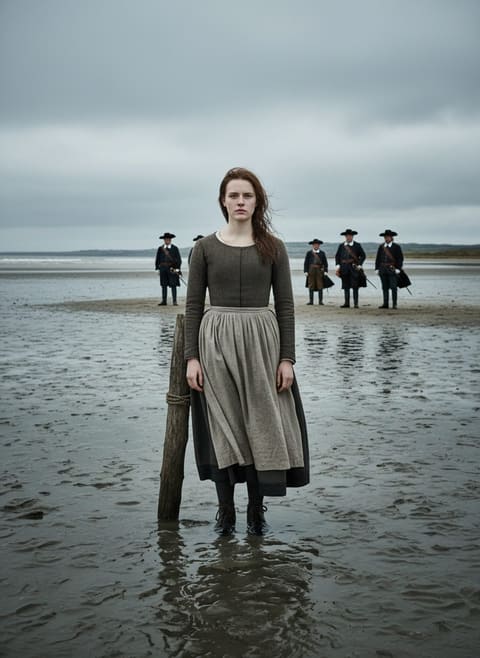
He held no noble title. Yet, he wielded the power to defy a king.
The Unyielding Defiance at St Giles' Cathedral
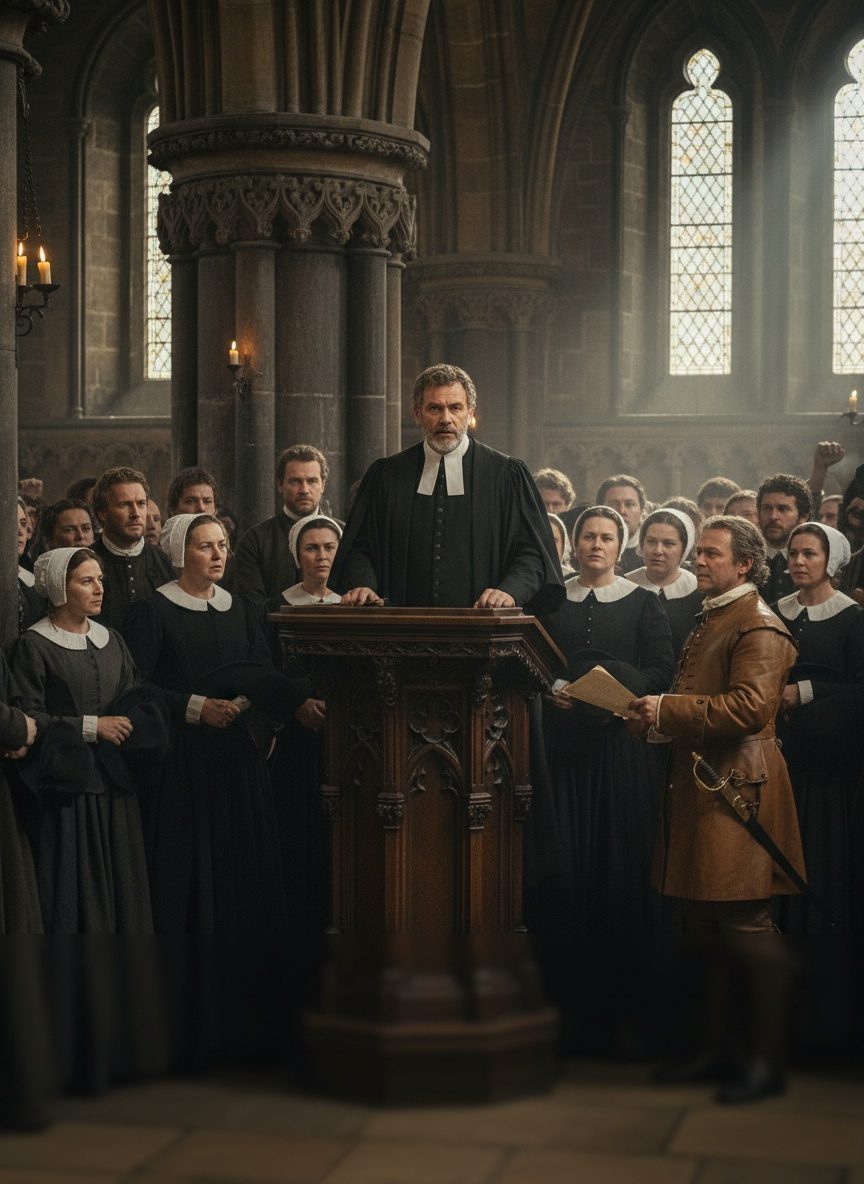
On a summer morning in 1637, the air within Edinburgh's St Giles' Cathedral was thick with expectation. This hallowed space, a cherished seat of worship for many fervent Scots, was about to become the stage for an explosive confrontation. The congregation gathered, some with anxious whispers, others with resolute silence. They had been summoned to witness the implementation of a new form of religious practice—one that did not reflect their rich traditions or beliefs, but instead, echoed the distant walls of the English court.
King Charles I, away in England, had decreed that all churches in Scotland were to adopt the newly fashioned prayer book, an attempt to unify worship under his singular vision. It was a vision viewed by many Scots as foreign and intrusive. Yet, on that day, one man, the minister at St Giles, stood against this royal command. His refusal sparked an uproar that echoed beyond the walls of the cathedral and into the heart of a nation.
The Minister Who Would Not Bend
Ordained as a keeper of faith, the minister found himself confronting a royal decree, his pulpit transformed into a battlefield not of swords, but of principles. His defiance was not born from a desire for personal glory, nor from mere rebellion. It was rooted in a deep-seated loyalty to his congregation and the distinct spiritual practices that had long unified them. Emblematically, he chose silence over the alien words of the prayer book, clasping the expectations and traditions of his people closer than any parchment declaring royal edicts.
Read next: The Day a Scots Weaver's Son Freed the Kirk From a King
For these parishioners, the sermon that was not spoken echoed as loudly as any proclamation. In refusing to utter the prayers imposed by the crown, the minister invited the wrath of authority upon himself, showing a backbone steeled more by conviction than by clerical duty. This act of noncompliance resonated with the Scots, a proud populace fiercely protective of their religious autonomy, who were no strangers to asserting themselves against the tides of externally imposed reform.
A Congregation’s Ripple of Revolt
As tension filled St Giles, a single act of protest quickly unraveled into a collective outcry. It is said that even amidst these charged moments, a stool was tossed by a congregant in disdain, a small but potent symbol of discontent that mirrored the thunderous sentiments within the hearts of those present. It was an act that brought the rising anger of the congregation into stark relief against the chilled imposition of royal demand.
Read next: The Day a Highland Clan Turned a Massacre Into a Legend
Outside the cathedral, the commotion transformed Edinburgh's streets into a chaotic symphony of dissent. News of the incident spread swiftly, igniting a flame of resistance that was not easily quelled. The defiance at St Giles was more than the story of a single church’s rebellion; it became a signatory event racing across the Scottish lands, repeatedly retold as a testament to the undeterred spirit of the Scots. For in this struggle against the prayer book, they found not just opposition to a king's decree, but a reaffirmation of their cultural identity and religious legacy.
The Roads Paved by Rebellion
The events at St Giles' were not a mere ripple in time but rather a catalyst, setting the stage for an era marked by turbulent religious and political shifts. This defiance came to symbolize resistance to tyranny, echoing far beyond the borders of Scotland and feeding into the broader context of the British Isles in turmoil—fostering tensions that would eventually contribute to the larger tapestry of the Wars of the Three Kingdoms.
While the earthly battle over liturgy seemed a modest quibble in the grand scope of empires, its implications were profound. It underscored the strength of communal resolve and the dramatic lengths to which individuals would go to protect their way of life from imposition, however mighty the source. At a moment when the authoritative machinery of monarchy sought uniformity above all, this Scottish minister and his congregation, in holding fast to a prayerless stand, reminded the world of the inalienable right to self-determination. Through their defiance, they left not only a mark on Scottish history but also illuminated the eternal struggle for religious freedom.