August 1645. The narrow, cobbled streets of Edinburgh lay silent, their usual tumult stolen away by a shadow that had slipped into the city unbidden. The scent of decay mingled with the crisp, choking bite of summer air tinged with mourning.
The Silent Streets of Death
In 1645, a reaper wore mortal guise, striking fear into the hearts of Edinburgh’s citizens. The plague, ruthless and indiscriminate, spread its rancorous fingers through the city. For every soul taken, another fled. The infectious malaise left the grand capital of Scotland hollowed and desolate. The St. Giles’ Cathedral bells, once pealing with the vibrance of life, fell mute as ministers and clerics, save one, left their posts, driven to refuge by the specter of the Black Death.
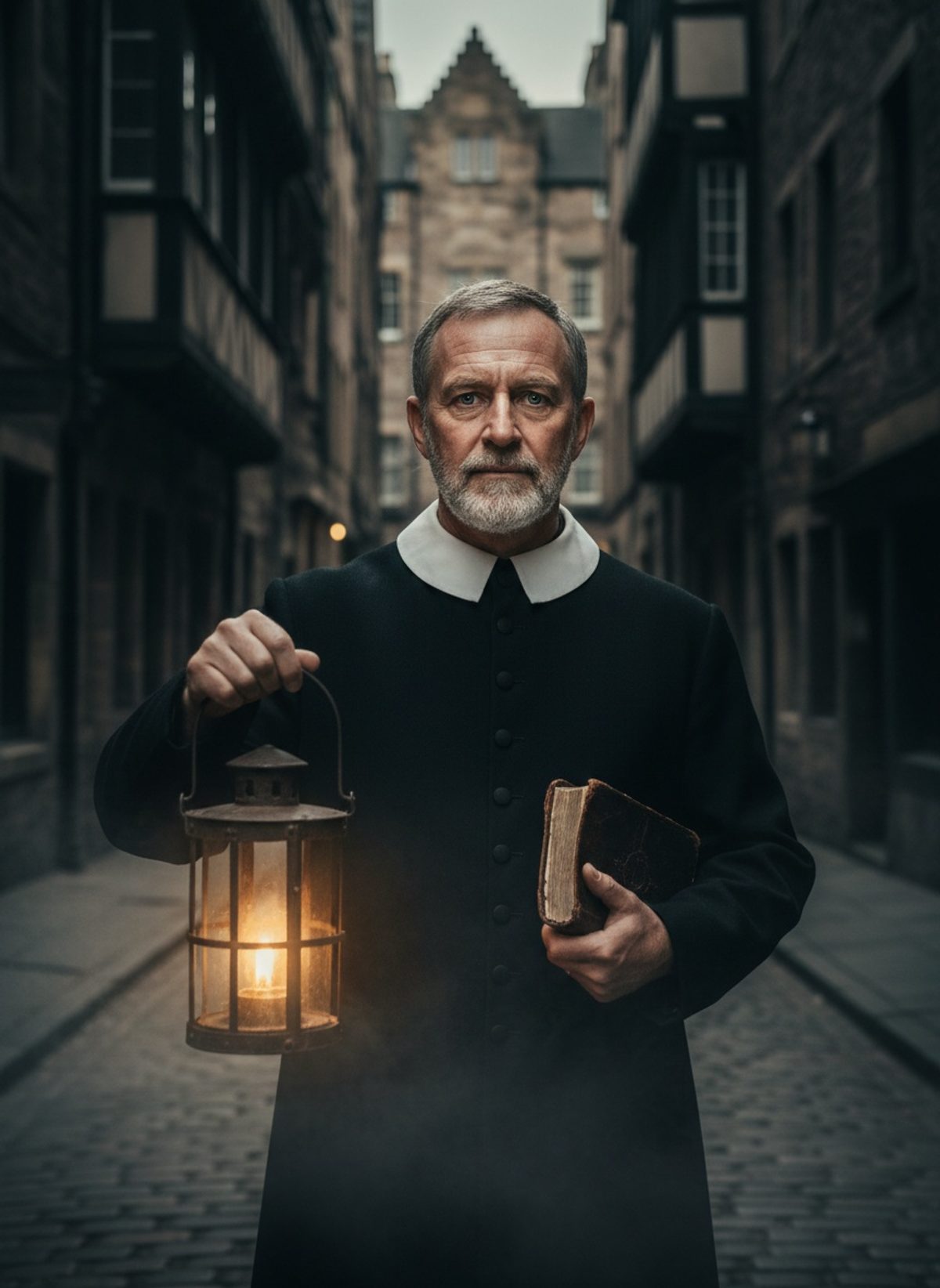
Amongst the darkened wynds and closes of Edinburgh, John Row alone remained. The minister, bound not by chains of fear but by ropes of faith, chose to anchor himself amidst the diseased. Where others saw doom, Row saw duty. His presence amongst the dying was as unwavering as the grey stone that encased the city.
A Daring Devotion: Walking With the Dying
Clad in his somber ministerial garb, Row moved silently through the deserted veins of the city. His steps were not rushed, for his mission was not to escape, but to bear witness. His congregation now comprised the sick and dying, their dwindling breaths a lament to heaven. The whispers of their suffering did not falter beneath his resolute care. Row carried with him no saints, but the simple assurances of prayer and presence.
Read next: The Day a Scots Town Chose Its Own Name for a King
He stood vigil over beds where once vibrant lives ebbed away. Here, in these last moments, John Row brought more than spiritual comfort; he was the harbinger of hope in a hopeless time. While many kept their distance, fearing the insidious threat of disease, Row leaned in closer, his voice a solitary light against the encroaching night.
The Minister Who Would Not Flee
Outside of Edinburgh’s confines, the countryside perhaps offered solace and refuge safe from the plague’s grasp. Yet Row chose the cross of caring over comfortable safety. The minister put one foot in front of the other, often single-handedly, to lay the dead to rest when no hands, friend or kin, remained untainted to do so.
Each new grave marked not just an end, but a testament to proximity. Broadsheets, penned and printed in cautious remoteness, whispered of his commitment. Row's name became synonymous with steadfast courage. No one could say why he alone stayed—perhaps faith, perhaps foolhardiness, or maybe a deep-seated resolve that every lost life deserved an ardent send-off.
Prayers Over Empty Spaces
How does one measure the weight of prayers murmured into emptiness? In the quiet hushed scenes Row inhabited, he filled the silence with supplication. Each beseeched word sought mercy as he performed the roles of consoler, compatriot, and custodian of lost souls and forgotten faces. As Edinburgh groaned beneath the weight of its illness, Row became a beacon. Small gatherings of hopefuls dared the streets to join him in makeshift services, whispering their fears and tribulations to a seemingly indifferent sky.
The minster's commitment lit a flicker of resilience amongst those who endured, showing that while flesh may falter, spirit held fast. In death's very shadow, kindled connections pulsed between survivors. Row offered solidarity in divine and earthly forms, walking through empty squares with prayers like banners unfurled above the heads of the doomed.
An Act of Witness—we learn from endurance
When the plague finally loosened its grip, leaving as swiftly as it had come, life hesitantly resumed. Alone, John Row's name rang with a legend of unwavering resolve. His actions spoke a language deeper than diction could catch. Why did he remain when others fled? It’s a question that persists through centuries, asking what we, too, might offer when faced with adversity.
Row's vigil in Edinburgh's darkest hour imparts more than tribute; it beckons reflection on how individual actions ripple into collective memory. His choice was less about confronting death and more about choosing life, affirming every fleeting second’s worth amidst the specter of annihilation. The tale is told not merely of survival, but of a commitment to humanity—with its gasps, beliefs, and beating hearts—even when the future went unseen.