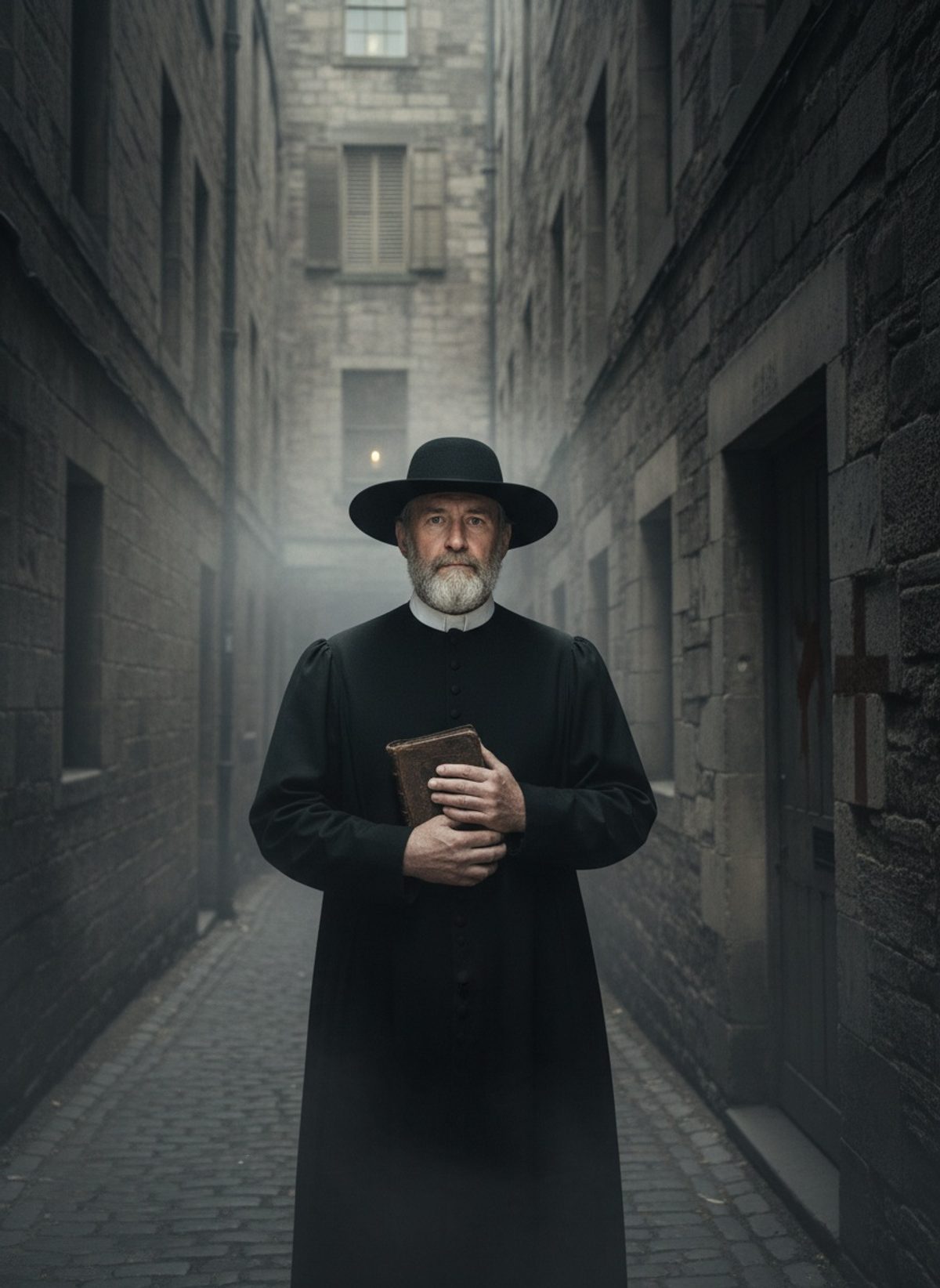
The morning fog lay thick over the cobbled streets of Edinburgh, pregnant with the chill damp of a Scottish summer. Alleyways that once brimmed with the bustling cries of merchants and the clip-clop of horses' hooves now sat eerily silent, as if holding their breath. Doors remained shut, windows barred, creating an unsettling quiet that stretched across the city's quarters. In a city where life had once spilled out of taverns and echoed in markets, absence now echoed instead. It was the summer of 1645, and the bubonic plague had emptied Edinburgh of all but the most forsaken souls.
Into this grim tableau stepped a lone figure, his steps purposeful yet contemplative, as he walked through the gates of the deserted city. Alexander Colville was a minister, not known for anything extraordinary before this day. And yet, in a time when others had fled, leaving the sick to languish in their locked homes, Colville walked back in. It was not for glory, nor madness, but a simple act of deep, unwavering empathy—a salve for his own soul, bound to suffer with those it shepherded.
Plague had long been a specter that haunted Europe, but its visitations to Edinburgh were particularly feared. The city, with its dense population and narrow streets, was a prime environment for such scourges. When the disease arrived that summer, it was a swift, invisible hand that tapped one neighbor after another, spiriting them away with fever and blackened swellings. It wasn't long before houses became crypts, and streets turned to morose thoroughfares for death carts. Even the clergy, God's own messengers, barred themselves from being part of this congregation of misery. They left for safer pastures, carrying with them the comfort that prayer typically brought in times of despair.
However, not everyone took fear for a master. Robert Rollock's succession had brought John Adamson to the city's ecclesiastical forefront, yet even he could not face the overwhelming chill of plague alone. Instead, it was Colville, perhaps the most unlikely of saviors, who resolved to do what others would not. With the steadfast gait of a man reconciled to his fate, he parted the silence of the streets with his solitary footsteps, a walking testimony to quiet courage.
Read next: The Day a Scots Girl Walked Into a Dungeon and Saved a King
The day Colville entered the city, the air was charged not with the scent of life but decay—a testament to the carnage wrought by the disease. He did not wear the long beaked masks filled with herbs like the plague doctors, nor did he carry the antiseptic staff to prod at the afflicted. No, Colville went armed only with his faith and a heart fiercely unwilling to abandon its flock. In homes where throats rasped dry and skin burned with fever, his presence was like an echo of grace. The dying, neglected and isolated in their suffering, found in him the compassion that had all but disappeared.
As he moved from house to house, beyond each door lay a story erased by illness, a life extinguished under the weight of a fate deemed too terrible to fight alone. It was said that Colville’s whispers of prayer and comfort stirred those too weak to rise, giving them a final respite, a moment of shared humanity amidst devastation. His mission was as gentle as it was stoic; he listened, he prayed, he held the hands of the infected, unflinching in his mission to ensure that no one faced the end in solitude.
Colville understood something profound—that science at the time could not conquer death, but kindness could certainly ease its passage. While Edinburgh itself became a macabre tapestry of tales untold and suffers unacknowledged, this man's chronicles of compassion remain a quiet legacy. His actions ask us to ponder: what governs human courage? Is it the stark recognition of our own mortality or the indefatigable urge to stretch our spirits across the void that fear creates?
In the annals of history, where kings and conquerors stake their claims in resplendent deeds, Colville's story is humble—a singular man facing nothing less than the end of days. It is precisely this humility, this forsaking of self for the welfare of others, that renders Alexander Colville’s walk through the plague-ridden streets of Edinburgh a stirring narrative not of grandeur, but of profound humanity. His quiet service during those tumultuous days in 1645 does not merely fill a gap left out of textbooks but instead draws us into reflection of our shared vulnerability and capacity for compassion. It whispers a timeless truth; that when fear walks amongst us, it is courage that steps forward, resolute, into the void.