1606. A chill wind swept through the cobbled streets of Edinburgh, bringing with it the whispered promises of defiance and the stifling tension of an impending clash.
The Summons to London
The kingdom was still settling into the complexities of a union under King James VI of Scotland, now also James I of England. It was a time when tensions between the crown and the church were not just departmental squabbles; they were questions of authority that bore the weight of eternity. The king believed in the divine right of kings, an idea that placed his authority directly ordained by God. Yet, there were those like Andrew Melville who held that spiritual authority could never be subject to earthly power.
Melville had long been a thorn in the side of royal aspirations for a compliant church. He was fierce and unwavering in his insistence on maintaining the integrity of the Presbyterian kirk against all attempts to impose episcopal governance. In 1606, King James summoned six of Scotland's most obstinate ministers to London. It was a move calculated to suppress their dissent and enforce conformity.
The men were brought not just to discuss ecclesiastical matters, but to be instructed in the ways of submission. For most, it was a foregone conclusion. The kingdom's might was vast, and the king's anger fearsome. Yet, amidst the looming threat, it was Andrew Melville, a figure stout in both body and purpose, who became the embodiment of defiance. He understood that to submit was not just a personal betrayal but an abandonment of the church itself.
Read next: The Day a Scots Weaver's Son Freed the Kirk From a King
The journey to London was both physically long and mentally exhausting. Moving from the comfort of his native land to the foreign and imposing environs of the English court, Melville and his fellow ministers were under constant scrutiny. The stakes were high, with the king's court eager to extract promises of obedience. Upon arrival, five of the ministers buckled under the formidable pressure. They acceded, each quiet nod another link in the shackles the king hoped to place around the Scottish Church. But Melville was of different mettle.
A Stand Unbowed
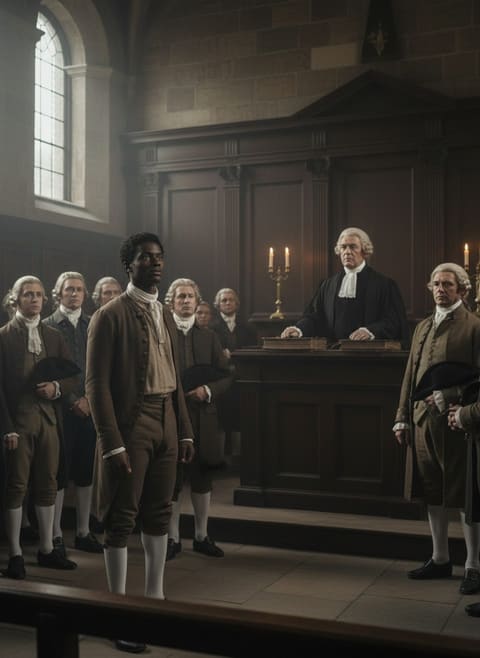
It was within the halls of Whitehall where Andrew Melville faced the royal tribunal, a ceaseless procession of power and grandeur intended to inspire awe—and fear. Yet, as the proceedings unfolded, Melville's steps grew steadier, his voice more resolute. The room swirled with the whispers of political machinations, the weight of imperial ambition tightening like a noose. But in Melville's heart lay a certainty that no king's decree could sever.
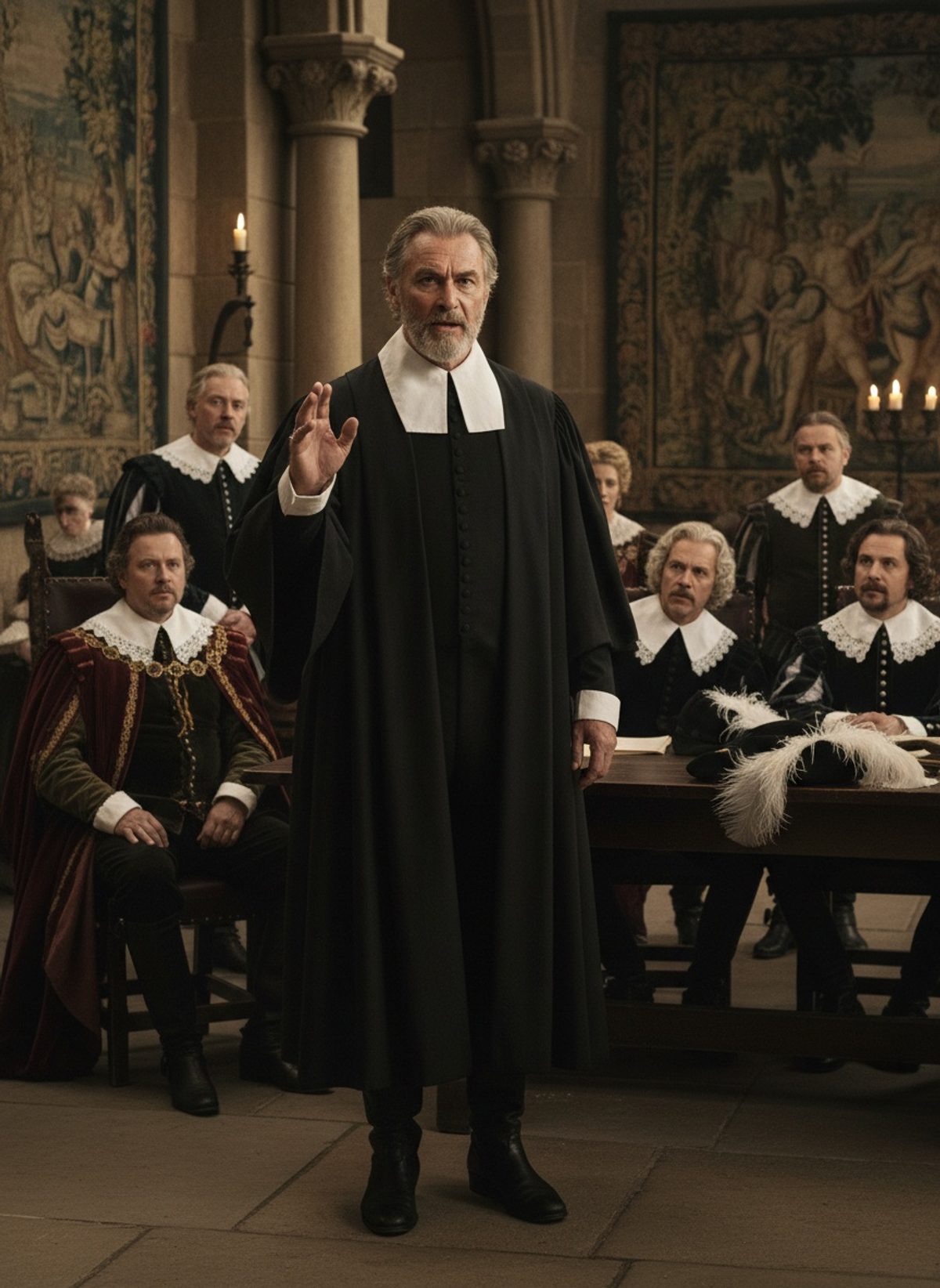
When at last it came time to address the bishops, representatives of the king's will over ecclesiastical affairs, Melville stepped forward, his eyes alight with conviction. In measured Latin—a language of both legality and sacred tradition—he delivered a cutting denunciation of their sycophancy. He declared them mere pretenders to God's sovereignty, relegating them to the status of "God's silly vassals".
Here was a moment that would echo through tales of defiance for years to come, an assertion that chilled the marrow of even the most staunch of the king's supporters. Melville spoke not just for himself but for a kirk untethered from the gilded chains of kingship—spiritual independence given voice in Latin eloquence.
No show of authority nor promise of consequence would dissuade him. The air hung thick with the silence of a court taken aback by such audacity. For this was not only an act of theological courage but a political insubordination of the highest order. It was, in essence, a tearing of the veil that sought to make heaven's authority beholden to a throne earthly and temporal.
Read next: The Day a Highland Clan Turned a Massacre Into a Legend
The Price of Resistance
The consequences were, as foreseen, severe. Unmoved by the weight of his confession, the court responded with the only language it knew—punitive containment. Andrew Melville was dispatched to the Tower of London, its cold cement and bars a stark counter to his spirited discourse. There he languished, confined not by stone and mortar but by a kingdom fearful of his fervor.
Imprisonment for Melville was not the hollow victory his captors intended. Instead, it was a testament to his resolve and his willingness to pay the price for truth unyielded. This very act of rebellion, standing staunch against the imposition of tyranny clothed in clerical robes, became a torch passed down through generations. It illuminated the path for those committed to a church governed first by its spiritual conscience, unhindered by the crown's intrusion.
The service of those like Melville who clung stubbornly to their conscience, sacrificing comfort and safety for principle, became a focal point in the annals of Scottish church history. His defiance echoed down corridors of time, a living challenge to any power that sought dominance over the soul’s freedom.
Andrew Melville's stand forms a foundational chapter in the story of presbyterian autonomy, a clarion call persisting beyond the turmoil of his age. In his solemn persistence, Melville encapsulated a universal truth: that the soul's allegiance lies not with earthly power but with immutable principle. His legacy endured, not confined by cell walls but liberating the spirit, ensuring that convictions spoken with courage would resonate through eternity.