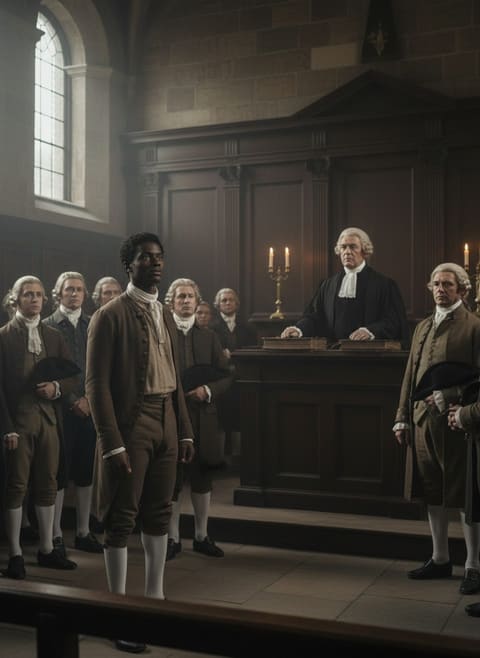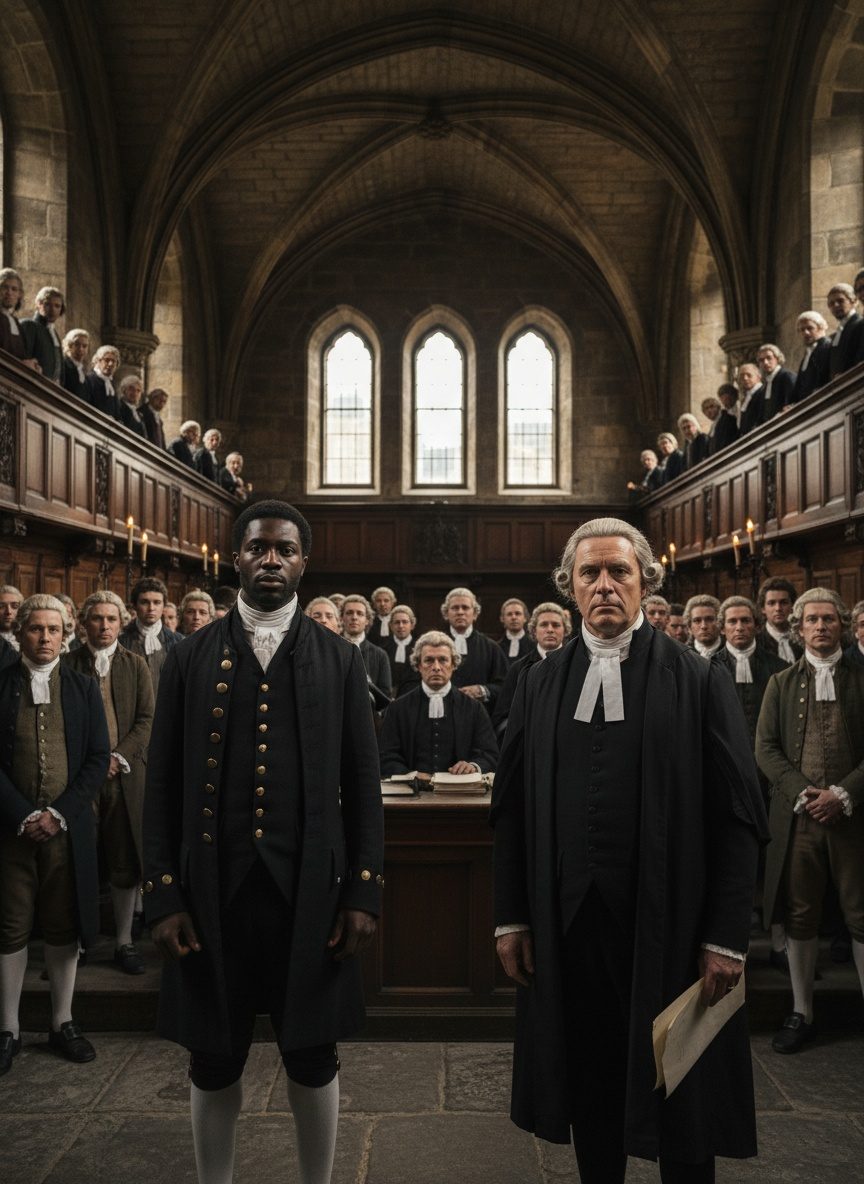
He was simply a man seeking freedom. His journey took him into the halls of Scotland’s highest court.
The Journey Across Oceans
Joseph Knight was not a native of Scotland; he began his life journey under Caribbean skies. Born in Jamaica, Knight's early years were marred by the human bondage of enslavement, a chapter written far too often in 18th century histories. Torn from his homeland and transported across the Atlantic, Knight's destination was a Scottish plantation in the West Indies, an echo of colonial expansion.
In 1769, Knight's master, a wealthy merchant named John Wedderburn, brought him to Scotland. The move was slightly unusual for the time, as the practice of holding slaves on British soil was met with an evolving moral consciousness, if not outright legality. For Knight, this voyage carried more consequence than just a change of climate — it offered a glimmer of hope. For the ground beneath his feet, Scottish soil, carried the promise of freedom through the Letter of Slavery, a legal understanding that resisted the perpetual bondage institution.
The Strains of Injustice
Knight’s life in Scotland did not mirror the emancipation he had longed for. Wedderburn maintained his dominance, asserting his ownership over Knight and demanding service as he would from any chattel. But Knight, emboldened by the whispers of liberty circulating through the Scottish Enlightenment, began to question the legitimacy of his enslavement.
Read next: The Day a Scots Weaver's Son Freed the Kirk From a King
The air at that time was thick with ideas of freedom, equality, and the rights of man, championed by thinkers like David Hume and Adam Smith. Though not philosophers themselves, common men like Knight were starting to view these Enlightenment ideals less as lofty abstractions and more as concrete entitlements. With audacity and desperation, Knight seized the moment and fled Wedderburn’s house, seeking employment and a life of his own beyond the immediate reach of the man who claimed to own him.
The Minister’s Moral Stand
While society debated the morality of slavery, one voice rose above the rest to defend Knight. It was the voice of a clergyman, a Scots minister whose name is lost to history, yet whose actions echo through time. This minister saw not a runaway slave, but a man asserting his dignity. The minister's congregation had been a burgeoning theatre of emerging human rights ideas, and in Knight’s plight, he found an embodiment of those principles. A sanctuary was provided, both spiritual and material, that offered moral clarity and kindness in equal measure.
This minister was not alone. The Society for the Abolition of the African Slave Trade had formed in 1778, only six years prior to Knight's escape, as an outcome of growing societal outrage against the slave trade — a sentiment that fed into the proceedings of Knight's subsequent legal battle. With newfound allies, Knight's claim stirred the communal conscience as his case unfolded in the Edinburgh Tribunal, formally known as the Court of Session.
The Courtroom Drama
As the case commenced in 1778, the courtroom in Edinburgh became a crucible of debate that extended beyond typical legal argumentation; it was a clash between differing ideologies of human worth and liberty. Knight’s legal claim was revolutionary. He asserted that no man on Scottish soil could be deemed property. The minister's testimony, along with the support from abolitionist sympathizers, pushed the case into the public realm and ignited a spirited defense.
Read next: The Day a Highland Clan Turned a Massacre Into a Legend
Representing Knight was his own indomitable spirit and the undeniable force of a moral thunderstorm gathering in public opinion. Against him stood Wedderburn and the prevailing economic argument defending slavery as an inextricable part of prosperity. But Knight’s opponents faced an unyielding reality: the tide of history was turning. Scotland was poised on the brink of a legal revolution.
The Victory That Echoed
The decision of the Court of Session transformed Joseph Knight’s story into a landmark moment. When the court ruled in his favor, it was more than a personal vindication — it was a sweeping statement echoed in the words that declared, "the state of slavery is not recognized by the laws of this kingdom." Knight was officially free, a man and a citizen with rights, void of the chains that had been placed upon him both in body and in shackle of legality.
This historic judgment rippled through Scotland, sending waves into Britain’s legal system and beyond. It would not be long before other nations would follow suit, each inspired by the courage of individuals like Knight and the extraordinary advocates who believed in them. The case became a cornerstone in the abolitionist movement, proving that laws in Europe could be challenged and changed altogether.
Joseph Knight's journey was one marked by desperation and hope, ignited by moral clarity and the courage of a single voice that dared to challenge the status quo. It reminds us of the power of conviction in the face of overwhelming adversity. This tale, rife with struggle and eventual triumph, encourages contemplation on the role that societies and individuals play in the arc of justice. It is a testament to the humanity that prevails when one dares to stand for what is right, no matter the personal cost. What was once just a courtroom in Edinburgh became the cradle of a new dawn for freedom and the inherent dignity of all men.