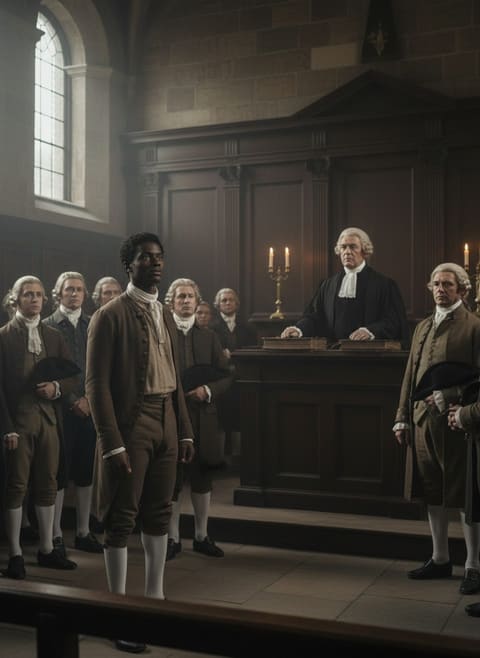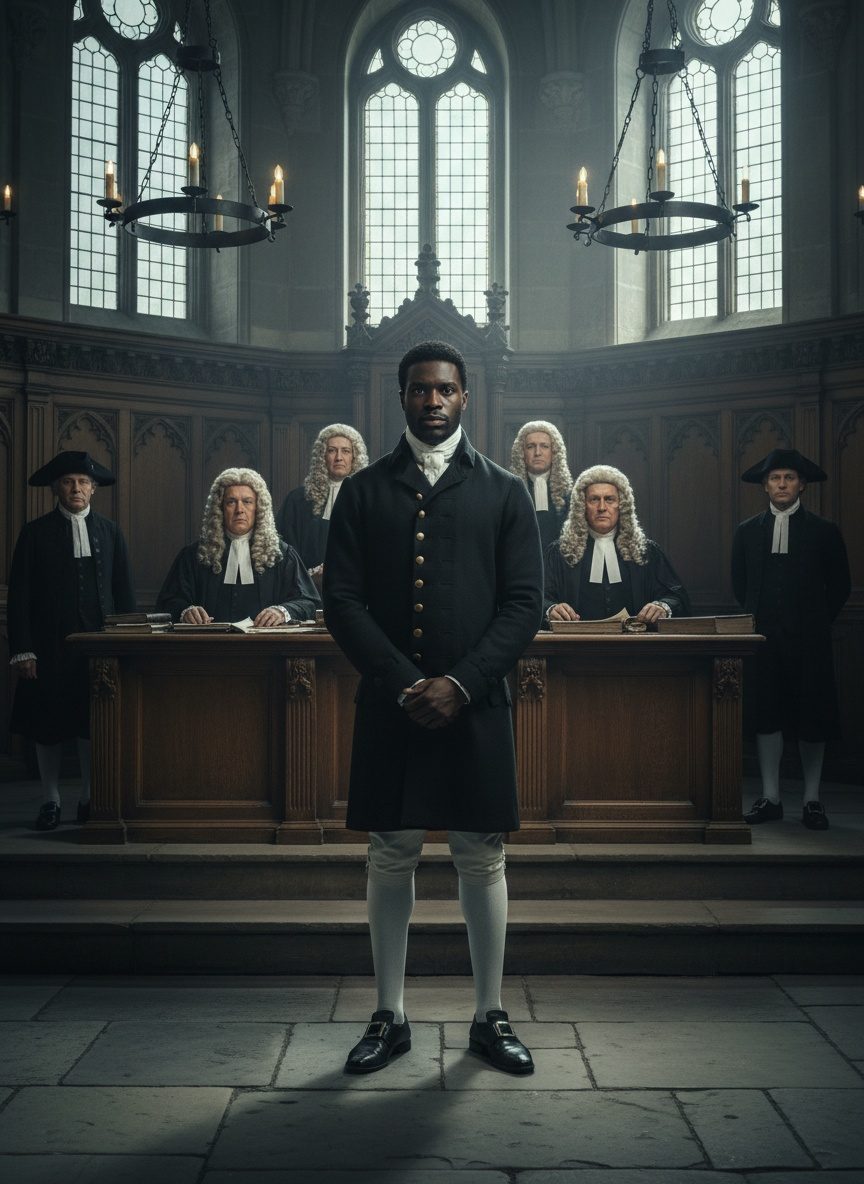
The morning air in Edinburgh, in the year 1778, was crisp and brimming with the promise of change. The stone streets echoed with the determined footsteps of a city slowly awakening to the day's responsibilities, underneath a sky liberally scattered with low-hanging clouds that perfectly matched the granite buildings below. It's not an uncommon morning in Scotland's historic capital, but within the somber walls of the Court of Session, something unprecedented was set to unravel that would leave its indelible mark on history.
Here, where legal judgments were as steadfast as the ancient stones, a young Black man named Joseph Knight was about to challenge the status quo. Knight had lived under the shadow of slavery, drawn from the Caribbean to this land of lochs and legends. He was brought to this northern enclave by John Wedderburn, a plantation owner who had amassed wealth from the sugar fields of Jamaica and now brought his servant home with him. But Joseph Knight was no longer content to be a possession, a shadow of a man. In this court, he sought something as bold as it was simple — freedom.
As the gavel called for order, a hush descended over the chamber, mingling with the rare shafts of sunlight that pierced through the clouded sky and slipped into the courtroom. It was a typical Georgian-era setting, with wigs and robes marking hierarchies that seemed as immutable as the laws of nature themselves. Yet, it's against this very backdrop of formality that Knight's audacious plea unfurled. It was not just a quest for personal liberation; it was a confrontation with the very ideas that stitched the fabric of British society.
To understand the gravity of Knight's defiance, consider that slavery was a concept as deeply woven into the 18th-century British psyche as the tartan patterns known the world over. The colonies thrived on the backs of enslaved laborers, and the wealth that flowed like the river Thames itself was entrenched in the transatlantic slave trade. Yet here, in the misty realms of Scotland, Knight's case was about to challenge this long-standing injustice.
Read next: The Day a Scots Weaver's Son Freed the Kirk From a King
The court session proceeded with an air of both curiosity and resistance. No British court had ventured into such a judgment before, particularly not on Scottish soil. The atmosphere was electric with expectation and doubt. Knight, somewhat emboldened yet mindful of the stakes, explained that personal liberty was a natural right, a radical idea that was being borne across the Atlantic in the burgeoning United States and something the Enlightenment philosophers adored and promulgated.
Joseph Knight's petition was meticulously prepared, presenting not just a personal appeal but also a reflection on the broader ethical tumult that was beginning to unfurl across the British Empire. In riveting detail, his counsel argued that under the legal principles upheld in Scotland, there could be no place for human bondage. The laws of man here, they posited, should adhere to the higher moral laws purported by Christian doctrine which decried such oppression.
This case leaned heavily on a precedent set south of the border, recalling the landmark ruling in England with Somerset v. Stewart in 1772, which had similarly confronted the demonic institution of slavery. However, the Scottish court faced its own unique legal and moral questions, ones that were tangled with the sinews of sovereignty and Enlightenment ideals. In a nation where no laws explicitly addressed slavery, was it permissible to consider personal liberty as absolute and irrevocable?
Amid these legal havens, the ministers of justice were swayed not simply by the legal echelons but by an unyielding sentimentality connected to morality and human rights making their own quiet yet forceful appeal. Soon, the judgment echoed through the hall like the reverberations of a distant storm finally breaking overhead. The ruling was clear: Joseph Knight had won his freedom. Slavery, it was declared, had no place in Scots law. The idea that one man could own another found itself homeless in this land.
Read next: The Day a Highland Clan Turned a Massacre Into a Legend
The implications of this decision cascaded through the social and moral structures like a mountain torrent, reshaping landscapes far and wide. In Britain's jigsaw of internal contradictions regarding freedom and oppression, here was a piece overtly asserting that slavery was not a natural status, but a socially and legally constructed one, without the philosophical or ethical foundations to defend it against the Scottish ethos of liberty and justice.
The clamor of approval outside those court doors was palpable. The news of Knight's emancipation spread like wildfire, challenging plantation owners and renewing the spirits of those who had long advocated against the tyranny of enslavement. It was a quiet revolution, perhaps one of whispers and gentle nods on the streets of Edinburgh, but a revolution nonetheless that would ripple outward in ways its contemporaries could scarcely believe.
For Joseph Knight, the moment was transformative. It marked the beginning of a life unburdened by chains, unfettered from fear. And yet, as this saga unfolded, its resonance carried into the wider narrative of human rights—an enduring keystone in the arch of British legal history. Undoubtedly, for many, this vivid tale of courage and the unrelenting pursuit of freedom is more than a footnote in the rich tapestry of history. It's a reminder of the potential for justice to rise from the cobblestones of nations.
The story of Joseph Knight matters today, a quiet ember in the heart of Britain’s legacy, reminding future generations of the power vested in an individual's voice against the titanic force of entrenched injustice. It underscores that battles for equality might be fought in grand theaters and whispered hallways alike, each with their own inextricable value. As the sun dips behind Edinburgh’s skyline, the echoes of Knight’s struggle still reverberate, urging a modern audience to heed its lessons and carry its torch forward.