Spring 1306. A bitter wind swept across the rugged hills of Perthshire, unrelenting and cold.
The Shadowed Glen
Amidst the stark beauty of medieval Scotland, the land lay unsettled by tension, the weight of war pressing upon its earthen brow. Robert the Bruce, once King of Scots, now found himself reduced to a fugitive's existence. Without an army, without a crown, and with the relentless pursuit of English soldiers echoing in his wake, his situation seemed dire. But in these dark hours, when hope seemed a distant memory, it was the courage and loyalty of family that would prove to be his salvation.
Far from the grandeur of castles and the clamor of battlefields, a modest farmhouse became a fortress of a different kind. Presiding over it was Christina Bruce, Robert's sister, a woman whose resolve was as unyielding as the Scottish highlands themselves. This was no noble family dwelling but a farmer's rugged abode, where survival meant toiling the land with hands calloused by both work and history's demands.
The significance of family ties, especially in the medieval era, cannot be understated. Clan loyalty was paramount, a thread that stitched together the fabric of Scottish society. It was within these bonds that the embattled king found shelter. Hidden beneath the floorboards, Robert the Bruce was more than just a brother in hiding; he embodied the hope of a nation yearning to shake off the yoke of English domination.
Read next: The Day a Scots Girl Thrust Her Arm Through a Door to Save a King
The farmhouse, with its simple stone walls and thatched roof, was hardly a fortress but it became a place marked by silent defiance. The Bruce siblings understood the risks they faced; Edward I was known for harsh retribution against those who defied him. Already, other women in Robert's family had paid dearly, their defiance met with imprisonment and degradation. Yet Christina's courage did not falter, for her brother's life was intertwined with the fate of Scotland itself.
The Unyielding Silence
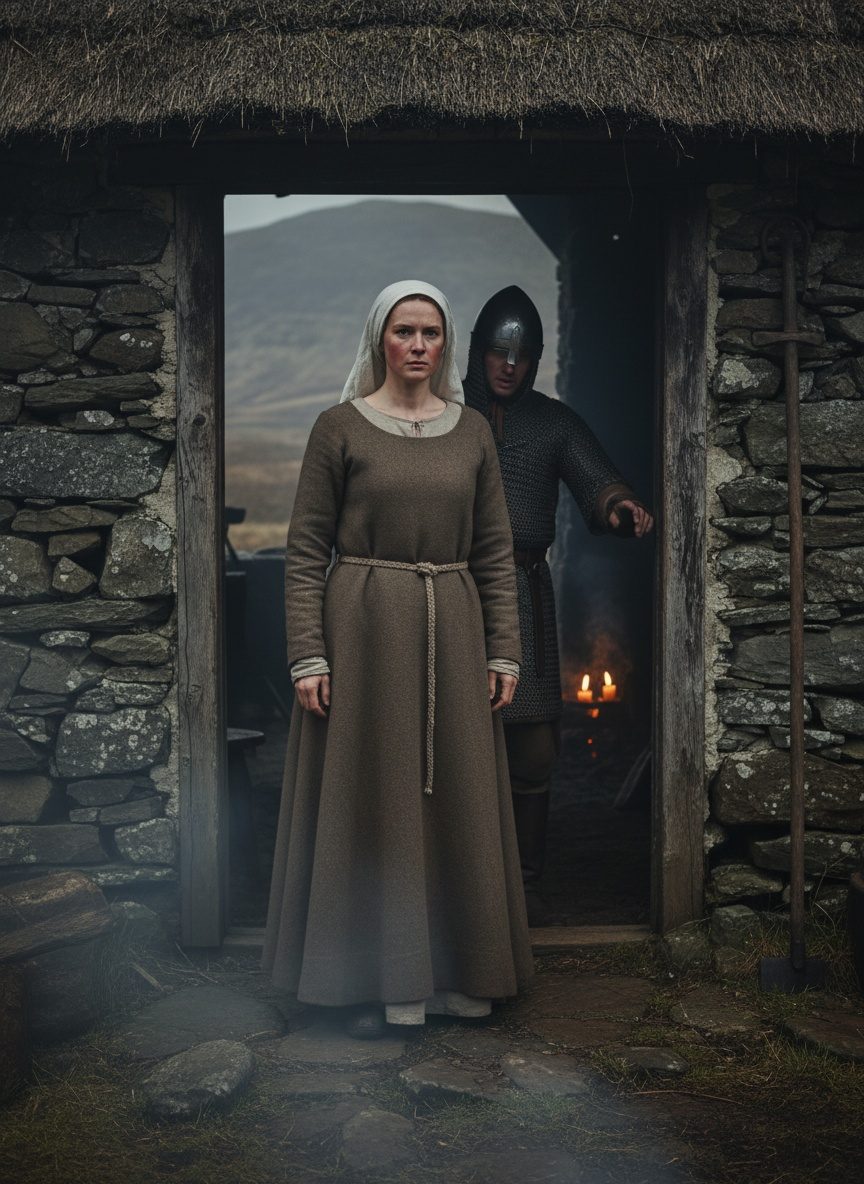
The moment of trepidation arrived on a day as bleak as Robert's prospects. English soldiers, clad in their mail and bearing the lion motif of Edward's army, appeared at the doorstep. They were hunters, their very presence a reminder of the peril that shadowed the Bruce clan. Standing at the threshold, Christina faced them alone. Her posture was an emblem of resilience, her eyes steady, betraying none of the turmoil within her heart.
The soldiers demanded entry, their intent clear. They sought the fugitive king, the man who had dared to claim a crown. Doubtless, they searched not just for Robert but for any signs of rebellion, any spark that might ignite the tinderbox of Scottish resistance. The walls, stout yet silent, kept their secret well. Beneath the floor, Robert lay, every breath a testament to the delicate balance between survival and discovery.
Christina's silence spoke louder than any words. Her refusal to yield, to betray her brother, was an act of defiance that transcended the immediate danger. It was not merely a personal sacrifice but a declaration about the right of Scotland to choose its own destiny. Perhaps the soldiers dismissed her as a simple woman, unwilling or indeed unable to comprehend the magnitude of their task. Perhaps they underestimated the strength hidden within her stoic demeanor.
Whatever the reasoning, the soldiers left without finding Robert, their failure a stark contrast to Christina's triumph. In that moment, under the weight of history and the gaze of her captors, she had not flinched, had not spoken, and thus altered a course not only for her brother but for a nation struggling to right itself amid chaos.
A Kingdom Rekindled
For months, Robert the Bruce remained a figure of shadow and secrecy. Each farmhouse, each glen became a potential refuge or a looming danger. The kinship and loyalty displayed by his sister and countless others like her allowed him to slowly gather support and forge alliances – laying the groundwork for his eventual return to the throne of Scotland. But it was that fateful day in 1306, beneath the floorboards of a quiet countryside home, that a kingdom's spark was rekindled.
Eventually, Robert rose from the ashes of his destruction to lead his people. His triumph against adversity was not achieved by martial prowess alone but through acts of bravery and loyalty from those who shaped his path. In 1314, at the Battle of Bannockburn, the echoes of victories both large and small culminated in a decisive Scottish win, a testament to the indomitable spirit swirling through Scotland's veins.
The silent determination of women like Christina Bruce, often omitted from grand narratives, played a pivotal role in this saga. Her unwavering courage, her defiance in the face of overwhelming odds, lit a beacon of hope when darkness threatened to engulf. In a time when women's voices were often stifled, Christina's spoke clearer than most – her actions screaming for freedom, for autonomy, and for an unbroken family bond.
In the tapestry of history, it is these hidden stories that reveal the true character of a people and their leaders. Christina's silent guardianship underpins the legend of Robert the Bruce, a king who understood that his crown was forged not only in battle but in the quiet strength of those who dared to defy an oppressive rule. It is a reminder that sometimes change begins not with a shout, but with the courage to remain silent.