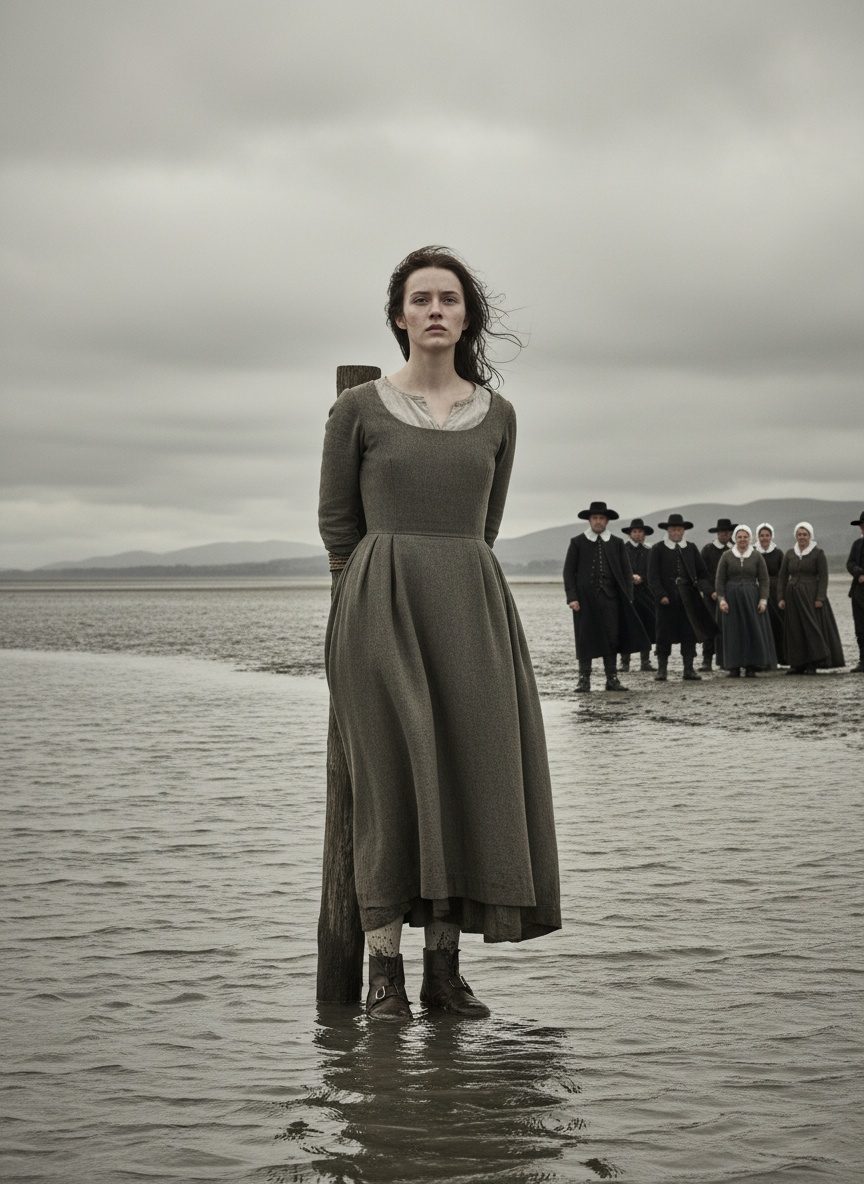
Margaret Wilson's name might be unfamiliar. Her defiance echoes through history.
In the year 1681, Scotland was a kingdom embroiled in turmoil and transition. The Stuart monarchs of England had long held the reins of power, tightening their grip not just on the lands but on the very souls of the people. Under King Charles II, a singular demand rose above the cacophony of royal edicts: the divine right of kings extended to spiritual dominion. It was this decree that would shape the destiny of Margaret Wilson, an eighteen-year-old from the lowlands of Wigtownshire. Here, amidst the sweeping landscapes of Solway Firth, Margaret's story of bravery and conviction would unfold.
The air was filled with apprehension on that fateful day. Dark clouds mirrored the grim fate awaiting the young woman. Margaret, a farmer's daughter, had grown up in an age where the King's rule had overstepped its secular bounds, encroaching upon the very sanctity of personal faith. The shadows of religious persecution loomed large as royal powers endeavored to enforce allegiance to the Episcopalian structure, insisting that the king should be recognized as the head of the church. For Margaret and many like her, this was not merely a political edict to be obeyed; it was an affront to their deeply-held Presbyterian beliefs.
The Covenanters, as they were called, represented a religious movement bound to the Presbyterian faith and opposed to any interference by the crown in ecclesiastical affairs. In simple but eloquent terms, they cherished a belief system where only Christ could govern the church. Margaret's youth and unyielding passion for her faith made her stand out among these staunch believers. Despite the clear risks, she refused the oath recognizing the king's religious supremacy—a decision that would put her on a collision course with the mightiest power of her time.
Read next: The Day a Scots Girl Thrust Her Arm Through a Door to Save a King
On the day of her trial, Margaret's resolve was to be tested against a monumental tide of conformity. Her accusers saw her as little more than a stubborn lass from the hinterlands defying an omnipotent ruler. But to Margaret, this was a stand for something far greater than herself. The decision to refuse compliance did not come out of ignorance or youthful rebellion. It was deliberate, rooted in deep spiritual conviction and the teachings of her community.
Bound and exposed at the Solway Firth's edge, Margaret's fate was tied to the cyclic dance of nature and time. The sea's steady rise mirrored the inexorable path that defiance had laid before her. She, along with another woman, was pinned to the sullen tide, awaiting nature's grim embrace. Local lore speaks of these events not just in terms of historical consequence but as cautionary tales about faith resisting force.
As the waters lapped around her, Margaret's voice did not waver. She recited biblical passages, her words mingling with the salt of the sea. Her quiet strength turned anguish into indignation among the onlookers, many of whom sympathized with the plight these women faced under what was perceived as ruthless tyranny. Those moments, suspended between earth and sky, were not just a testament to conviction—they embodied a defiant stand against royal assertions.
Margaret's ordeal begs introspection into the meaning of courage. It prompts a reflection on where loyalty truly lies, for hers was a struggle not merely against an incoming tide but against the very essence of authority dictated from a foreign throne. It serves as a sharp reminder of the power wielded by ordinary people when emboldened by unshakeable beliefs.
The story of Margaret Wilson is a microcosm of the struggles that rippled throughout Stuart Scotland. This era, rife with religious strife, saw countless individuals embroiled in the conflict that blurred the lines between governance and faith. While many stories from this time remain untold, faded into obscurity, Margaret's unwavering stance offers a glimpse into the era’s heart—a time when every deed echoed with the noise of uprisings and unflinching courage in the face of despair.
Margaret's story, one of defiance and sacrifice, resonates in a world still grappling with the tension between authority and belief. It possesses the rare ability to speak across centuries, reminding us of the eternal struggle between individual conscience and overarching power. Here, in the rugged lowlands, a young woman's refusal to acquiesce preserves the spirit of a people determined to assert their right to spiritual self-determination.
The echoes of Margaret Wilson’s final moments serve not just to remind us of the past but to challenge us to question our readiness to stand for principles in times of profound consequence. Her story, like the constant tide of Solway Firth, continues to rise and fall in our collective memory, shaping our understanding of courage, conviction, and the unwavering spirit of dissent. Let it inspire perseverance in the face of overwhelming odds and the recognition of a profound truth: even when currents rise, the heart stands unwavering.