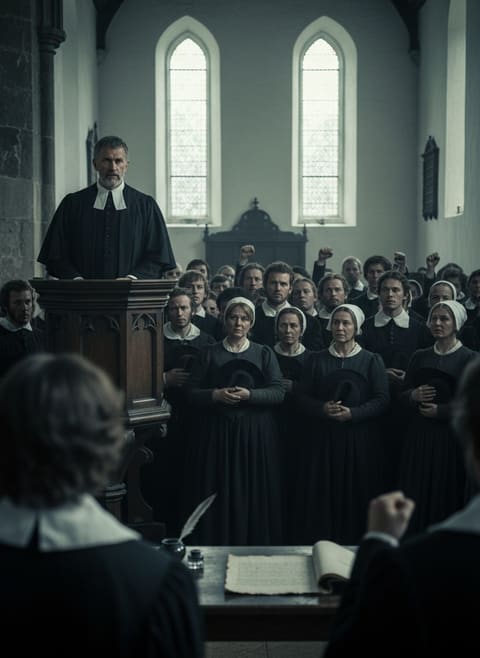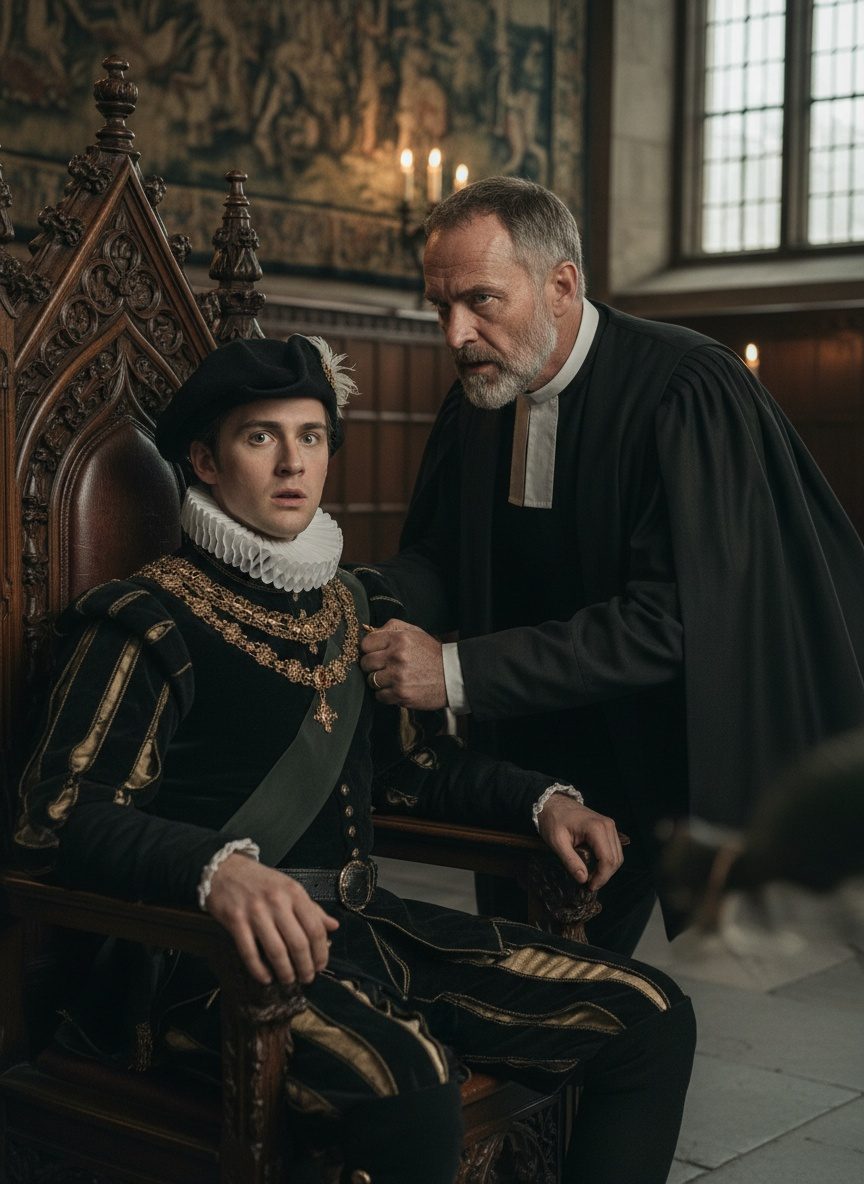
Andrew Melville’s hand clamped down on the royal sleeve, the murmurs of the court fading into an electrified silence. His eyes locked onto King James VI, unwavering in their determination. The air in Edinburgh's grand chamber seemed to crackle, filled with the tension of a man who dared defy the King of Scots on his own ground.
The Stage and the Stakes
1596 was a tumultuous year in Scotland, a time when the very soul of the nation seemed poised on a precipice. Religion was the burning question of the day, a potent force that could unite or divide the realm. The Reformation had left Scotland a land torn between the old Catholic ways and the burgeoning might of Presbyterianism. For King James VI, this conflict was not merely abstract; it had tangible implications for his rule and the stability of his kingdom.
Central to this struggle was Andrew Melville, a man of intellect and fire. As a prominent minister and scholar, Melville was a staunch advocate for the independence of the Scottish Kirk from royal interference. He fiercely opposed efforts by James to impose the hierarchical structure of the English Church, with its bishops and royal supremacy, upon the Scottish Church.
The king’s frustration with Melville was understandable but unable to quell—actions that threatened to challenge his authority struck at the heart of his ambitions. James had summoned Melville to thwart his defiant speeches and the groundswell they inspired. It was a meeting that could have led to imprisonment or worse. But Melville had other plans.
Read next: The Clan That Was Declared Outlaw by Name Alone
A Witness to Defiance
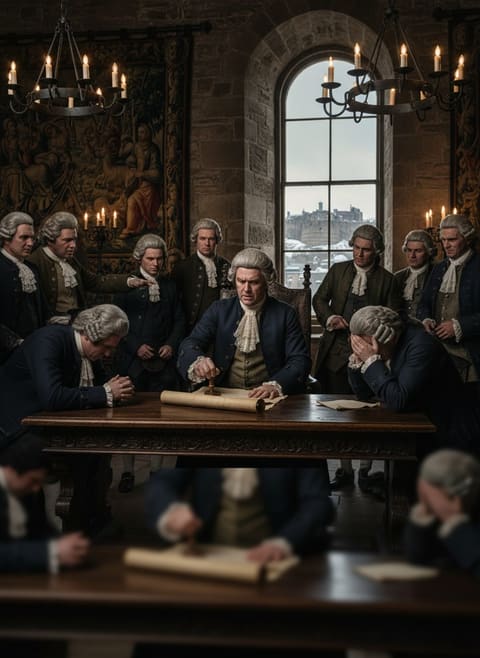
The gathering took place amid the opulence of Edinburgh’s royal chamber, where the scent of beeswax and aged wood intermingled, ghostly echoes of centuries-old debates hanging within its ancient walls. As Melville entered, his presence commanded attention, the soft scrape of his shoes on stone floor marking each step toward the king. Those present watched, breathless, as the preacher locked eyes with James.
With every word, Melville carved a line between the profane and the divine. "There are two kings and two kingdoms in Scotland," he declared, his voice a clarion call against tyranny. "There is the Kingdom of Christ, whose subject King James is, and of whose kingdom he is not a king, nor a lord, nor a head." James’s attempt at masking irritation faltered, every word hurled by Melville resonating not just as an argument, but as an indictment.
Melville continued, each statement an assertion of unfettered religious conviction against Royal decree. The court, hanging on his bold declarations, collectively held its breath, apprehensive and awestruck in the presence of such potent defiance — a moment frozen in time for those lucky, or perhaps destined, to witness it.
Aftermath and Echoes
Melville’s audacity left its mark; he was a man untouched by fear of temporal power, advocating for the spiritual sovereignty that lay beyond earthly crowns. Perhaps it was his unwillingness to back down that startled James into inaction, or perhaps it was the complex political calculus of the day. Whatever the reason, Melville did not find himself thrown in chains. Instead, he walked away free, his determined speech no doubt echoing in James’s mind long after the courtroom’s murmurs faded.
This encounter epitomized the tension that would shape Scotland in the years to follow. Though Melville and his fellow Presbyterians did not achieve immediate victory in their battles for ecclesiastic independence, their influence was profound. They helped to weave a cultural tapestry of fierce autonomy and conscience that would define the Scottish perception of governance and religion.
Read next: The Mountain Hollowed Out to Power a Nation's Lights
The reverberations of Melville’s confrontation with King James stretched beyond the span of their lives. It planted seeds that would grow into broader resistance movements, eventually simmering into the fervor of the Covenanting Wars and echoing through the annals of Scottish resistance against perceived tyranny.
The Significance of a Silly Vassal
In the flickering candlelight of history, the tale of Andrew Melville reminds us of the enduring power of principle over power. By illustrating the conviction that there exists a higher moral authority to which even kings must bow, Melville’s confrontation with James VI remains a stark reminder of the potential for individual integrity to challenge and change the world.
Melville’s words carved a place for him in the lore of the church and the hearts of those who favoured spiritual independence over royal dominion. Part of what makes this account resonate through time is the timeless valor of standing up to authority in the name of principle, forging ahead unwaveringly on the uncharted path of righteous defiance.
In looking back at that charged moment when Andrew Melville held King James VI by the sleeve, we glimpse not just a matter of historical record but an enduring human story. A testament to the timeless struggle between earthly power and ethical faithfulness, it challenges us to ponder where lines must be drawn in our own days, where the voices must rise against the silencing hand of arbitrary power. In every epoch, Melville’s defiance finds its echo, urging us to remember the strength of standing steadfast in the face of formidable might.