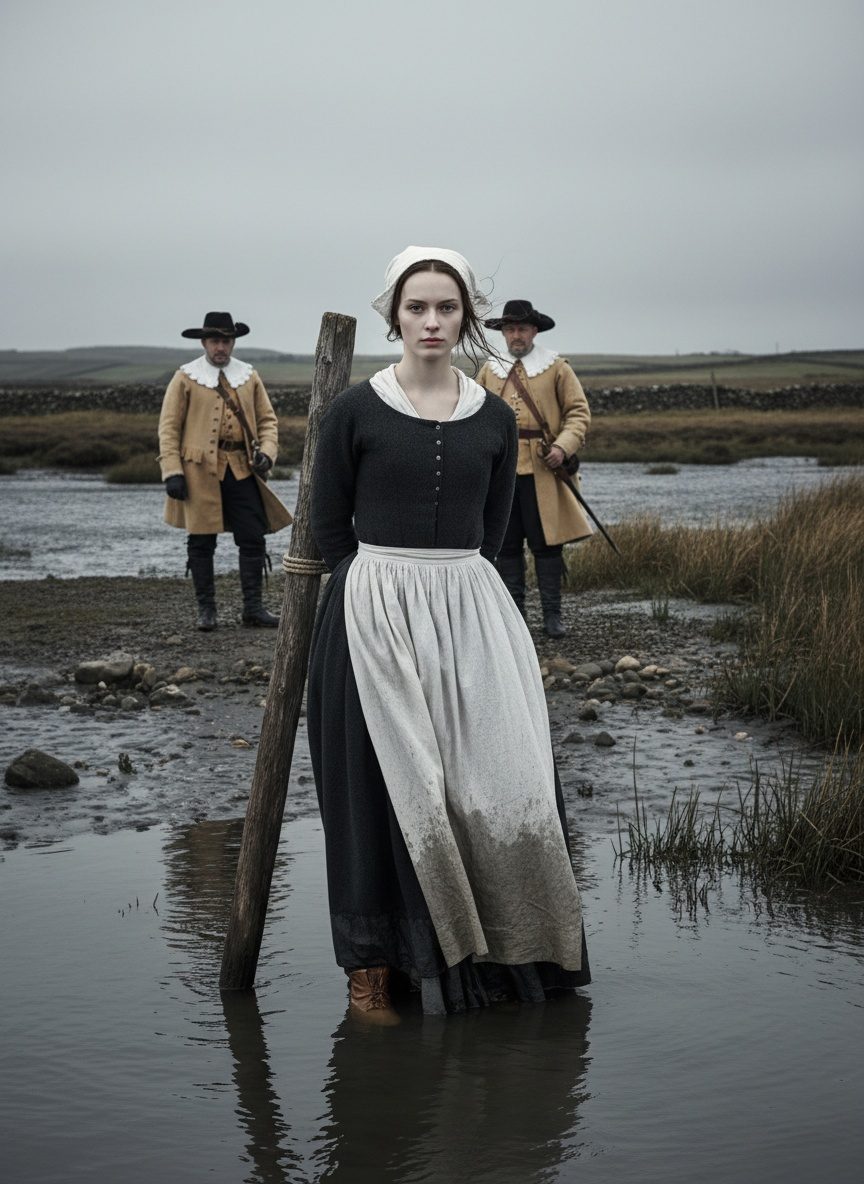
The chill of the incoming tide seeped through Margaret Wilson's thin clothes as it climbed steadily up her legs. She stood firm, the resolute rhythm of the ocean incessant around her, the salt spray biting sharply at her face. Tethered to a wooden stake in the Solway Firth, every fiber of her being rejected the oppression that brought her here. The laughter of soldiers on the shore, almost lost to the wind's moan, cut harshly through the air — a reminder of the grave weight of her impending fate. Her lips parted, not to concede but to sing, her voice unwavering against the roar of the sea.
Scotland at the Crossroads
It was May 1685, a turbulent time in Scotland’s history. The Scottish Reformation, a series of religious confrontations catalyzed by the clashing doctrines of Covenanters and Royalists, had thrown the land into disarray. At the heart of this conflict was the Covenanters' stubborn devotion to Presbyterianism — a defiant stand against the state-imposed Episcopal structure endorsed by King Charles II. For young Margaret Wilson, a girl of just eighteen summers, her otherworldly courage was a deliberate act of faith, not folly.
Born in the town of Wigtown, Wilson was the eldest daughter, raised to be firm in her beliefs. She grew up amidst sermons whispered in darkened rooms and the clandestine meetings of the Covenanters, who were hunted and prosecuted mercilessly. The oppressive regime pursued these dissenters with unyielding severity, branding them traitors, rebels, and outright enemies of the crown. Yet, their clandestine worship gatherings only grew larger, the people more fervent, and Margaret, alongside others like her, more inspired and resolute.
This climate of persecution gave rise to what became known as the 'Killing Time.' The mandate was clear: any display of covenanting faith was to be quashed ruthlessly. It was under these bleak skies that Margaret was arrested. She, along with her sister Agnes, was found attending one such forbidden gathering. Captured and ushered to trial, Margaret faced the gallows in silence, the crack of a gavel sealing her fate when she refused to renounce her faith. She could have chosen the crown’s pardon, whispered the words they longed to hear. Instead, she clung to the psalms that had cradled her spirit from infancy.
Read next: The Day a Scots Girl Thrust Her Arm Through a Door to Save a King
The Rising Tide
Back in the Solway Firth, the water rose unrelentingly. The blood-red hues of the sunset mirrored the English soldiers’ coats as they jeered from the shore, waiting for the tide to claim its sacrifice. With each wave crash, Margaret's hold on life grew more tenuous. Her sister, younger and sproinged with hope despite her chains, had been spared the water's embrace by a last-minute reprieve — a loophole woven from political machinations or divine intervention, depending on one's faith.
Margaret stood alone. Left to the mercy of an unforgiving sea and insistent in her rebellion against recantation, she continued to sing. No plea came from her lips, just verses from the psalms, interwoven with the sound of the wind. This defiance puzzled her captors, their desire for control turning desperately to the water's tide. Still, there was a bizarre, almost reluctant admiration in their stares, recognizing that perhaps the stones they gathered for her execution had underestimated her tenacity.
The Solway, a witness to clandestine crossings and now execution, teetered on claiming another life. The water reached Margaret’s neck. She closed her eyes to the silent prayers rising from the earthbound witnesses who dared to watch from a distance. Her body chilled by the frothy sea clasped in defiance, connected her to something far greater than the powerful men who sought to silence her hymns.
The Legacy of Faith
In that moment, with death but a breath away, Margaret Wilson's name was etched into the annals of history as a martyr for the cause of religious freedom. She never wavered, never bowed to the promise of earthly salvation. It was a profound unity with a divine purpose that compelled her to resist what seemed inevitable. Long after the tide receded, long after the sea relinquished its hold, her story stood as a silent testament to the enduring power of belief in the face of tyranny.
While historians debate the nuances of her final moments — was she indeed mercifully drowned before the final wave claimed her, did she breathe prayers to the last? — her tale echoes through time as a symbol of resilience. The trials faced by Wilson and her compatriots cast long shadows, influencing not only religious discourse but the very fabric of Scottish identity itself. In remembering Margaret Wilson, we confront the raw courage embedded in the human spirit, a clarion call to stand resolute, come what may, against tides far more invasive than those of the Solway Firth: the waves of oppression, of injustice.
In the end, Margaret Wilson's story is one not merely of martyrdom but of triumph — a triumph infused with grace, carved into the currents, echoed in the psalms that weave through Scotland's whispers. We remember her not just for her death, standing steadfast in the rising tide, but for the vivid illustration of faith's power — a narrative perhaps left out of textbooks, but indelible in the hearts of those inspired by the quiet shore where a young woman once sang.