The Battle of Mons was a tale of utter devastation. Yet, amid the chaos, a remarkable act of courage unfolded that would become a whispered legend among the soldiers.
An Army in Exodus
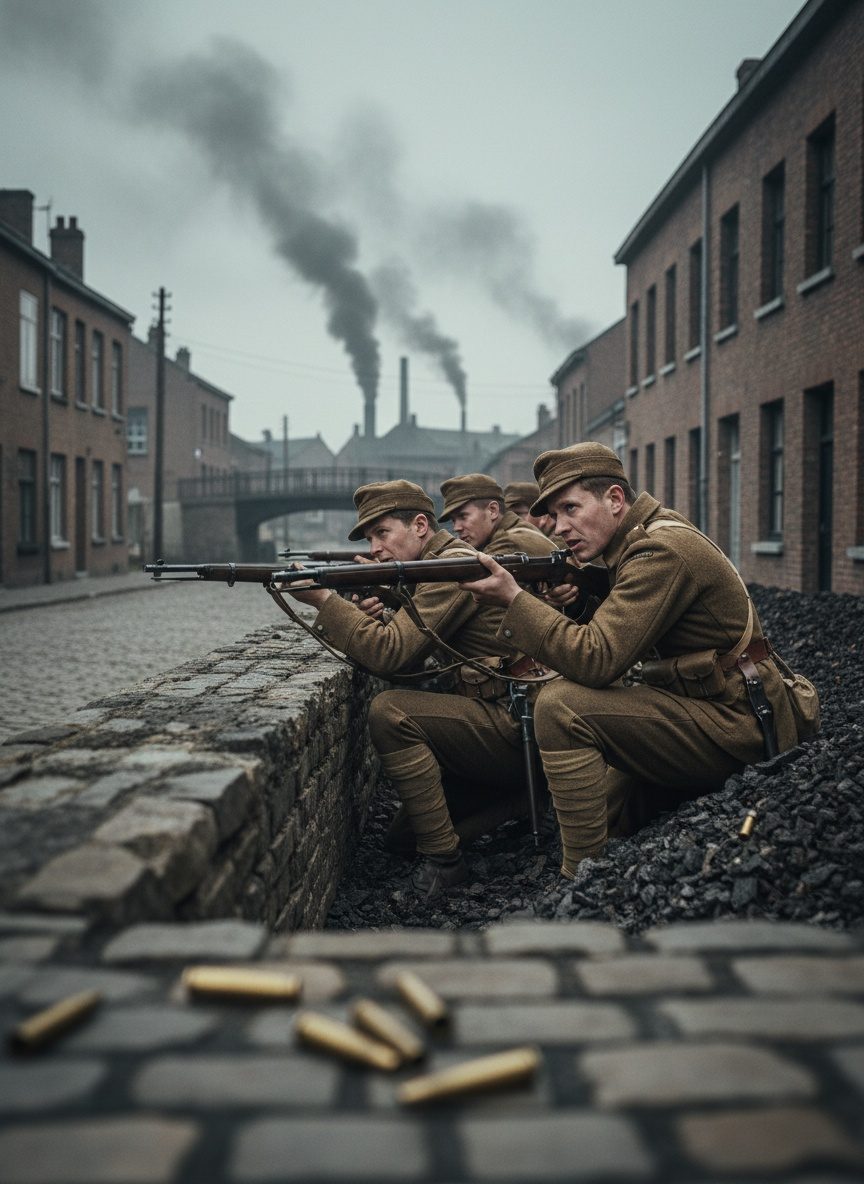
August 1914 marked a turning point in history. The British Expeditionary Force (BEF), having landed in France, prepared to face the might of the German army — an encounter long awaited since tensions began their inexorable rise at the dawn of the 20th century. They found themselves at Mons, a nondescript town in Belgium, where strategy and fate would intertwine. With a force merely a third the size of their opposition, the British soldiers, seasoned professionals trained to fire fifteen aimed rounds a minute, confronted a reality scarcely imagined in war colleges.
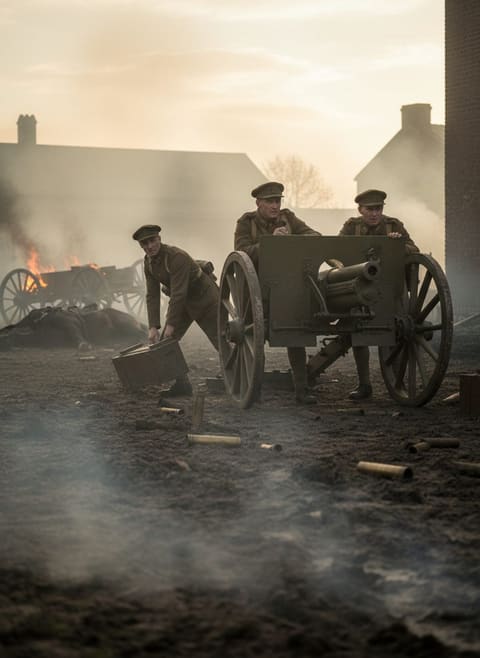
The BEF's commanders knew their predicament well. Imagine it: a thin red line scattered across hastily dug trenches, each man a vital cog in a delicate machine facing annihilation. On August 23, as dusk approached, the pounding of artillery and crackle of rifles silenced the whispers of uncertainty. It was not just another European skirmish; it was the opening salvo in a new kind of warfare. Tales of the machine-like precision of the British firing line fed into the growing mythos. An artillery officer, amazed at the rapidity of rifle fire, exclaimed it was as if the Germans faced invisible machine guns. For the Germans, expecting to brush aside this pocket of resistance, it was a nightmarish quagmire.
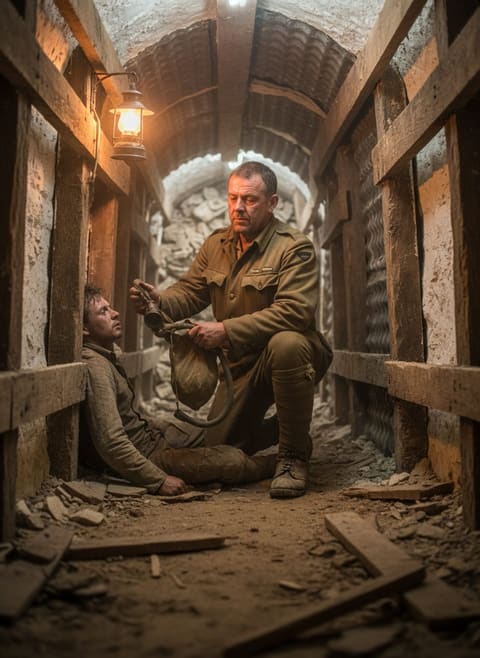
Amidst this chaos, an unexpected figure emerged, emblematic of the indomitable spirit of survival and defiance. A shepherd boy, barely old enough to be considered a man, found himself amid the chaos, a strange coincidence of time and place. Clad not in the khaki of the British Tommy but in simple garb, this boy became a rallying point at a critical junction where an exposed flank risked collapse. As stories say, he picked up a fallen soldier's rifle and, with no formal training, joined the hastily called defense. Legend mixes seamlessly with documented history here, but his presence provided vital time and moral support for a section on the brink of ruin.
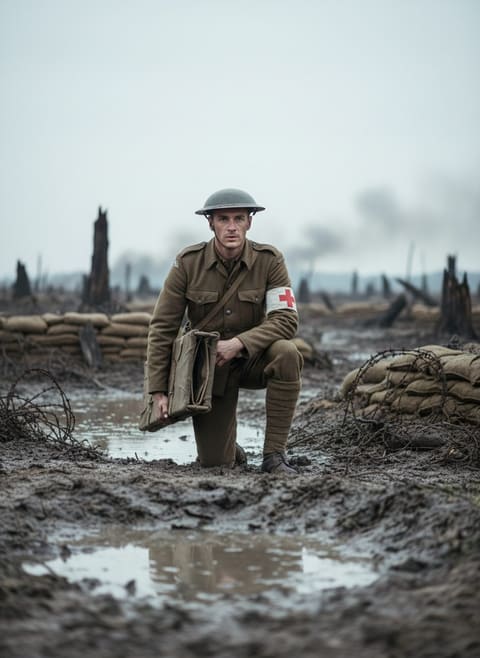
Read next: The Day a British Stretcher-Bearer Refused an Order to Save Lives
The Art of Illusion
History remembers the grand tactics and strategies forged within shadowed rooms, but it often forgets those snippets of human ingenuity and spirit on the battlefield. The BEF knew too well that defeating the Germans outright was implausible. Instead, they excelled at creating the illusion of strength. By dawn, as the Germans regrouped in confusion, the British were already preparing for a strategic withdrawal — an art in itself that required precision and discipline. Under the intense and semicircular assault of their foes, the BEF maintained this mirage of unassailability paradoxically, through their steady, continuous fire.
Eyewitness accounts from German sources speak of their disbelief at the scenes before them; how a seemingly modest force could hold a river crossing against overwhelming odds baffled seasoned generals. The trenches and emplacement areas littered with khaki felt sparse, deceptive in their emptiness only temporarily filled by the relentless hailstorm of bullets. Among these accounts, the remarkable scene of the shepherd boy standing vigil, weapon in hand, punctuated the narrative — a stark picture against the manicured landscape of Mons transformed by battle.
The chaos of the first day gave way to a sense of timelessness, an embodiment of exhaustion for soldiers and commanders alike. Yet in the space between the opening shot and the strategic withdrawal, the indelible mark of camaraderie emerged. The soldiers' stories reverberated: the perplexed German advance, expecting an easy victory, continually halting at the sight of impenetrable fire, were unwittingly facing not just bullets but the spirit of defiance clothed in the unassuming body of a shepherd.
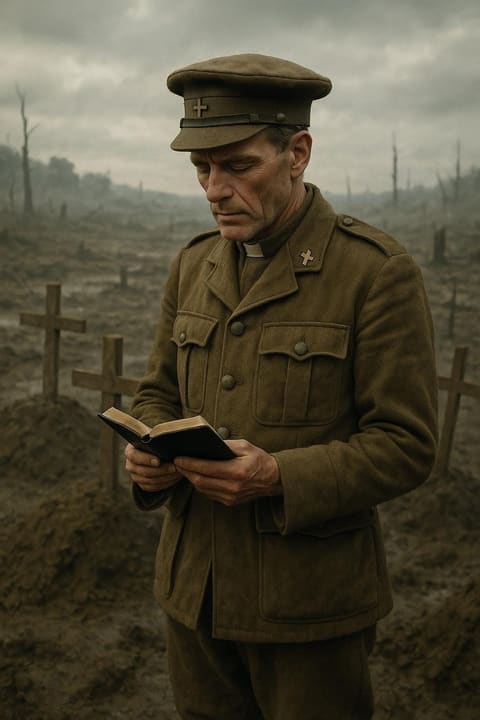
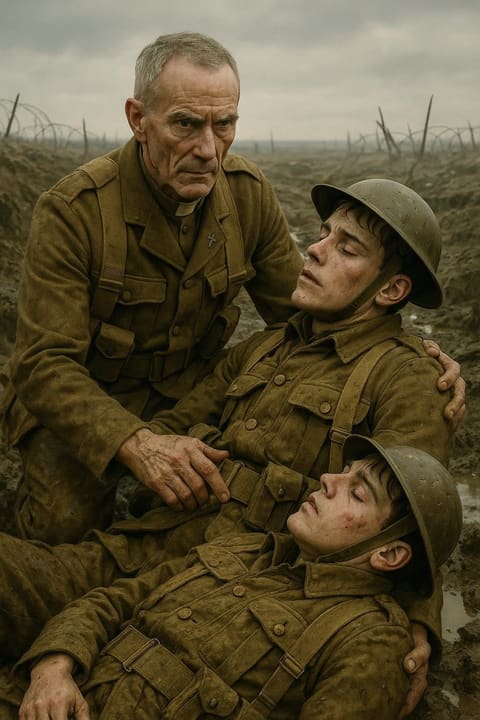
Read next: The Day a Army Chaplain Gave His Coat to a Dying Stranger
A Legend Born in the Fields of Belgium
As Mons fell silent following the ordered withdrawal, the brushwood legends began to take shape. The shepherd boy, whose name remained elusive, became an emblem of the chaotic and unscripted nature of war. Whether exaggerated or merely taken out of context, tales of his courage lingered. It was more than a simple matter of holding a rifle; it was a moment that encapsulated the war's unpredictability, where anyone, however unlikely, could stand between peril and preservation.
The shepherd's tale, though echoing in mess halls and journals, serves as more than a fanciful story. It signifies the broader reality that war spares no one in its tides; civilians and soldiers alike are caught in its thrall. As the BEF moved to new positions, regrouping for subsequent challenges, the Germans paused, reconsidered, and recalibrated — vital hours bought with courage. This delay, possibly influenced by their initial underestimation, granted the Allies precious time to ready new defenses and adjust strategies.
So why does this story, wrapped in layers of myth and history, hold significance today? It's a reminder of the unpredictable tapestry of war, where even the smallest actor can alter its course. As the shepherd boy returned to the shadows from which he came, unheralded yet profound, his place in history endured — a testament to courage when faced with overwhelming odds. The legend, often missing from the annals of mainstream history, echoes in corridors where warfare is discussed and understood with reverence. His is not just a story of defiance, but a profound illustration of human resilience when confronted by forces that seek to sweep them away. In the annals of history, it is in such unexpected moments that our past finds its most potent lessons.