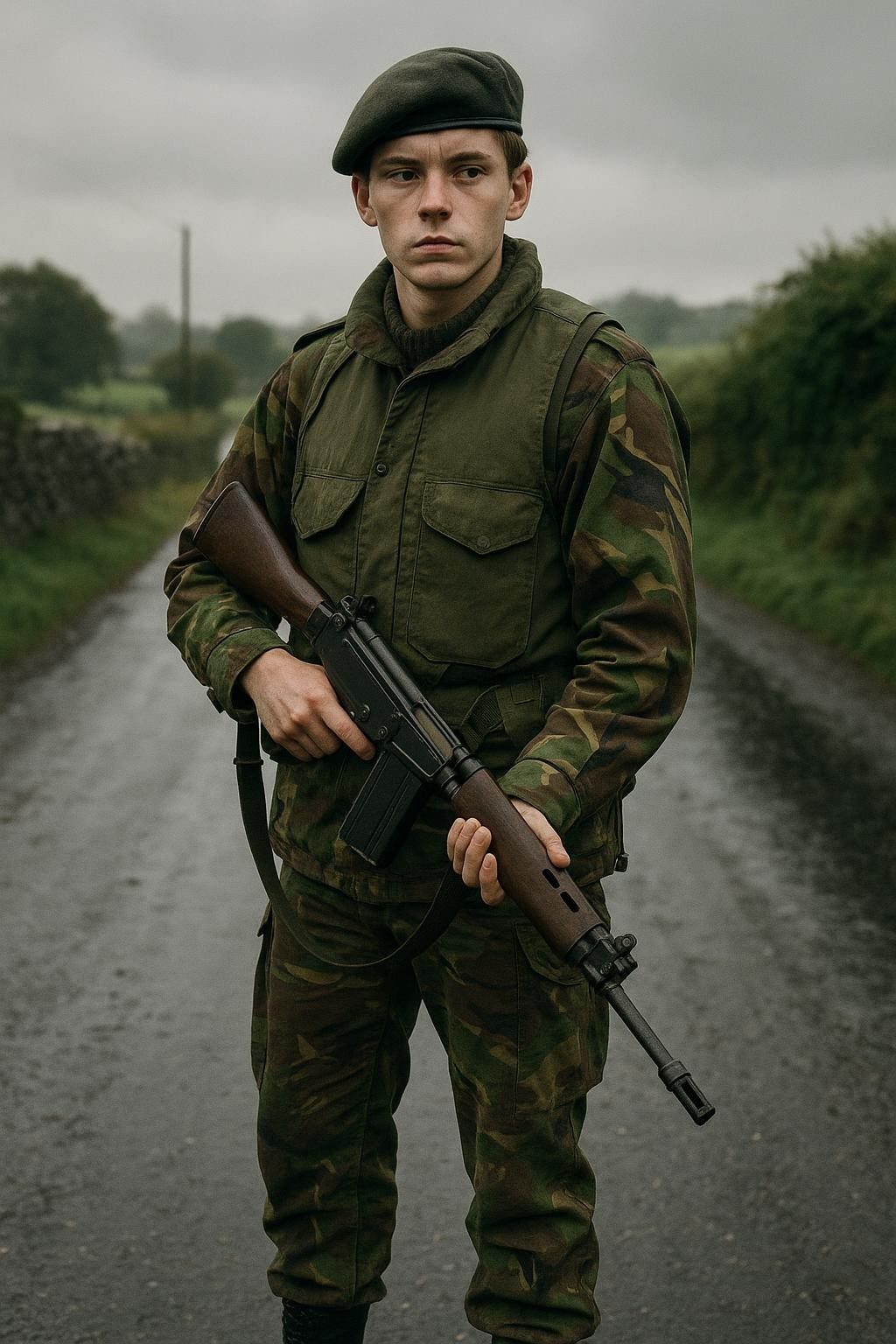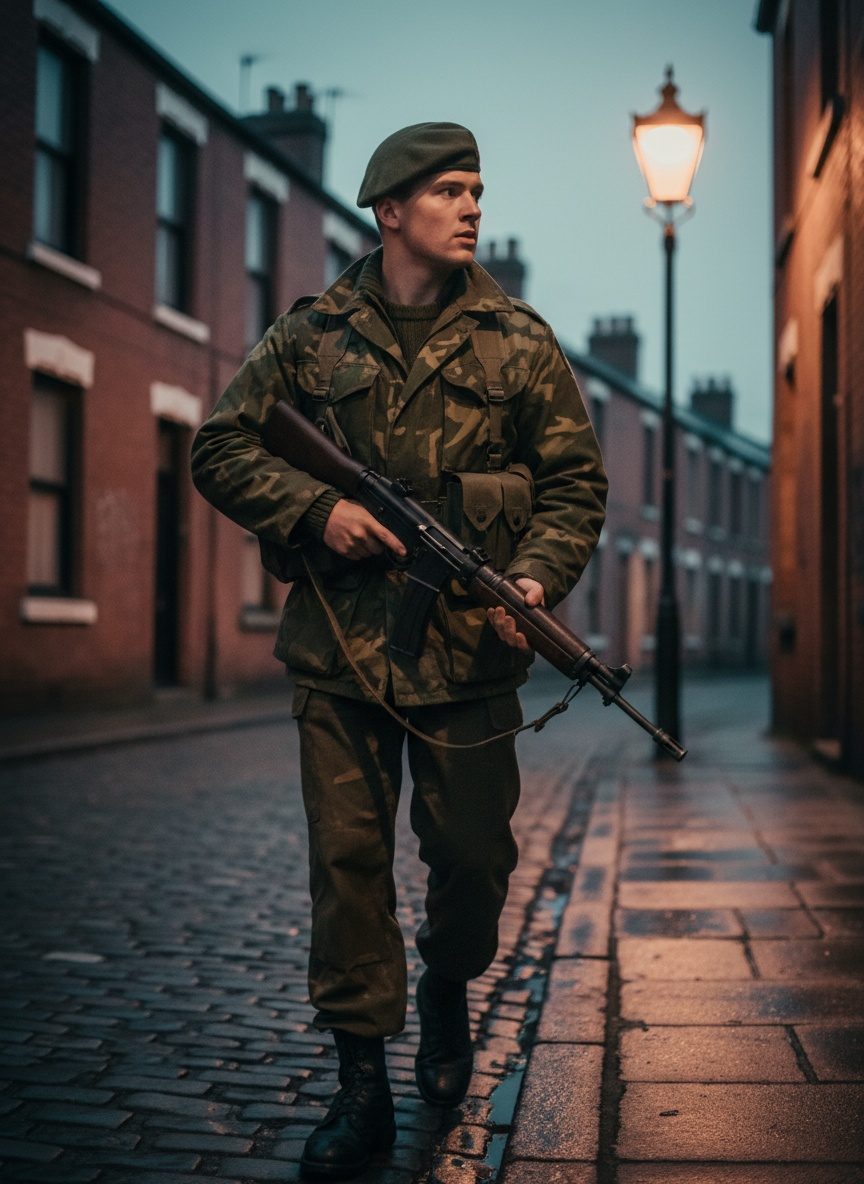
He was nineteen years old. He had never left his hometown before his deployment to Belfast. In an era scarred by The Troubles, the mundane transformation of youth to soldier wasn't just a rite of passage, it was a leap into the unpredictable. For a young British soldier patrolling the fractious urban landscape of Belfast, every alleyway and trash can had the potential to punctuate his fate. He walked these charged streets, rifle in hand, heart in throat, unaware one day would define his legacy.
A New Kind of Battlefield
By the late 1960s, the British Army found itself embroiled in an unexpected chapter of modern warfare within its own realm. Operation Banner began in the summer of 1969, making the fraught streets of Northern Ireland its battleground. Over the next 38 years, more than 300,000 British soldiers rotated through this tense terrain. At its core was Belfast, a city fractured by sectarian rivalries, where hostility crackled like electricity down graffiti-strewn streets. Patrolling soldiers were caught in a web of politics and local tensions, with every maneuver scrutinized under a glaring spotlight.
The soldiers of Operation Banner were youthful emissaries from towns across Britain, sent not to defeat an enemy on an open battlefield, but to manage a volatile peace that dangled by a thread. The situation they encountered shifted by the hour; one minute you were a peacekeeper offering reassurance, the next you were dodging stones and worse. To many soldiers, Belfast presented a peculiar paradox: officially not a war zone, yet it bore all the hallmarks of a war. For the uninitiated, it was both perplexing and terrifying.
The Daily March
The routine was deceptively monotonous, a daily patrol through Belfast's divided neighborhoods, where Catholic and Protestant allegiances dictated allegiance and animosity. Streets were patrolled with methodical precision, like veins in a human body, each beat resonating in staggered pulses of caution and alert. Soldiers walked these paths not as conquerors, but as arbiters of a fragile peace, always vigilant, always wary.
Read next: The Day a London Printer Stood Trial and Freed the Press
In Belfast, the architecture itself was an adversary, each stoop and storefront a possible trap, each pedestrian a potential foe or friend. Adolescents ran wild in the corridors of council housing, and from windows above, locals would loom, watching, sometimes mocking, sometimes quietly compassionate. For the soldier with a rifle in hand and a mission before him, the simplest sound—a distant engine roar or shattering glass—could ratchet the tension to a boiling point.
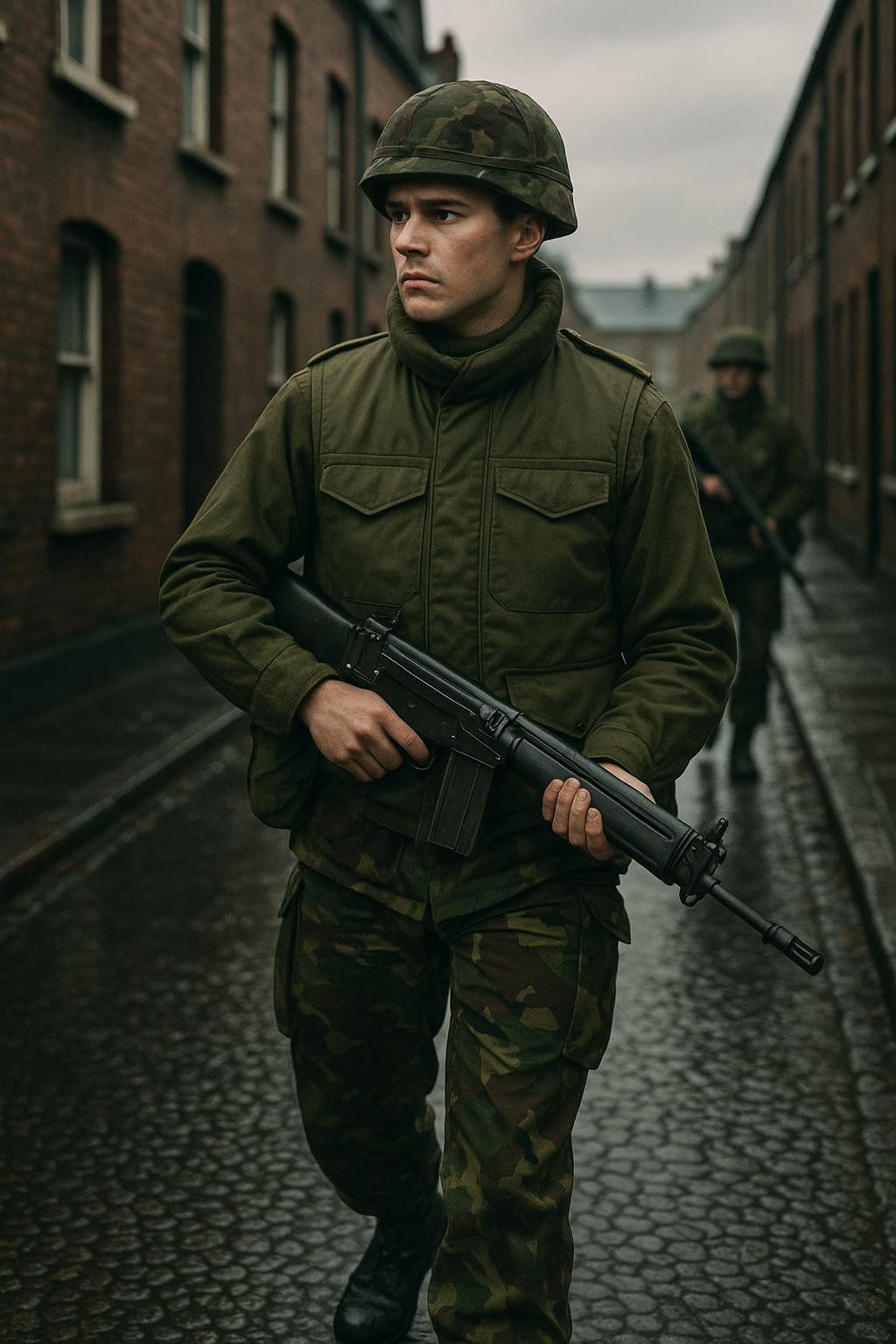
These perambulations, however, were more than mere military diligence. They were exercises in navigating a landscape where ambiguity cloaked every civilian interaction, each as potentially life-saving as life-ending. Behind the camouflage gear and metal helmets were boys tasked with an adult’s burden, navigating a conflict that demanded discretion but brooked no hesitation.
The Turning Point
But whose story is it that becomes our focus? This nineteen-year-old soldier, handed a rifle and immersed in Belfast's theatre, represents an untold number of similar stories. He was not alone; every day, soldiers departed their barracks into the ambiguous light of Belfast morning. Yet, he stands at the crux of our narrative precisely because one day, he did not return.
The juxtaposition of routine and sudden heartbreak is the eternal spectre that haunts conflict. On that fateful day, the soldier’s patrol seemed no different than the hundred before it. He marched step-in-step with peers through the cobwebbed alleys. Each seemed ordinary, yet in Belfast, ordinary could pivot into chaos with the opening of a door or the turning of a corner. The moment that changed everything was not preordained, yet with the pull of a trigger or the press of a detonation, it arrived unbidden and irrevocably.
A sound—perhaps imperceptible at first to anyone except a trained patrol—quickly crescendoed into chaos. In those fractions of a second, decisions made became dialogues with destiny, and bravery was the currency by which fate was bought.
The Unseen Sacrifice
Not all soldiers sent to Belfast came away with their stories intact. Some, like our young soldier, became ghostly markers of sacrifice, their existence bound to the city's history. For those who survived, the streets of Belfast lingered as shadows in the recesses of their memories, a place of formative, haunting experiences. But for the families of those who didn’t return, like our nineteen-year-old's, Belfast became an impossible crossroads—a place where the trajectory of life was forever altered.
Operation Banner has its narratives: political discourse, diplomatic strategies, momentous ceasefires. Yet amidst the pages, stories like that of our young soldier remain tethered to the fringes. The unseen sacrifice of these men is the connective tissue of Belfast's uneasy peace, often overshadowed by grander narratives but integral in shaping the region's mosaic.
A Legacy Carved in Echoes
Why does this story matter? Because it underscores a reality often obscured in conflicts: that every statistic was once an individual with dreams truncated. The urban symphony of Belfast's streets, with its pauses and crescendos, does more than haunt us; it challenges us to acknowledge those lives that were vibrantly full before their silencing. The soldier who didn’t return imparts a narrative through absence—urging us to count not only the fallen but to remember them with each footfall on those storied streets.
Their tales are reminders not just of the conflict they were drawn into, but of the resilience and humanity that each soldier, regardless of their fate, carried with them. As we traverse history's corridors, it is crucial, sometimes achingly so, to look beyond the official records and find the human stories that pulse behind every shadow and echo.