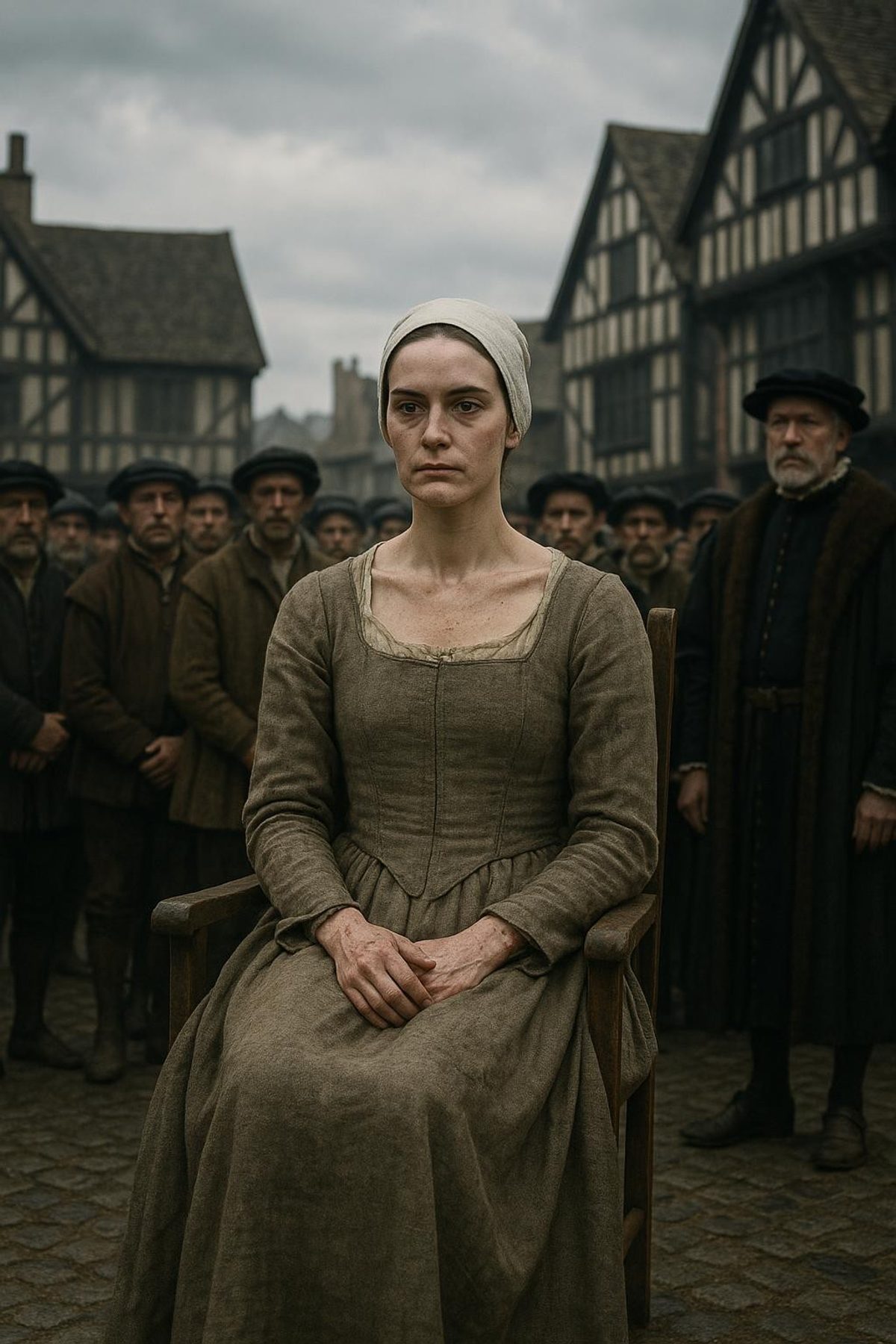
The clouds hung low and heavy over Oxford on that fateful March day in 1556, casting a muted gray over the city’s spires. A flaxen light filtered through, occasionally pierced by the gusty wind that swept through Broad Street. The air was thick with smoke, mingling the scents of burning timber and the somber anticipation that electrified the crowd gathered around. The stage was set for a grim spectacle of faith and defiance, where the stakes could not have been higher: life itself, and the soul beyond.
The Tower and the Signing Hand
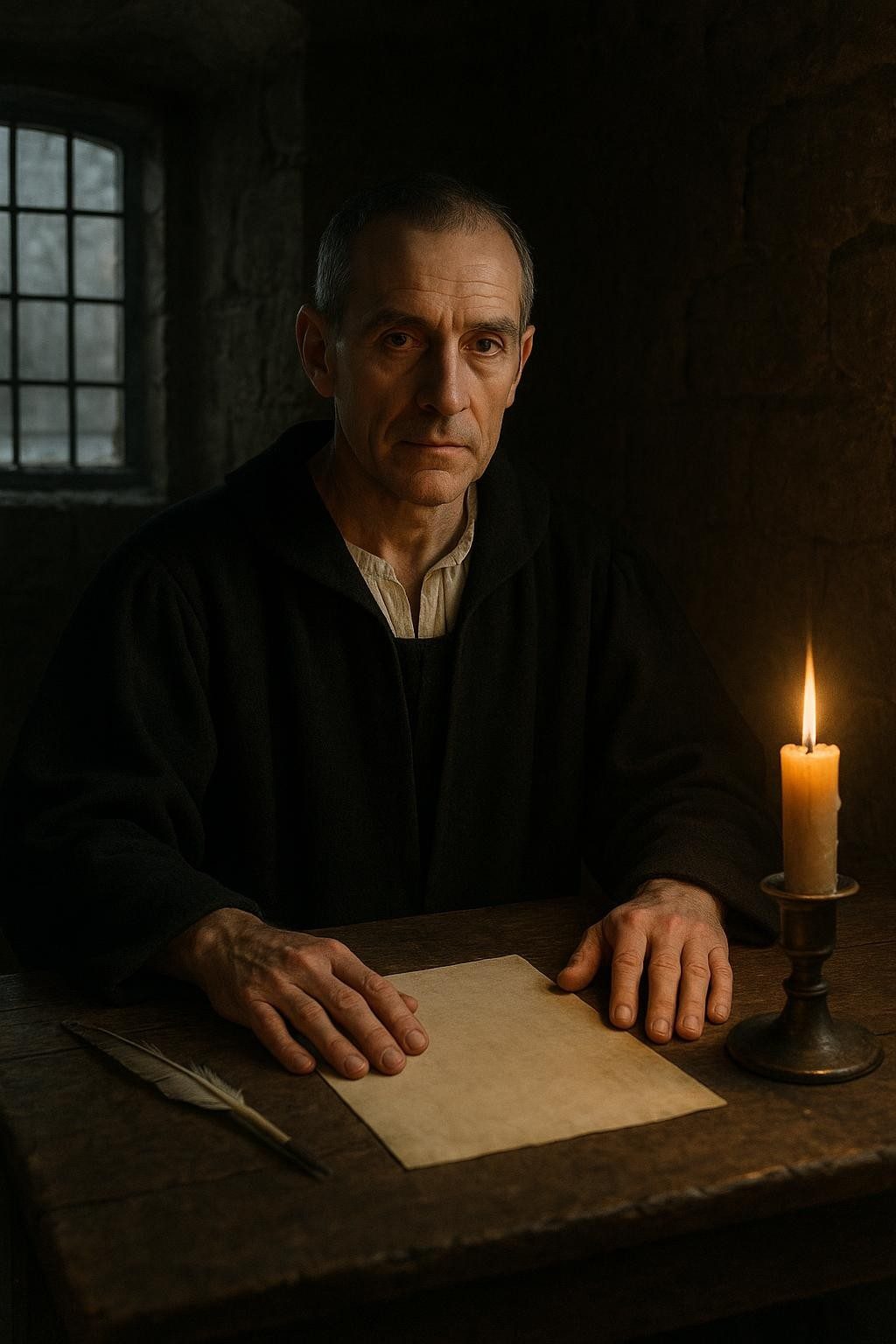
Thomas Cranmer was no stranger to walls and enclosures, but the stony confines of the Tower of London were different from the hallowed halls of Lambeth Palace or the thoughtful solitude of his study. Once the Archbishop of Canterbury, Cranmer's scholarly hands had crafted doctrines and framed the structures of a Church reformed, aligning England's spiritual light with a new dawn. Yet here, those same hands had been compelled to recant: six painful signatures, a dance of ink and reluctance, that each time, chipped away another piece of his resolve.
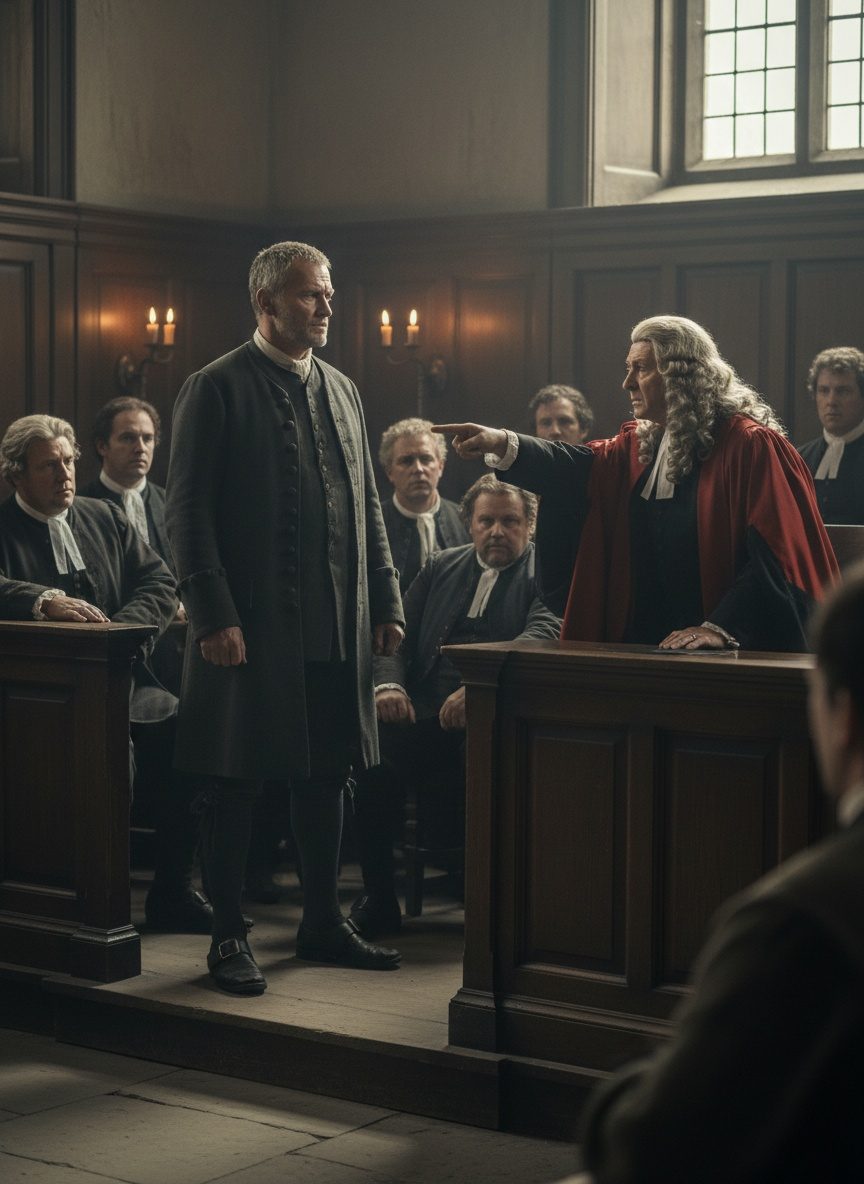
Each confession had been an act of survival. Pressed under the weight of mortality, Cranmer did what he believed necessity demanded — choosing life over conviction. The first recantation might have saved him, had the political winds not turned so fiercely. The English Reformation, which Cranmer had so fervently advanced under Henry VIII and Edward VI, had come full circle in the reign of Mary I. The fires of the Counter-Reformation sought both to cleanse and to consume.
The Unexpected Thrust
As Cranmer was led to the stake on that cold March morning, a mingling of fact and rumor skittered through the crowd like a restless animal. Liberty in the form of reprieve seemed as unreal as the chaotic trials that had sealed his fate. Yet, it was common for mercy to be granted even as the execution pyre awaited — such was the unpredictability of politics cloaked in piety.
Read next: The Day Britain Voted to Keep a King — and Lost Him Anyway
Cranmer addressed the assembly of clergy and curious spectators, contrition mingling with clarity in his voice. It was expected he would repeat his recantation, affirm once more the Catholic doctrines he had formally renounced and then embraced again under pressure. But with a measured calm, Cranmer startled all by denouncing his previous confessions. He declared every recantation to be a lie and reaffirmed his Protestant faith.
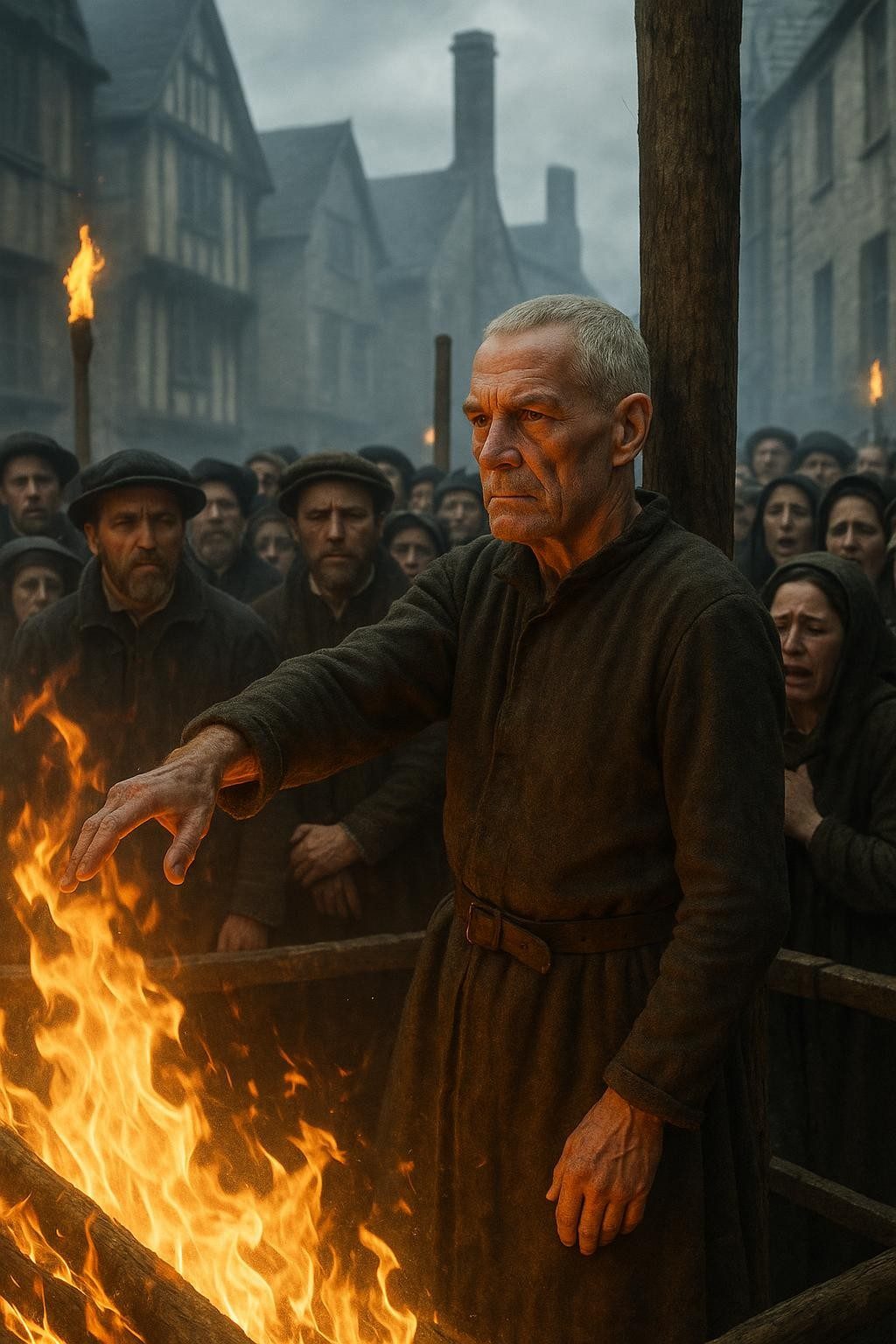
Then, without hesitation or falter, Cranmer extended his right hand into the heart of the fire. The hand that had signed the false documents, the one instrument of his betrayal of conscience, was given over to the purifying flame first. The crowd gasped at the sight of a man determined to erase earthly compromise with his flesh blazing openly, an act of defiance against the coercive forces that sought not only his life, but his soul's alignment.
Recollection of the Catalyst
Cranmer's martyrdom marked a poignant chapter in the enshrined annals of England's religious crises. He had been more than a theologian; he was a craftsman of belief, penning the Book of Common Prayer, a text that would linger in the Anglican tradition long after its author’s death. His execution was not merely a morbid tale of power and persecution, but rather the reflection of shifting allegiances and clashing beliefs that turned arenas of faith into battlegrounds.
The response to Cranmer's final act echoed through biblical and contemporary narratives. Some interpreted it as the ultimate act of courage, a man rejecting the earthly authority that could condemn the body but not the soul. Others viewed it with caution, as proof of the complexity and turmoil within an individual faced with existential pressures. Cranmer's death was a symbol, one that stands amid the fires of Smithfield and the burnings of Oxford, irrevocably tied to the marrow of England's reformations and revolutions.
The Enduring Flame
The shadows cast by the flames flickered long into the evening, lapping at the twilight as Cranmer's life smoldered into legend. The shock of his sudden act of courage resounded far beyond the cobbled streets of Oxford. It burned into the consciousness of a nation divided, leaving an enduring mark on the pages of history and the optimistic vision of a reformed Church that Cranmer had aspired to build.
As recantations and steadfast courage mingle in the corridors of historical memory, Cranmer’s choice reveals much about the perilous nature of conviction and the haunting resonance of faith. In his final acts, he left behind a paradoxical legacy: through the flames that consumed his earthly form, the Archbishop forged a beacon that would illuminate England's spiritual and cultural landscape for centuries to come.
The tale of Thomas Cranmer continues to resonate through history, a reminder of the complex dance between conviction and coercion. It challenges us to reflect on our own principles and the lengths we would go to protect them. Would we stand firm, reaching into the fires that threaten to consume us, or would we sign away our deepest beliefs to live another day? It is a question that each generation, in its own way, must answer anew.