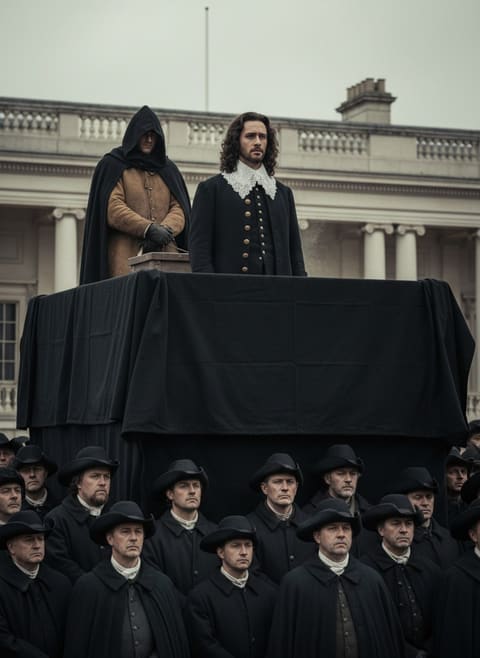
Anne Askew’s story ends in flames. Yet, it began with words that refused to burn.
The Unyielding Faith of Anne Askew
In the heart of Tudor England, where political intrigue brewed behind the closed doors of palatial courts, the religious reformations initiated by Henry VIII began to ripple through society, leaving both fervor and fear in their wake. Amid this chaos emerged Anne Askew, a figure of unwavering conviction whose life was dictated not by the whims of kings and courts, but by her personal truth. Born into a well-established Lincolnshire family, Anne was drawn into the Protestant ideas that whispered of reform and renewal. Her beliefs soon placed her at odds with the staid orthodoxy of her day—a dangerous position for anyone, let alone a woman. Despite the inherent risks, Anne's Protestant fervor led her to London, where she shared her convictions with any who would listen.
For the elite of Henry VIII’s court, Anne’s actions were more than just heretical whispers; they were a threat. In 1546, the stakes were raised as authorities sought names—those of influential Protestant sympathizers nestled within the court. Anne, seen as a loose thread that might unravel a larger tapestry of dissent, was arrested and taken to the Tower of London. Here, her defiance was put to the ultimate test. The tower's shadows bore witness to Anne’s relentless questioning by her accusers—questions punctuated by her refusal to betray the names of others, even as her own fate hung perilously by a thread.
Torture and Trial: A Soul Unbroken
The rack, a dreaded instrument of medieval torture, became Anne's brutal companion. The simple but horrific mechanics of this device were designed to dislocate and tear, and Anne was stretched beyond the limits of human endurance. Her frail body, however, belied an indomitable spirit. As her bones were literally pulled apart, Anne remained steadfast, silent on the secrets she held. She refused to divulge the names of her fellow believers at court, her lips sealed by a resolve forged in faith rather than steel. Meanwhile, outside the confines of the tower, tension simmered; the court was a treacherous battlefield where any whisper of treason could ignite deadly consequences.
Read next: The Day a Tudor Chancellor Chose Death Over a Royal Lie
Documents from the era indicate that Anne’s accusers were growing desperate. A single name from her lips could unleash retribution on scores of men and women, some who only tentatively embraced the shifting tides of Protestant thought. But Anne, broken on the rack, listened for a different call—a call she described as divine. When brought to trial, her physical frailty was met with inquiry, yet her responses were sharp and unyielding. Anne's astute use of Scripture as both shield and sword frustrated her opponents. The court, unable to coerce a confession and wary of her influence, found her guilty nonetheless. Anne Askew was to be burned.
The Fire at Smithfield
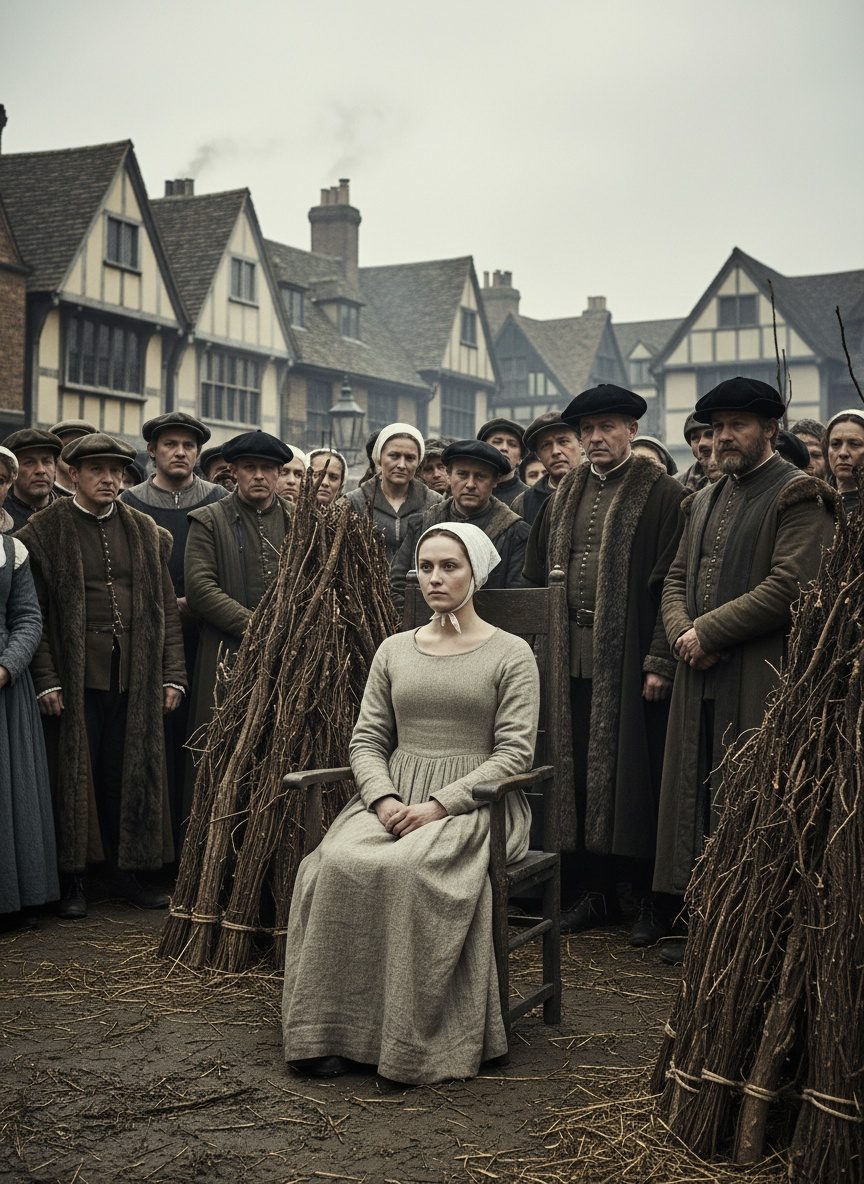
On the sixteenth of July, 1546, Anne was carried to the pyre in Smithfield, a poignant image of defiance against insurmountable power. Unable to walk due to the torture, she was seated in a chair and paraded to her execution site—a stark symbol of her broken body and undiminished spirit. Her impending martyrdom drew curious onlookers, both supporters and skeptics, who gathered beneath the gray, heavy skies of London. Among the crowd were those who saw her execution as a morbid spectacle, while others perceived a profound and perilous protest.
Read next: The Day a Tudor Bishop Refused to Crown a Usurper
Anne Askew faced her death with a serenity that spoke louder than any words she could have uttered. Flames licked at her ankles and rose to embrace her, consuming the mortal remains of a woman who had rendered her final verdict on tyranny and fear. Her smile, though fleeting, shone as a beacon amid the cruel blaze—a testament to her unshakable faith and her choice to suffer in silence rather than compromise her beliefs or endanger others. As ash danced their final waltz with the wind, Anne’s story transcended her earthly end, illuminating the perilously thin line between faith and fanaticism, conviction and concession.
Anne Askew's story is less about martyrdom and more about the courage to defy insurmountable odds in pursuit of one's beliefs. In doing so, she ignites a powerful reflection on the nature of resistance and the price of truth in an age where even the whisper of dissent could lead to a fiery fate. The question her life imparts upon us lingers: In what do we truly believe, and what would we sacrifice to uphold it?