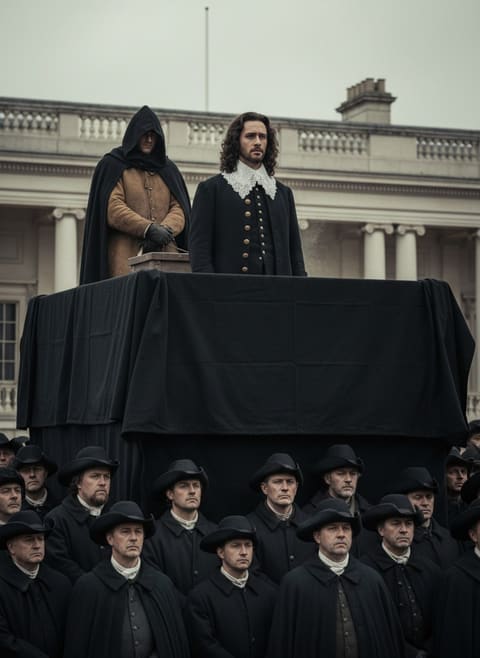
Anne Askew's name is not etched into the annals of history as Henry VIII’s is. It should be.
In the year 1546, the air around Tudor England was thick with tension and suspicion. The Reformation had left a trail of upheaval, setting neighbour against neighbour in a battle of faiths. In the midst of this turbulence, the story of Anne Askew unfolds—a noblewoman, whose quiet strength and unyielding spirit would resonate through the corridors of history. Her tale is not only of unimaginable physical suffering but of unwavering conviction.
Anne Askew, who hailed from a noble family, walked a path few dared in Tudor society. Born into privilege, it would have been easy for Anne to enjoy a life of comfort. But she had different aspirations, ones that aligned with the ever-dangerous Protestant teachings rapidly spreading through England. It was a turbulent era, characterized by King Henry VIII's ruthless suppression of any dissent against his religious reforms. For Anne, the stakes couldn't have been higher. Secret gatherings and coded letters marked her life as she propagated Protestant beliefs amidst pervasive fear and danger.
As Henry VIII faced daunting political pressures, Anne fought her own battles within the confines of secrecy. Her elegance and noble birth did not protect her from the prying eyes of the king’s men. Arrested and imprisoned in 1546, Anne was transported to the notorious Tower of London—a stark fortress that loomed large with tales of torture and death. Under the dim shadows of its towering walls, Anne Askew faced the rigour of interrogation by those determined to extract names and betrayals that could connect her to influential figures within the royal court.
Read next: The Day a Tudor Chancellor Chose Death Over a Royal Lie
The rack, infamous for its brutal efficacy, awaited in that grim chamber. The mechanism, simple in design but terrifying in impact, aimed to extract confessions by dislocating and tearing apart a victim’s joints. As Anne’s body was stretched, the pain must have been excruciating, yet her spirit remained untouched. Her silence in the face of this unspeakable agony speaks volumes about her resilience and unbending faith. The image of Anne, resolute and unyielding under such duress, starkly contrasts with the image of her tormentors, who floundered and failed in their brutal campaign for names.
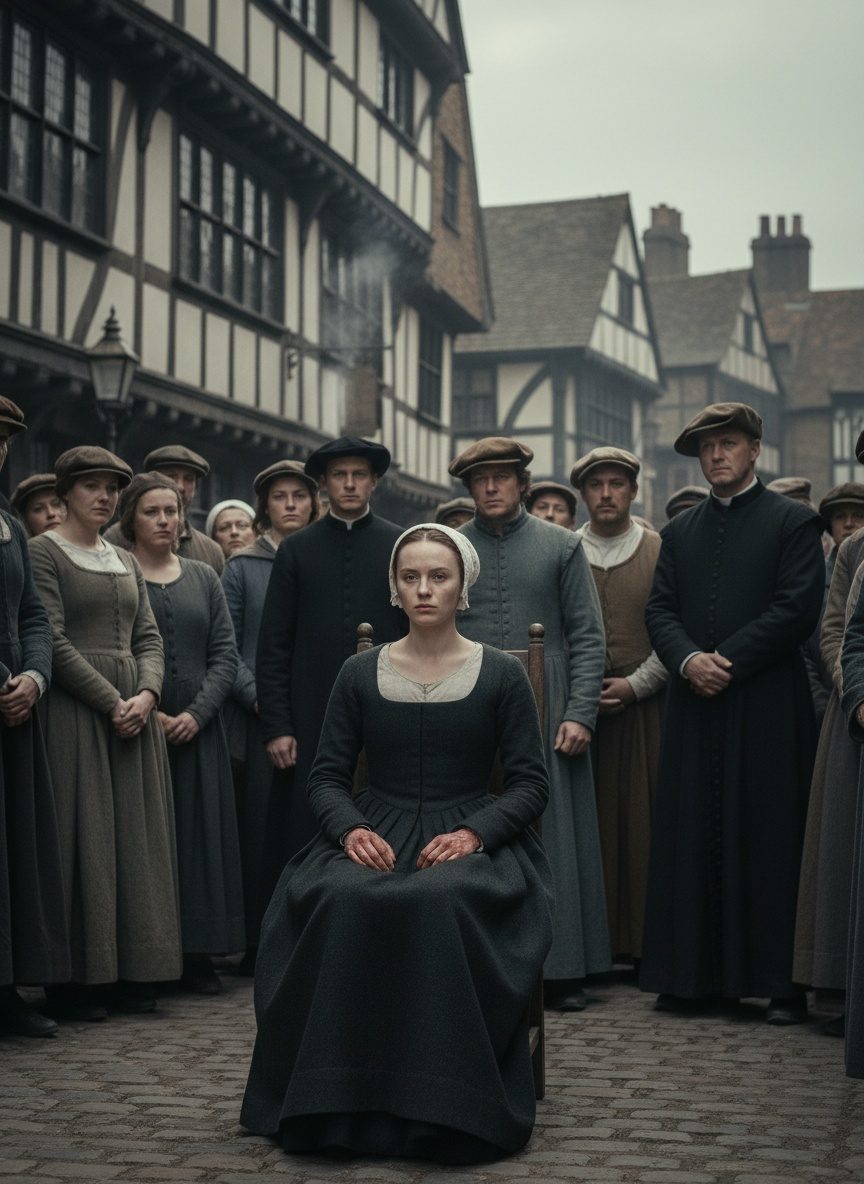
Anne Askew’s torturers, bewildered by her steadfast defiance, eventually had to concede that they would garner nothing more from her than what she had already offered—silence and dignity. The cruelty of their acts did not break her, so they resigned themselves to the ultimate punishment. The sentence was pronounced. Anne was to be executed by burning, the gruesome end reserved for those deemed heretics. Too broken in body to walk or stand after the rack had done its worst, she was carried to Smithfield on a chair, the weight of her ordeal a testament to her suffering, yet the absence of broken spirit a testament to her inner strength.
Read next: The Day a Tudor Bishop Refused to Crown a Usurper
Smithfield, with its open sky, witnessed the final act of this somber drama. It was here that Anne made her last stand. As flames licked around the pyre, consuming the timber and her frail figure, the fires failed to claim her silence. Those watching might have expected cries of mercy, but Anne Askew gave none. Her legacy, seared into history, became one of strength—a woman who faced death with a fortitude that none could have anticipated. In that roaring finality, Anne Askew’s voice was louder than any words she might have spoken. Her death a martyr’s silence in the annals of the English Reformation.
Anne's story, though interred beneath layers of more widely told histories, resurfaces as a compelling narrative of courage against tyranny. In a time when women's voices were often stifled, Anne’s refusal to bow before those who sought her submission serves as a powerful iconoclastic message. Her story is a reminder, not just of the brutalities of the past, but of the courage necessary to confront contemporary struggles for justice and equality. This was not merely a woman's sacrifice at the hands of a tyrannical state but a profound statement of resistance that time cannot erase.