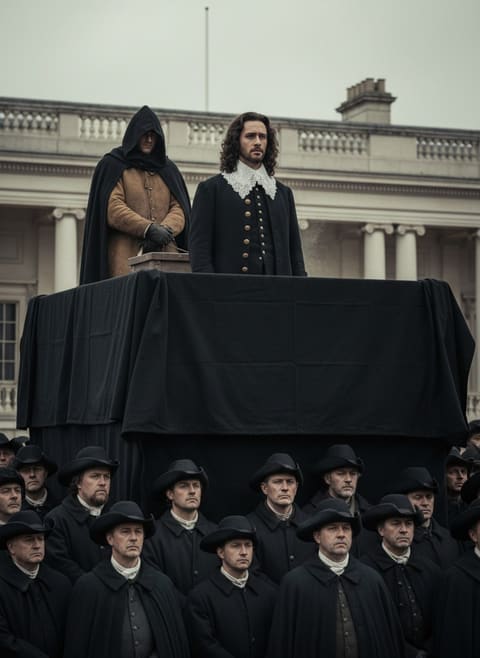
The summer sky stretched vast and heavy above the unwieldy sprawl of Tudor London, as the River Thames meandered through its midst like a muted grey ribbon. Amidst the rhythms of this bustling city, clouds gathered—both in the heavens and within the stark confines of the infamous Tower of London. It was here, in 1546, that Lady Anne Askew made her final defiance against the brutal machinery of religious persecution. Her story, a harrowing tale of resilience and resolve, remains etched into the annals of history—though remarkably absent from many of its textbooks.
The Unyielding Silence of Anne Askew
Anne Askew was a Yorkshire knight's daughter, a woman of startling mettle and even more startling beliefs. By the time she walked through the hallowed gates of the Tower of London, her fate seemed achingly inevitable. Born in 1521, Anne's life unfolded against the backdrop of England's turbulent religious landscape. King Henry VIII’s final years were smoldering with paranoia about heretical plots. Into this charged atmosphere walked Anne, accused of spreading Protestant doctrines.
The arrest may have initially appeared routine—a woman preaching heresy, merely another thread in the complex tapestry of Tudor England's religious conflicts. Yet, it soon became apparent that Anne's resolve was anything but prosaic. As she faced relentless interrogation by the King’s men, their demands were clear: give them names—confess the identities of the influential women at court who sympathized with the Protestant cause. But even as the rack pulled her bones apart, Anne Askew—a woman of mere flesh and unbreakable spirit—offered only one answer: silence.
The Torturous Path to the Flames
Inside the grim Tower, the echoes of her own screams would have reverberated off the stone walls, mingling with the ambient clanking of swords and the distant cries of the River Thames' wharves. Undeterred by the agony inflicted upon her body, Anne remained resolute. Her torturers, among them Sir Richard Rich, a man infamous for extracting information through cruelty, were desperate for her to implicate the female courtiers with Protestant leanings—perhaps even the Queen herself, Catherine Parr.
Read next: The Day a Tudor Chancellor Chose Death Over a Royal Lie
As bones dislocated and ribs threatened to fracture under the relentless force of the rack, Anne Askew preserved not just her dignity, but the integrity of her cause. The refusal to name her fellow supporters was a bold act of defiance in the face of a monarchy intent on rooting out Protestant treason. Her silence spoke louder than any testimony could, echoing a strength that seemed to sketch new dimensions of human endurance and belief.
A Pyre Lit with Injustice
Anne was sentenced to die by burning at Smithfield. On July 16, 1546, a wooden chair was carried to the place of the pyre, where it stood waiting to embrace its singular occupant. Anne, unable to walk due to the tortures she had endured, was carried to the stake, each of her movements accompanied by the reluctant and creaking symphony of wood and rope, as the chair settled into its place atop the kindling.
The execution grounds were a cacophony. The murmur of the gathered crowd, the crackle of flame eagerly awaiting its human toll, the whispered prayers of a woman about to be consumed by fire. Her final moments were a testament to enduring conviction. As the flames licked at her chair, her lips moved, barely a whisper against the din, perhaps in prayer, perhaps in defiance. Her agony was matched only by her uncompromising silence, as her tormentors realized the consequences of their failure; the net they had cast to snare high-profile Protestant sympathizers remained resolutely empty.
The Woman Behind the Legend
Anne Askew's legacy, much like the smoke that billowed around her pyre, is ephemeral yet pervasive. Though little of her writings survived, what remains offers an intimate glimpse into her inner world—a collection of forthright words and transcribed interrogations that unwittingly document her resolve. However, while her courage was undeniably profound, her status as a Protestant martyr complicates her legacy. It speaks volumes about the paranoia that had infected the Tudor court, leading to extremes such as the use of the rack to silence dissent.
Read next: The Day a Tudor Bishop Refused to Crown a Usurper
This isolated but poignant narrative of a Yorkshire knight's daughter who dared to defy a king has outlasted the very monolithic structures that once clamored for her confession. It prompts one to reflect: in a breathless era driven by the frantic pulse of religious reform, how many other voices like Anne Askew’s were silenced, lost to the annals of history—names never spoken, secrets taken to the grave?
A Legacy of Resilience
Anne Askew's fortitude transcends time, a testament to the resilience of the human spirit when confronted with unspeakable challenges. Her story challenges us to think about courage and the price of one's principles. In a world where conformity to the reigning dogma offered a measure of safety, Anne chose the solitary, fiery path of integrity. Her defiance in those final, terrible moments speaks to the persistence of hope and conviction even in the face of overwhelming power.
As we wander the halls of current-day parliaments or seek understanding in the acts of defiance documented in history, Anne's story encourages us to remember that bravery and faith often come entwined with sacrifice. Her silence, undisturbed even by the agony of the rack, coupled with the quiet dignity of her last moments, endures as a stark reminder of those for whom faith is an irrevocable choice—often exacting the highest price, yet nonetheless unyieldingly inspiring.