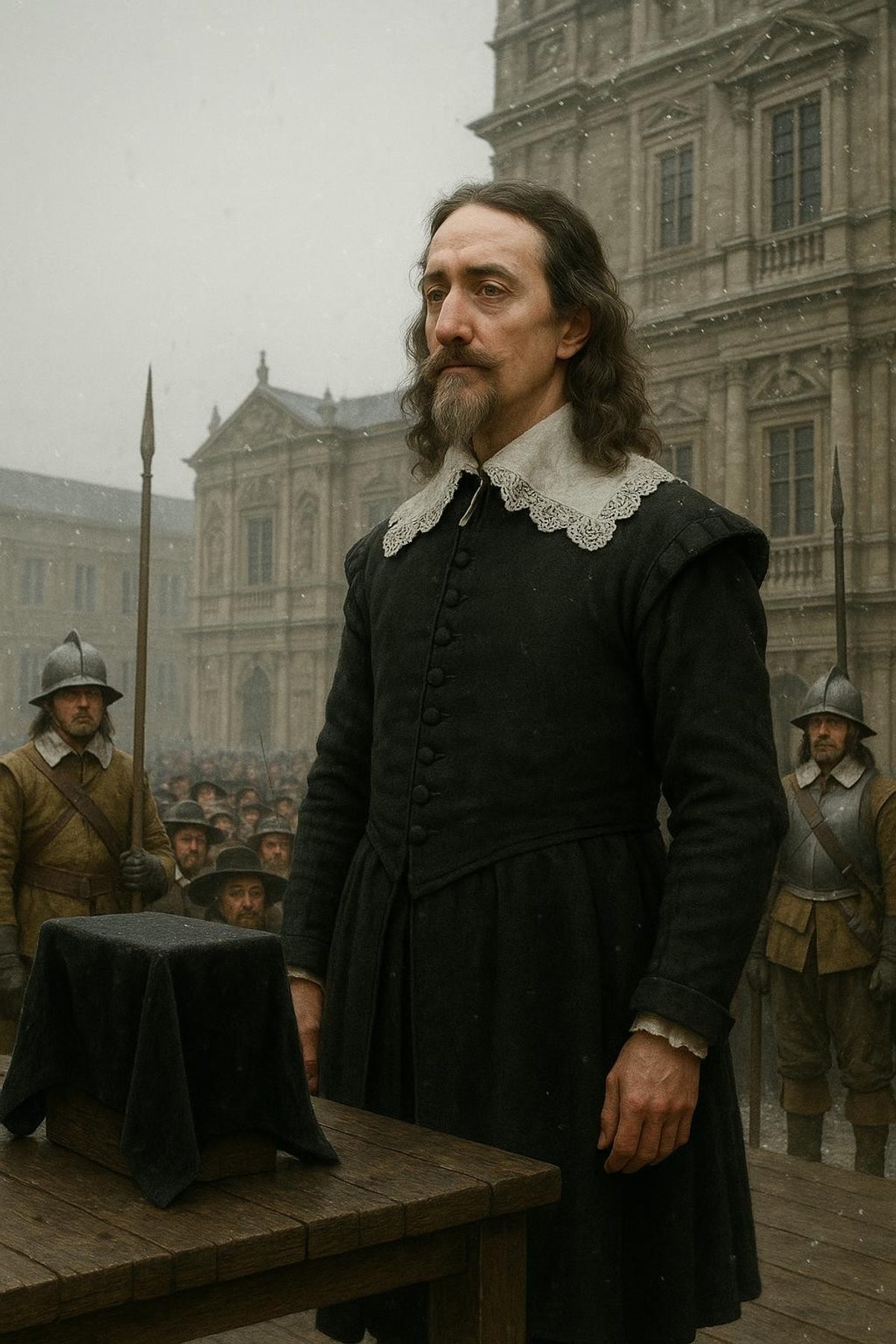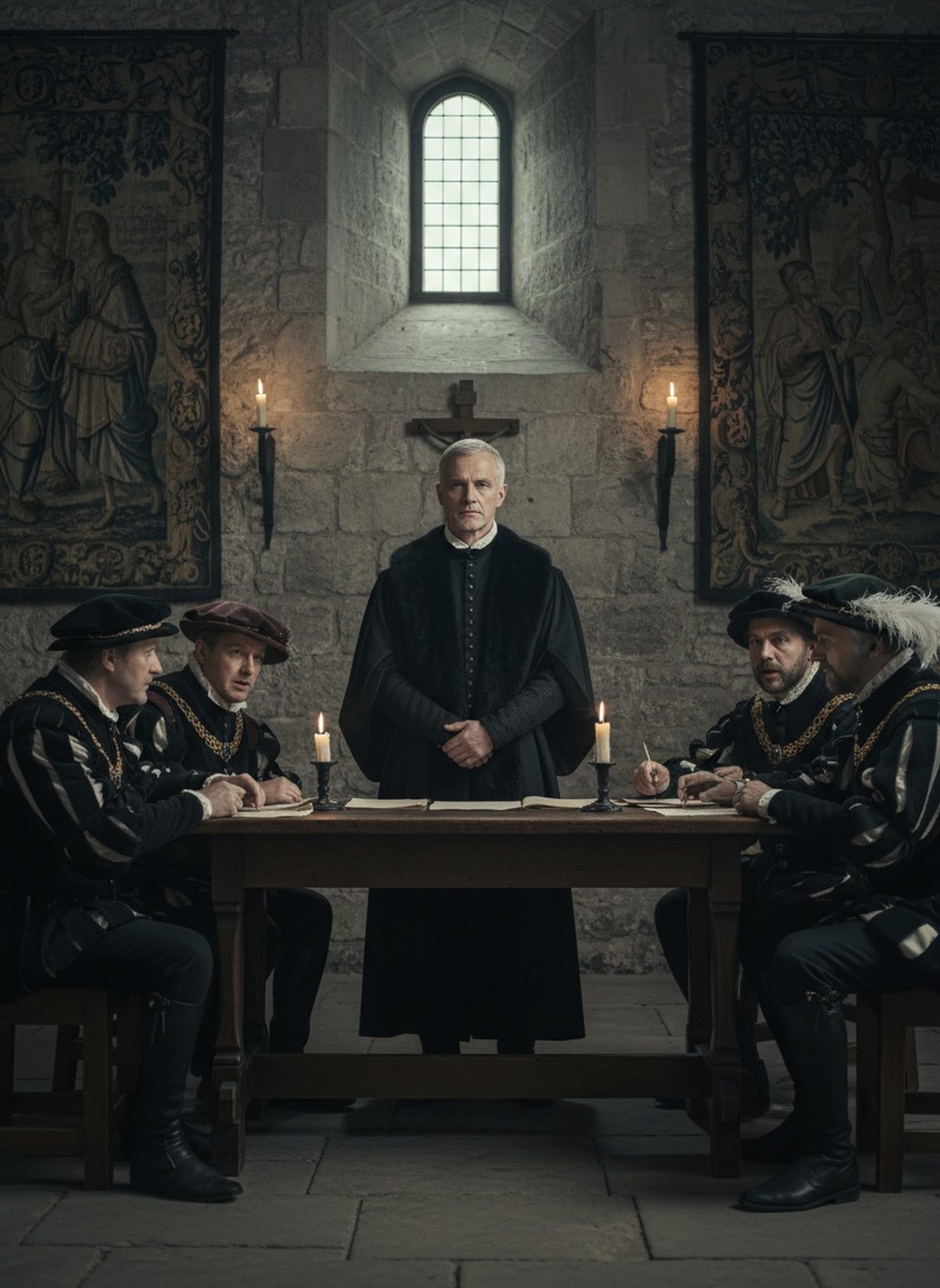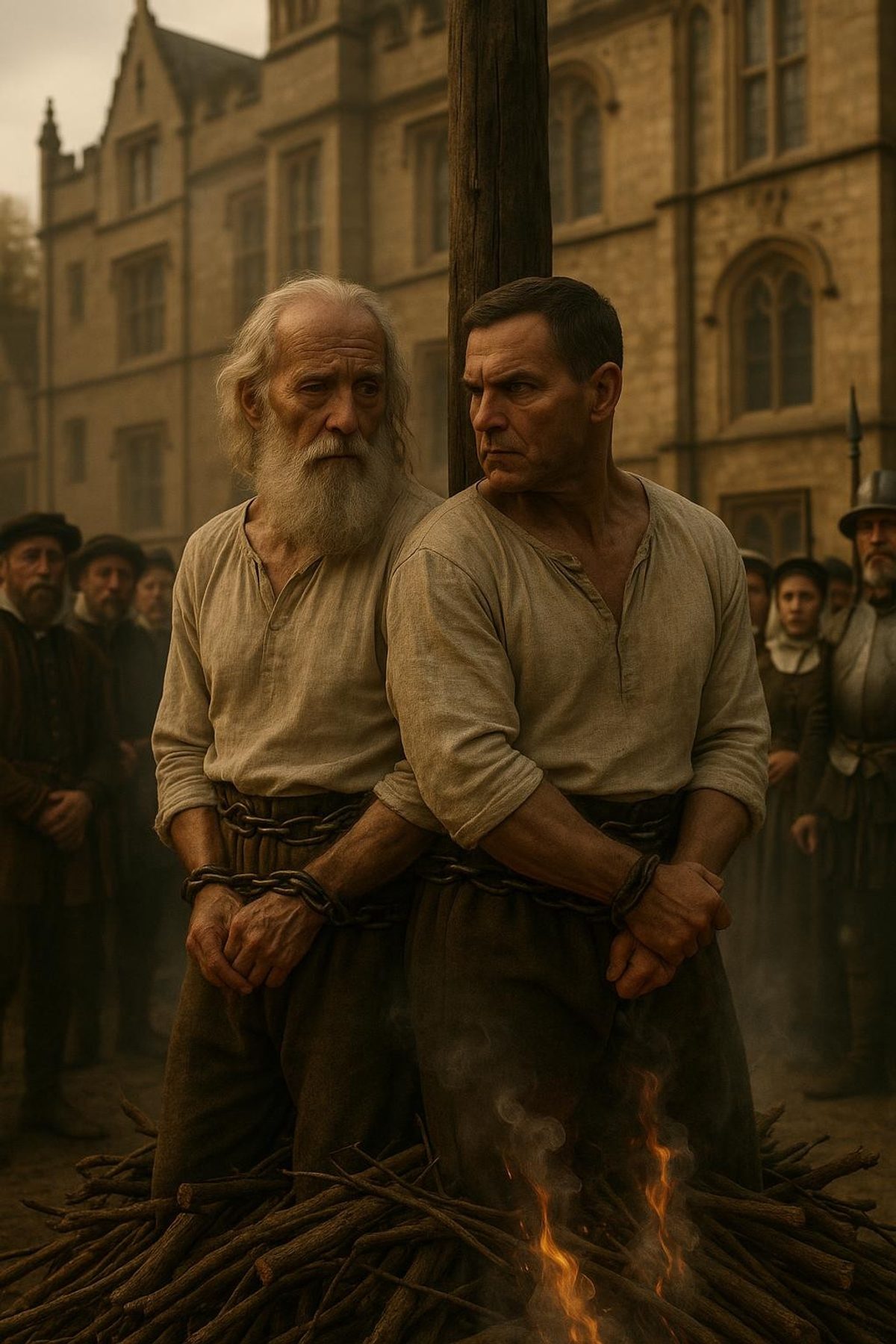
October 16, 1555. The morning air carried a biting chill that seemed determined to seep through every pore of the skin. In the heart of Oxford, outside the ancient stones of Balliol College, a crowd gathered, faces etched with a complex tapestry of anticipation and dread. The air was thick with the smell of impending torment—an unsettling blend of burning wood and the chill of human anxiety.
At the center of the throng stood two figures, chained to a single stake as if in a grim embrace—not enemies, nor mere collaborators, but steadfast friends and fellow martyrs. One was Hugh Latimer, a man whose wit and candor had won him renown and infamy in equal measure, and beside him, Nicholas Ridley, scholarly and respected, a symbol of learned defiance. Both were caught in the deadly tides of religious upheaval, brought about by the reign of Queen Mary I, a devout Catholic determined to reverse her father’s Protestant reforms.
Latimer and Ridley had not been mere pawns in the vast game of Tudor politics. They were architects of the Reformation in England, eager to kindle the light of Protestant faith across the islands. However, under Mary’s rule, such ambitions were met with the sword and the stake. The men had been given chances to recant their beliefs, opportunities they met with unwavering resolve, knowing well that acceptance would mean a betrayal not just of their faith, but of each other.
As the executioner prepared the pyre, the somberly clothed onlookers watched in silence, a silence punctuated only by the crackle of the kindling catching fire. Latimer turned toward Ridley, his eyes alight with a conviction that burned brighter than the flames beginning to lick at the hem of his tunic. "Be of good comfort, Master Ridley," he declared with serene authority, his voice carrying across the hushed assembly. "We shall this day light such a candle in England, as I trust by God’s grace, shall never be put out."
Read next: The Day a Tudor Archbishop Walked Calmly Into the Fire
The words held a potent truth. The candle Latimer spoke of was more than mere metaphor; it was a defiant assertion that even as the fire consumed their bodies, it ignited an indomitable spiritual force. The charged metaphor fueled those who would later continue the Reformation’s cause, becoming a part of England's collective consciousness and enshrining Latimer and Ridley as martyrs of the faith.
The flames grew fierce, fueled by bundles of wood packed tightly around the men. For Latimer and Ridley, ensnared by the flickering tongues of fire, there was no turning back. Yet, the eerie calm that surrounded them seemed to spread among the spectators. Some turned away, unable to bear the searing sight that would haunt them long after the last embers had cooled. Others stood resolute, their expressions stony, bearing witness to what they saw as necessary sacrifice—a bloody proof of their faith’s endurance.
The sun rose higher, casting stark shadows over the cobbled paths of Oxford, paths that Latimer and Ridley had walked in better days, years when the Reformers' debates had breathed vivid life into the hallowed halls of the university. Now, those debates had combusted into terrifying reality. Within a few short hours, the charred remains of their resolve lay ashen on the ground, yet the potency of their words echoed far beyond the courtyard, reverberating through time.
Mary Tudor's ambitions for a Catholic restoration continued with fervor, and the fires of persecution burned brightly across England. Yet for all the violence the Marian persecutions wrought, they only intensified the Protestant cause, fanning the flames of a religious conviction that would soon engulf the nation. No decree, no sovereign edict, could quell the surge of reformed faith kindled by the deaths of these two men.
Today, if one were to walk the cobblestones of Broad Street outside Balliol College, they would find a small cross set into the pavement, marking the place where Latimer and Ridley met their fiery end. It's a simple memorial, unassuming and easily overlooked, but one that speaks to those who pause and consider its significance. To stand there is to feel the echoes of history—of conviction and sacrifice that affirm the power of belief in shaping destiny.
Hugh Latimer's promise of a candle lit in the face of tyranny remains. The notion illuminates the corridors of British history, guiding generations toward the light of individual faith against the shadows of oppression, ensuring that the flame of religious freedom can persist. It is a reminder that while the fires of adversity can destroy, they can also ignite an enduring spirit that challenges the darkness.