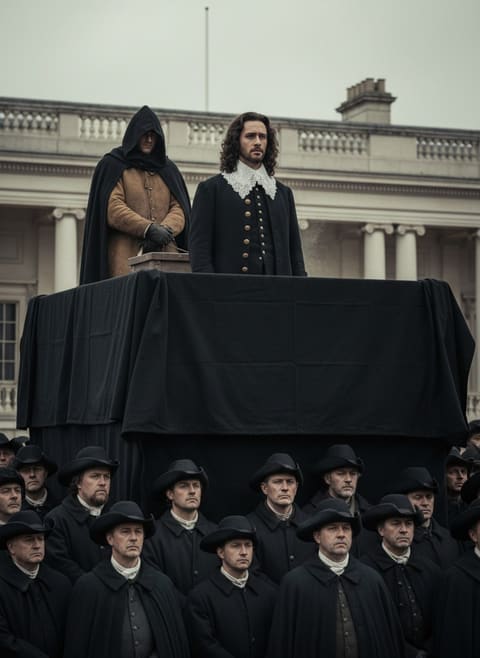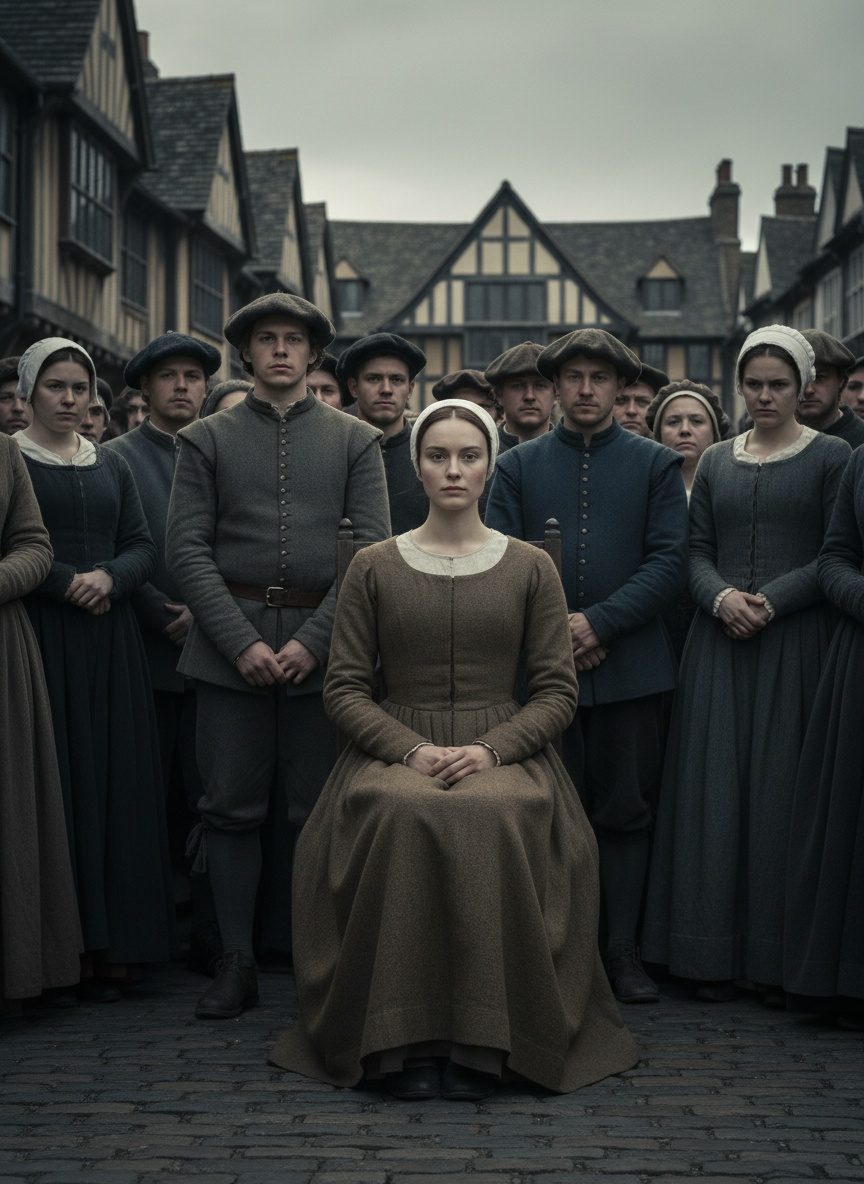
Smoke stung her eyes, the acrid scent of burning flesh mingling with incense in the frigid morning air. Anne Askew took a ragged breath, the chair beneath her unmoving among the clamoring crowd at Smithfield Market. Her voice, though strained from days of relentless agony, was steady as she began to quote Scripture, her words rising above the murmurs and cracklings of the burgeoning fire.
Anne Askew, the resolute Protestant martyr, found herself ensnared in the deadly politics of Tudor England. It was 1546, and the nation tentatively balanced on the precipice of change, caught between the old Catholic faith and the burgeoning Protestant Reformation. With King Henry VIII's religious policies as mercurial as his temper, adherence to a single line of belief could be a fatal folly. And yet, for Anne, her conviction was forged in fire and tempered by her indomitable will.
Her journey to this fiery death was fraught with peril, marked not just by her outspoken beliefs but also by the societal boundaries she dared to cross. Born into a noble family, Anne possessed education uncommon for women of her time. Her command of the Scriptures was as fierce as it was threatening to the patriarchal order. Her eloquence and forthrightness in discussing theological matters not only captivated but infuriated those who held religious and political power.
In the weeks leading up to her execution, Anne had endured one of the most barbaric forms of interrogation devised by the king’s men: the rack, a brutal stretching device intended to dislocate limbs and rupture tendons. But even as her body was torn beneath the relentless force, Anne’s spirit remained unshakable. She is known to be the only woman in English history to be tortured on the rack — a title earned through the relentless pursuit by her accusers to extract names of fellow believers and, perhaps more pressingly, to force her recantation.
Read next: The Day a Tudor Chancellor Chose Death Over a Royal Lie
Each turn of the screw and each question posed to her met with unwavering resolve. Anne Askew refused to betray others or renounce her faith. She left behind a chilling account of her experiences, maintaining the sharp clarity of her innocence and conviction. This account, smuggled out of the Tower, served not only as a testament to her faith but also as a beacon of hope for other reformists.
Her trial at Guildhall was a spectacle of judicial theater. The prosecution, desperate for her recantation, presented claim upon claim of her heretical views. But with remarkable composure, Anne Askew confronted her accusers, each riposte underpinned by the very Scriptures they waved as evidence against her. Men in robes and ecclesiastical regalia gnarled in frustration as a woman, a prisoner, turned their own texts against them.
The offer was simple but insidious: recant, and your life shall be spared. But the cost was a betrayal to the very essence of who Anne was and the God she refused to forsake. Despite the lack of physical strength to stand or walk, her spirit could not be silenced. Her refusal sealed her fate, condemning her to an execution designed to serve as a public reminder of the peril faced by dissenters in Henry’s England.
On the day of her execution, Anne was carried to Smithfield, her body unable to support itself. As the pyre was stacked around her, the chill in the air was met with a warmth that emanated not from the kindling flame but from within her. Anne Askew grasped the Bible, a forbidden book that had become the symbol of her defiance, the pages smudged with ink and ash, clutched to her heart.
Read next: The Day a Tudor Bishop Refused to Crown a Usurper
Crowds gathered, some drawn by morbid curiosity, others seeking a glimpse of the young woman who dared to defy a king. Among them were spies and sympathizers, priests and preachers. Some might have expected fear or desperation in her eyes, but those who would later recount the scene described something different — an unyielding serenity even as death's warmth crept ever nearer.
Her final words, echoing above the crackling timbers, were delivered not as a plea but a promise. "I am not afraid to die," she declared, embodying the very hymn of those who sought a truth larger than themselves. Her sacrifice did not unfold silently into history; it bellowed, setting forth ripples that would challenge monarchs and mold martyrs long after the embers dwindled in the cold, misty air of an April morning.
Anne Askew’s story is a reflection on the complexity of conviction in a Tudor world that oscillated between tyranny and reform. It reminds us that the struggle for religious freedom and the courage to hold onto personal beliefs in the face of oppression have long defined the human experience. While history often paints its heroines in broad strokes, reducing them to mere players in a linear narrative of kings and conquests, the legacy of Anne Askew rides the finer brushstrokes — the indomitable force of a single individual's stand against the tide. Her voice, once lost to the flames, sings still through the annals of history, whispering to those willing to listen that sometimes silence is the loudest cry.