The Industrial Revolution was driven by engineers and factory owners. But sometimes, revolutions are sparked by poets.
The Weaver's Son Who Became a Parson
In 1785 Lancashire, Edmund Cartwright was an unlikely candidate for an industrial innovator. Born in April 1743, he was the son of a blind weaver — a fact that perhaps predestined him to feel a connection to looms. However, Cartwright had chosen a very different path, embracing the quiet contemplation of the Church and the elegance of poetry over the mechanical clattering of a cotton mill. His education had been steeped in the classics, a gentleman’s education, far removed from the smokestacks and canal sweat of the burgeoning industrial domain.
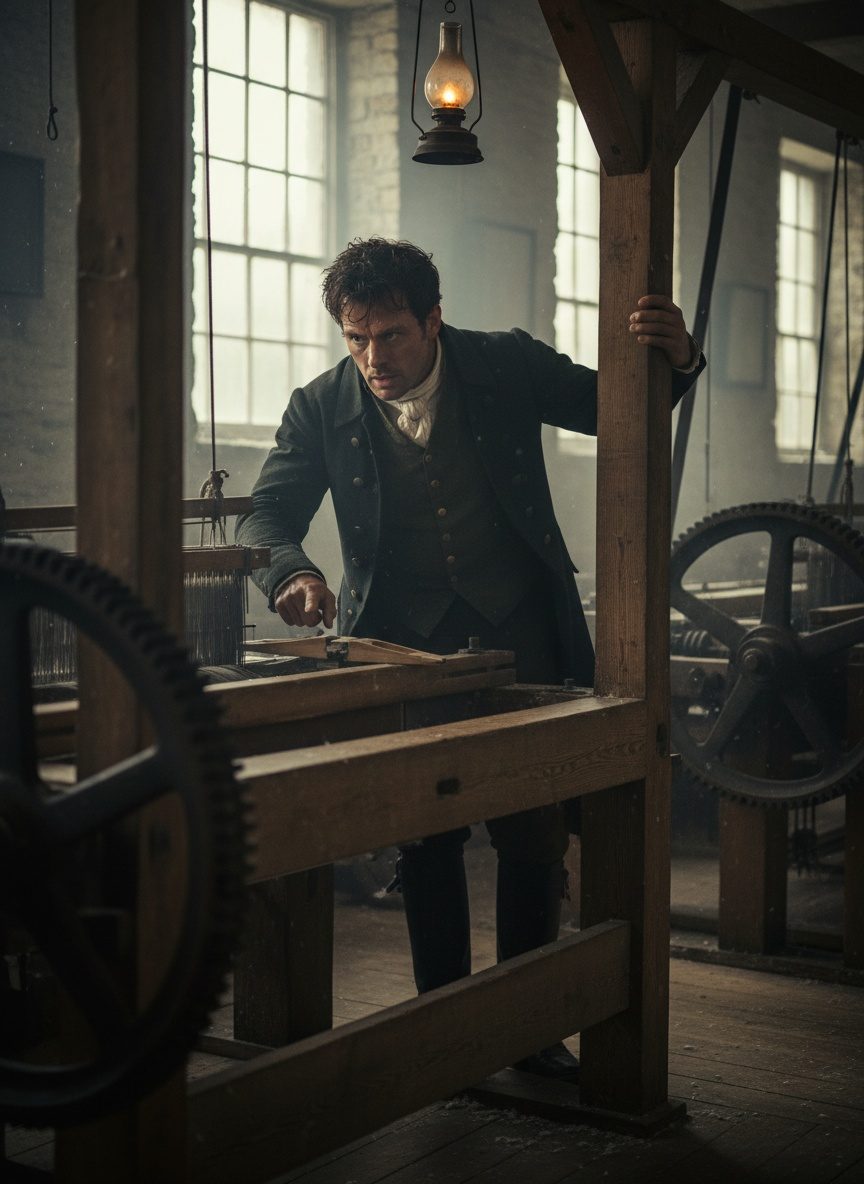
It was at a Derbyshire cotton mill in 1784 that an unexpected curiosity stirred in him. Perhaps it was the rhythmic clacking of the manual looms that struck a chord within his poet’s soul, a cadence of human toil that demanded a new stanza. He watched the loom’s shuttle fly, observed the weavers toil all day to create what the machines of industry promised to do better, and a spark of inspiration took hold.
A Poet at the Forge
Cartwright returned home with a mind ablaze and ideas forming as quickly as words on a page. With nothing more than a poet's curiosity and a keen intelligence unfettered by conventional engineering knowledge, Cartwright began to tinker. He drafted, erased, and drafted again, a mechanical alchemist, translating fibers of thought into metal and wood. Despite having no formal training in mechanics, his mind was free to leap over the boundaries adherence to established principles might have imposed.
Read next: The Day a Weaver's Son Lit Britain's First Public Railway
In 1785, less than a year after first viewing a loom, the reverend presented what the weavers in the mill had thought impossible: a mechanized invention that could replicate their manual skill – the power loom. Skepticism met his efforts initially, but Cartwright's invention was as much a challenge to the sensibilities of the time as it was a boon to industry. Yet, despite hurdles still to be overcome, this was a profound moment in industrial history — one which showed that genius could spring from the most unlikely places.
The Loom That Powered a Revolution
The first iterations of Cartwright’s power loom were unreliable and met with resistance. After all, the inception of mechanical automation suggested to many that the specter of unemployment loomed. Members of the public reacted as if possessed by the rifled-gun clarity of fear. Among the teasing echoes of laughter were the more sinister notes of looming discontent as weavers rebelled against the machines they predicted would render them obsolete.
Read next: The Day a Mill Owner Walked Into Court and Freed His Rivals' Children
Despite the challenges, Cartwright persisted, propelled by an uncanny faith in his invention. Gradually, refinements were made and the true potential of the power loom unfolded with each iteration. By the turn of the century, his pioneering design had transformed the textile industry. It heralded a wave of efficiency that rippled from Britain’s mills to factories worldwide, threading a new fabric for the industrial age.
Weaving the Fabric of Modernity
Edmund Cartwright’s contribution might easily have been lost in the mechanical cacophony of the industrial revolution. Yet, the power loom brought more than just efficiency; it recast the relations between human labor and mechanized invention, spurring on the cultural transformations that marked the late 18th and early 19th centuries. His ingenuity, emerging not from workshops or factories but the study of a country parsonage, bridged the pastoral calm with industrial might.
This story, like the reverberations of the looms that once clattered in Derbyshire’s mills, serves as a reminder that progress can come from the most unexpected sources. Our modern world incessantly hums with innovation and invention, yet it pays to remember that these breakthroughs often owe their genesis to the innate curiosity of the human spirit, undaunted by traditional expertise or formal trainings. In a time when revolutions were measured by smog and steel, it was Edmund Cartwright, the poet with ink-stained hands, who wove new patterns into the fabric of industrial possibility.