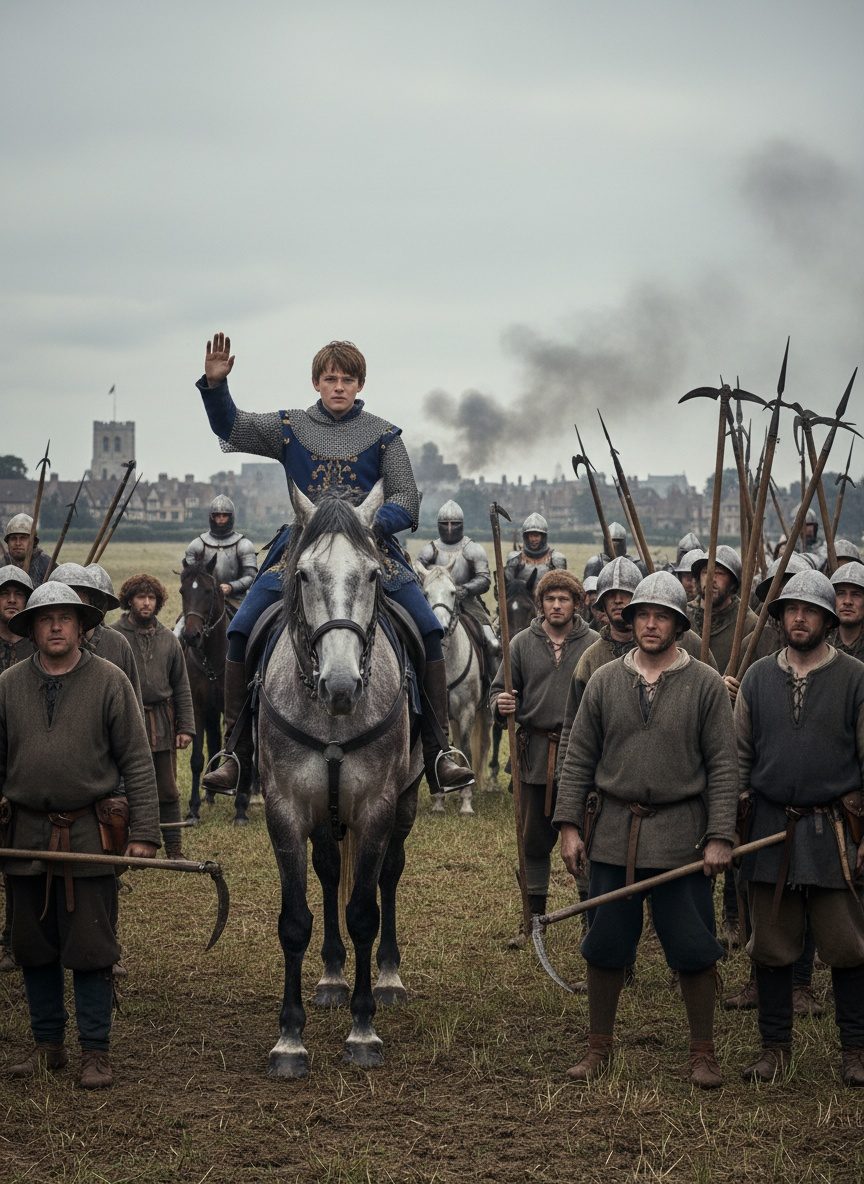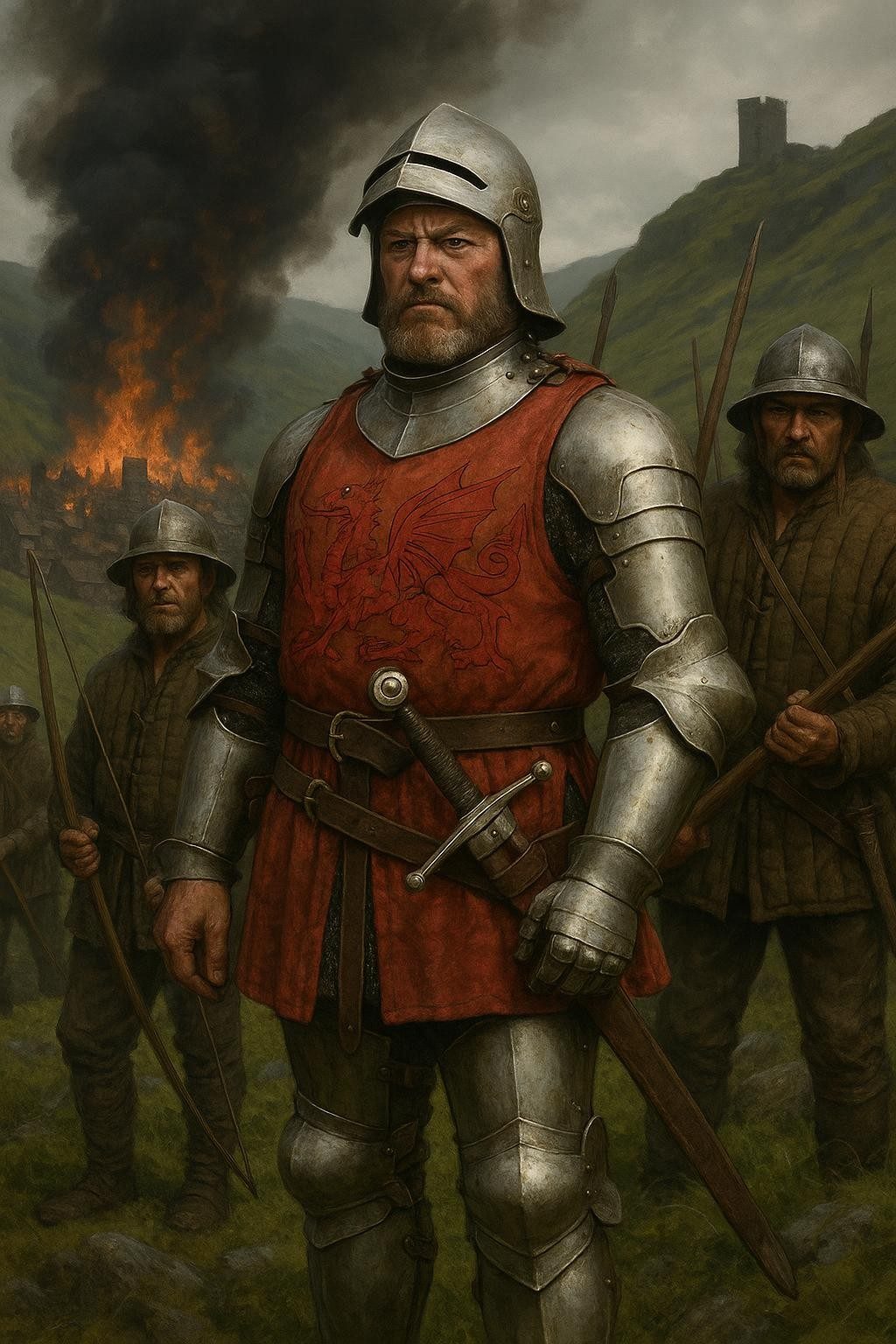
Crackling flames curled around the wooden frames of Lichfield, illuminating the night sky with a hellish glow. The air was thick with smoke and the screams of townsfolk fleeing the inferno, their possessions forgotten in the frenzy. The smell of burning timber mingled with the tang of victory for Owain Glyndŵr as he surveyed the havoc from a distance, a determined figure against the pyre of English towns.
Owain Glyndŵr, once known primarily as a Welsh landowner with an eye for legal disputes, had transformed his grievances into a fiery symbol of rebellion. In 1400, with no army and no throne, he raised his standard against a dismissive England, declaring himself Prince of Wales. This act would cast him as a legendary dragon to his people, a fiery force unwilling to bow to English crowns.
The tale starts not with fiery conquests, but with simmering grievances. A dispute with a neighbor over land, a common enough occurrence, but one that found no just resolution in the biased courts binding Wales to English law. For Glyndŵr, it was the final insult in a series of wrongs. Inspired by prophecies of a savior to lift the yoke of English oppression, he took up arms not just for himself, but for a long-subjugated nation. It was a calculated gamble, yet few could have predicted the success of this Welsh uprising.
By 1404, Glyndŵr had emerged as a formidable opponent, known not only for his shrewd strategies but also for his audacious tactics. He waged a war not of simple battles, but of daring raids that left English strongholds smoldering and their armies in disarray. His forces were a patchwork army of Welshmen, banded together by shared grievances and a daring leader who wielded his knowledge of the rugged terrain with devastating effect.
Read next: The Day an English King Drowned an Army in a Marsh
The Battle of Bryn Glas in 1402 marked a significant victory, where Glyndŵr's forces outmaneuvered a far larger English army, turning their size into a disadvantage on the narrow passes. Bloody and humiliating, it sent shockwaves through England. Stories of Welsh fighters appearing out of the mist, vanishing just as quickly, fed into the legend of Glyndŵr as an almost mythical warrior.
The victories fueled Welsh support, swelling Glyndŵr's forces with zealots and patriots alike. Yet, it was not merely Welsh support that buoyed his ambitions; it was calculated diplomacy, too, that carved his path to power. In a stroke of political genius, Glyndŵr forged an unlikely alliance with France in 1404, promising support against their mutual enemy. With treaties signed, foreign reinforcements bolstered his forces, while the very threat of a Franco-Welsh pact unnerved English rulers, distracted as they were by other continental affairs.
Glyndŵr established himself as a statesman, not just a rebel. He convened a parliament at Machynlleth—a historic moment not seen since Welsh independence was crushed centuries earlier. Here, he asserted his role as Prince of Wales, invigorating Welsh hopes for national identity and self-governance. His court drew in scholars, clergymen, and nobility, fostering a brief renaissance of Welsh culture and governance. It was a vision of a new Wales, scorched from the embers of the old.
Through cunning, charisma, and a fierce passion for Welsh sovereignty, Glyndŵr continued to press into English territory. His enemies were left reeling, defending against phantom armies that struck like lightning, only to retreat into the craggy hills of Wales. Glyndŵr's campaign was as much psychological as it was physical; the sporadic raids and the elusive nature of his forces effectively turned the tables on a far larger opponent.
The fires Glyndŵr lit across England were more than just acts of destruction. They signified the burning desire for autonomy, the cleansing force of a movement that saw its leader willing to defy the norm and redefine what it meant to be a Welshman. As he continued his legendary campaign, Glyndŵr's name became synonymous with Welsh resistance and tenacity, embedding him into the mythology of the nation.
Despite his triumphs, the tide eventually turned. Attrition wore down his forces, and political winds shifted. The grand dreams of a fully independent Wales eluded Glyndŵr, but the legend he crafted burned eternal. Today, his legacy is rekindled not just in tales of rebellion but in the enduring spirit of the Welsh people. The fire Glyndŵr kindled represents more than a mere bid for power; it was a beacon of national identity in a time of oppression.
Owain Glyndŵr's uprising remains etched in the collective memory, a symbol of defiance, identity, and hope. The day a Welsh dragon burned half of England alive was not just an assertion of power but a deeper call to remember who they were and, crucially, who they could one day become. In the smoldering ruins, Wales found more than just a leader; they found a legend who reminded them that their voice could still rattle the walls of empires. His story remains a poignant reminder that fire, once kindled in the hearts of the oppressed, can illuminate paths to freedom long after the embers cool.