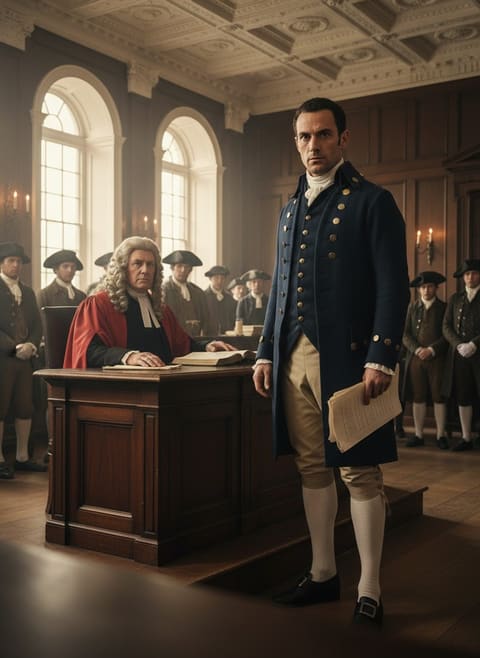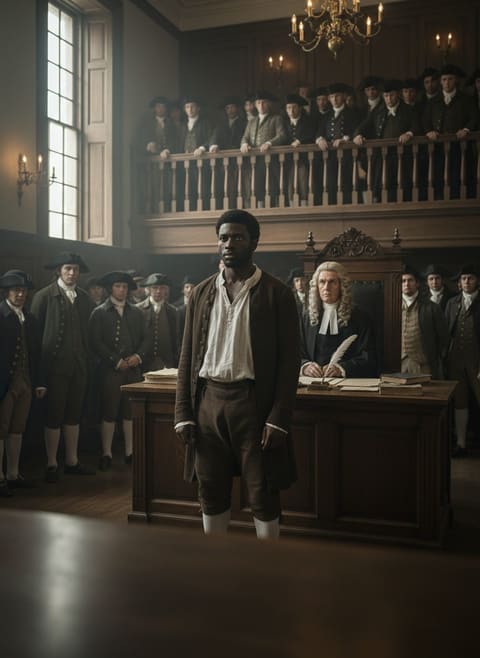
London on a crisp autumn morning in 1765 was a city of contrasts, where the whispers of mist threaded through cobblestone streets bustling with life. The grey clouds hung low, their edges softened by the pale light of an early dawn. The Thames flowed with a calm determination, its murky waters dividing the city between old wealth and burgeoning industry. It was here, amid the clatter of carriage wheels and the calls of street vendors, that a momentous legal clash would unfold in the heart of Georgian England, one that would challenge the nation's moral compass and tune the ears of its society toward the muted cries of the enslaved.
Jonathan Strong, a man young in years yet aged by the chains of cruelty, lay battered and blind in the streets of London, his life hanging by the thinnest of threads. Left for dead after enduring a brutal beating, he became a silent testament to a despotic system that reduced human beings to mere property. His violent ejection from the world of the living was nearly complete when Providence, in the form of a compassionate lawyer named Granville Sharp, intervened.
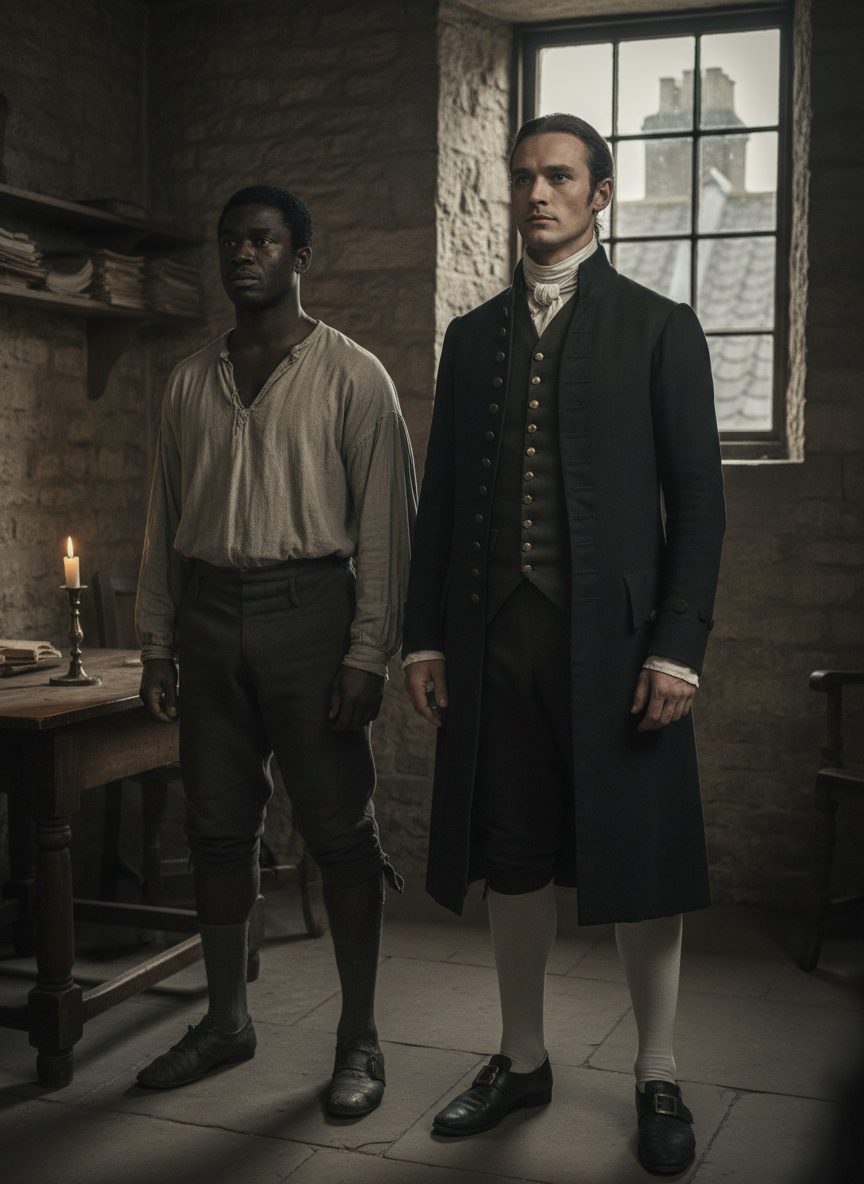
Granville Sharp, though primarily a civil servant drawn into the legal profession by family influence, possessed a heart that beat against the societal injustices that marred his nation's conscience. Upon encountering Strong, hopeless and shattered, he was moved to act. Sharp, with his brother William—an apothecary by trade—embarked on a mission that would see Jonathan nursed back to health, cared for with the same dignity afforded any free man. Within the confines of their home, Jonathan found more than charity; he found allies willing to fight his battle.
For two years, the specter of his past remained at bay, allowing Strong to carve out a new life, far removed from the chains that had once bound him. Yet as autumn leaves gave way to winter frost, shadows of his past loomed once more. His former master, having caught wind of Strong’s recovery, re-emerged to reclaim what he viewed as his rightful property. The demand was simple yet outrageous—Strong was to be shackled and shipped back into bondage.
Read next: The Day a Black Sailor Walked Into Court and Freed Himself
The encounter unfurled upon the docks of the Thames, where the chill air tasted of salt and desperation. Strong faced his former master, defiance carved into his very stance. With a heart unwilling to return to a life of servitude, he stood rooted, an unyielding figure against a tide of oppression. It was here that Granville Sharp entered the fray once more, armed not with weaponry, but with the power of the law and a fervent belief in natural justice.
The legal battle that ensued was one not only of personal redemption but of national significance. At its core was a question that dared to unsettle the status quo: could a man, once washed by the free air of England, be forced back into slavery? Sharp, understanding the stakes transcended Jonathan, took to his battle with fervor, pouring over legal tomes, searching for a defense rooted in law and morality.
In the courtrooms of England, where history’s wheels turned slowly against the grind of precedent and tradition, Sharp found his footing on an ancient legal principle: the right of habeas corpus. This principle, which stipulated that no subject of the Crown could be detained unlawfully, became the cornerstone of Strong's defense. The argument was both audacious and simple; Strong, having walked upon English soil as a free man, could not be lawfully subjected to the bonds of slavery.
As the legal proceedings unfurled, the city was abuzz with a potent mixture of curiosity and trepidation. The rich and the influential, their wealth often tied to the very trade of human lives that the case threatened to undermine, watched closely. In contrast, the poor, the disenfranchised, and those who had long felt the sting of injustice, gathered hope from the proceedings. The court became theater, the fine lines of justice blurring into the broader question of morality.
Read next: The Day a London Clerk Walked Into Court for a Dying Slave
Months passed in tense anticipation, the outcome hanging like a storm on the horizon. Liberty for Jonathan Strong would mean more than personal vindication; it would symbolize a chink in the formidable armor of the slave trade. When the ruling finally came, it was a victory not only for Jonathan but for the idea that the winds of change could indeed challenge the listless drift of tradition.
Jonathan Strong walked free from the courtroom, a quiet yet resounding testament to the power of justice wielded by determined individuals. His freedom was a bell that rang across the isles, sparking debates that questioned the very foundation of a trade built on human suffering. The case inspired minds, altered hearts, creating ripples that would grow into waves propelling the abolitionist movement.
In the years that followed, the name Granville Sharp would become synonymous with the struggle against slavery, his dedication to the cause unwavering. Through his efforts, Jonathan’s story transcended one man's battle, morphing into a clarion call for human rights and dignity. The case of Jonathan Strong stands as a pivotal chapter in the long and arduous journey toward abolition, a beacon lighting the way forward.
In reflecting upon Jonathan Strong’s steadfast stand upon the docks, one sees the tenacity of the human spirit, the profound impact of a single act of courage. While the pathway to liberation is strewn with obstacles, it is stories like these that remind us of the potential within each individual to effect change. As we navigate the complexities of our world today, let the memory of Strong’s defiance and Sharp’s tireless advocacy serve as a powerful reminder that justice, though long delayed, can and should always be pursued with unrelenting passion.