Westminster Abbey's grandeur is undeniable. Yet, it was the solitary figure of a young queen that drew every eye on June 28, 1838.
The Morning of Destiny
The day began like no other. The streets of London were alive with anticipation, the air vibrating with excitement and the clamor of distant church bells. Victoria, the young queen of a populous empire, awoke to a world poised on the brink of her reign. She was just nineteen years old and barely five feet tall, yet her presence was as formidable as the crown she was about to don. The morning light crept through the windows of Buckingham Palace, finding her poised but alone, a portrait of youthful poise juxtaposed against the heavy shadow of expectation.
It was a scene of contrasts. Tradition and youthful vigor intersected within the Abbey’s walls, yet Victoria’s entrance shifted the balance unmistakably. As she prepared that morning, her thoughts must have been a blend of uncertainty, resolve, and perhaps, an overwhelming awareness of the history to which she now belonged. She stepped into her carriage, eyes fixed on the path ahead, not just on the streets bustling with subjects but toward a throne that both beckoned and warned.
The Silence of the Abbey
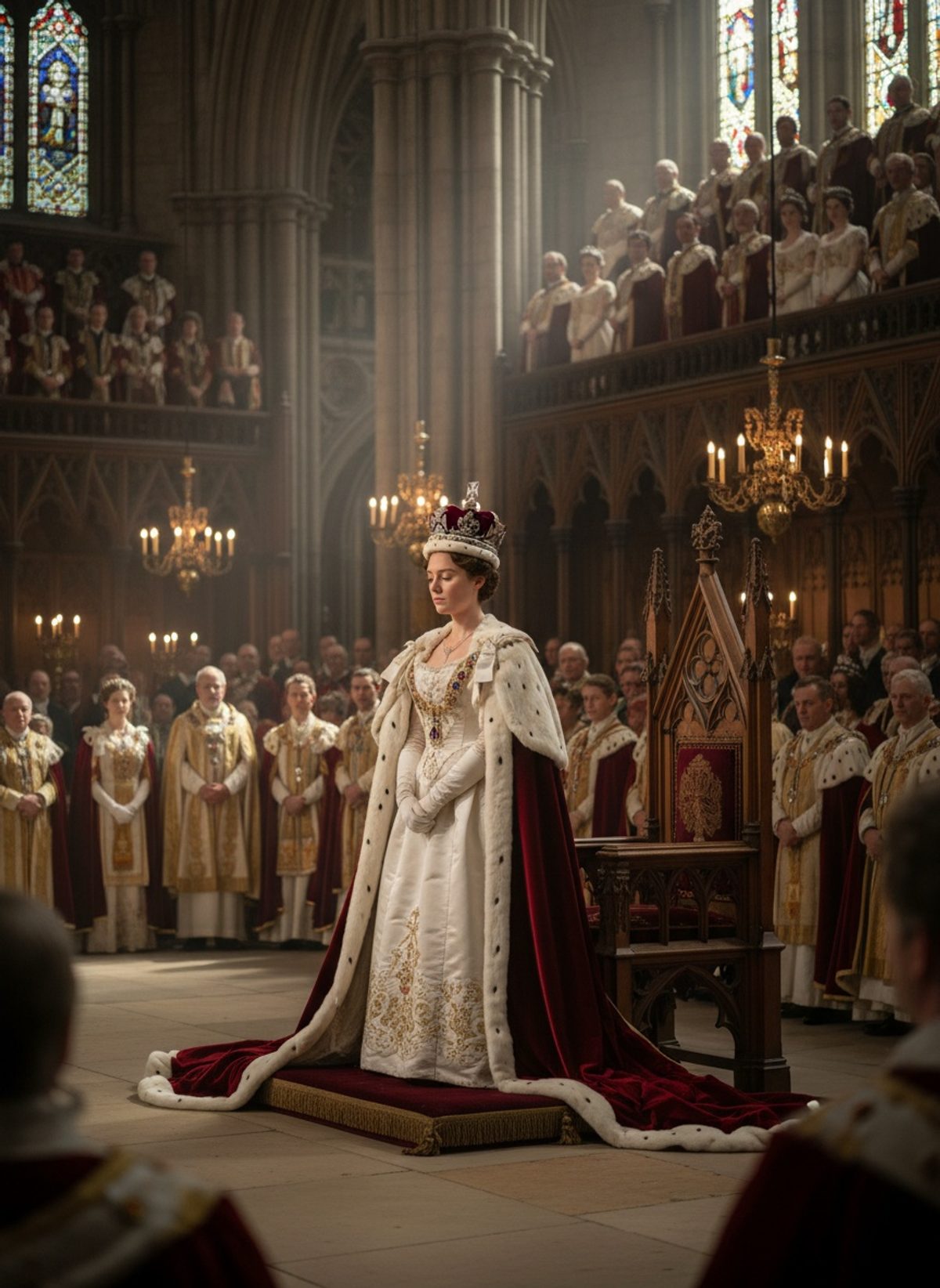
Inside Westminster Abbey, a hush fell over the assembled crowd, a vast sea of nobility, clergy, and officials all awaiting the arrival of their sovereign. The Abbey, a monument to both divine and royal legacy, was draped in the weight of tradition. Yet in that moment, it was Victoria’s solitary figure that commanded the space. Her walk down the aisle was not merely a procession; it was a statement. Each step echoed with a resolve beyond her years.
Read next: The Day a Queen Rode to Her Own Coronation Alone
The centuries-old stone of the Abbey seemed to absorb her presence, the ancient walls a silent testament to the spectacle of continuity she represented. As she moved forward alone, without the comforting presence of her long-lost father or mother, she embodied the very essence of royal duty: bearing the weight of expectation with grace and quiet determination. An observer might see her not merely entering as a monarch, but as a young woman stepping beyond the threshold of history’s embrace.
Kneeling Before Destiny
The moment of coronation was a paradox: both a culmination and a beginning. As Victoria knelt before the Archbishop of Canterbury, the symbolic gesture was one of both humility and authority. The crown, an ornate circle of power and burden, awaited her. This simple act of kneeling was heavy with centuries of precedent, yet Victoria’s youthfulness lent it an unprecedented freshness.
The assembled congregation, a blend of anticipation and reverence, watched as she rose. It was not just the rise of a queen—it was the ascension of a new era. The young queen’s ascent was witnessed by those who would write about it and those who merely murmured their approval or awe. As she rose, the crown placed upon her head, it was more than a symbol of regal authority. It was the moment she turned from a figure of prospective promise into the living emblem of national pride.
The Weight of the Crown
The crown itself was said to have the weight of history within its metal and jewels—a burden that had indeed crushed shoulders before hers. But Victoria bore it with a quiet insistence on defining her own narrative. Her small yet upright stature under the crown indicted a resilience rarely highlighted in textbooks. This day was her assertion that the crown did not stand above her, but rather with her.
The ceremony continued, rich with ritual and tradition, each stage meticulously calculated to reaffirm the timeless bond between the monarch and the nation. Yet for Victoria, it was a day not just of inheritance but of personal triumph. She needed no precedent to follow. The legacy of those who had come before her swirled invisibly around her, but they were her support, not her dictate. Her tenure, much like her reign, would be defined by reshaping duty to match the changing times.
A Nation Unites
The coronation of Queen Victoria was more than a lavish ceremony; it was a moment of unity for the nation. As she emerged from the shadows of the Abbey, the newly crowned sovereign was greeted by roaring cheers. The streets pulsed with a collective joyous energy, subjects leaning out of windows and waving flags. Her youth and resolve were a beacon of hope, promising stability in a time where every change mattered deeply.
This story of a young queen standing alone at the front of her nation, with only her courage to guide her, is not merely historical. It's an evocative tapestry of individual courage and collective aspiration. The legacy of that solitary figure in Westminster Abbey resonates still—showcasing how the actions of one individual, no matter how young or seemingly inexperienced, can inspire a nation toward greatness. In her aloneness was a latent unity, one that reflected a nation turning its gaze toward the future, led by a queen who learned on that day that isolation could be a powerful ally for change.