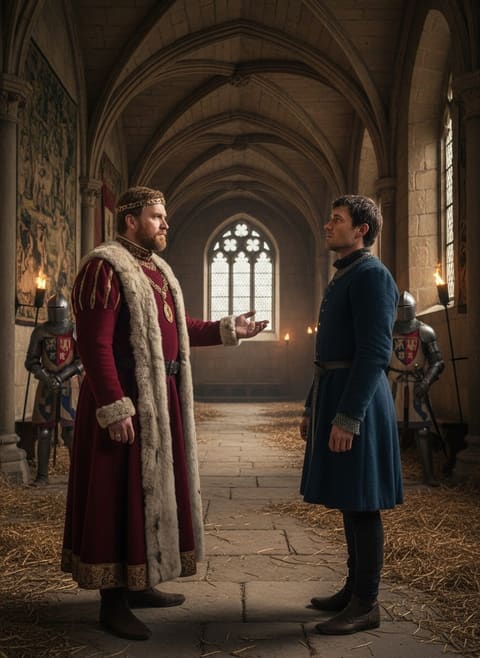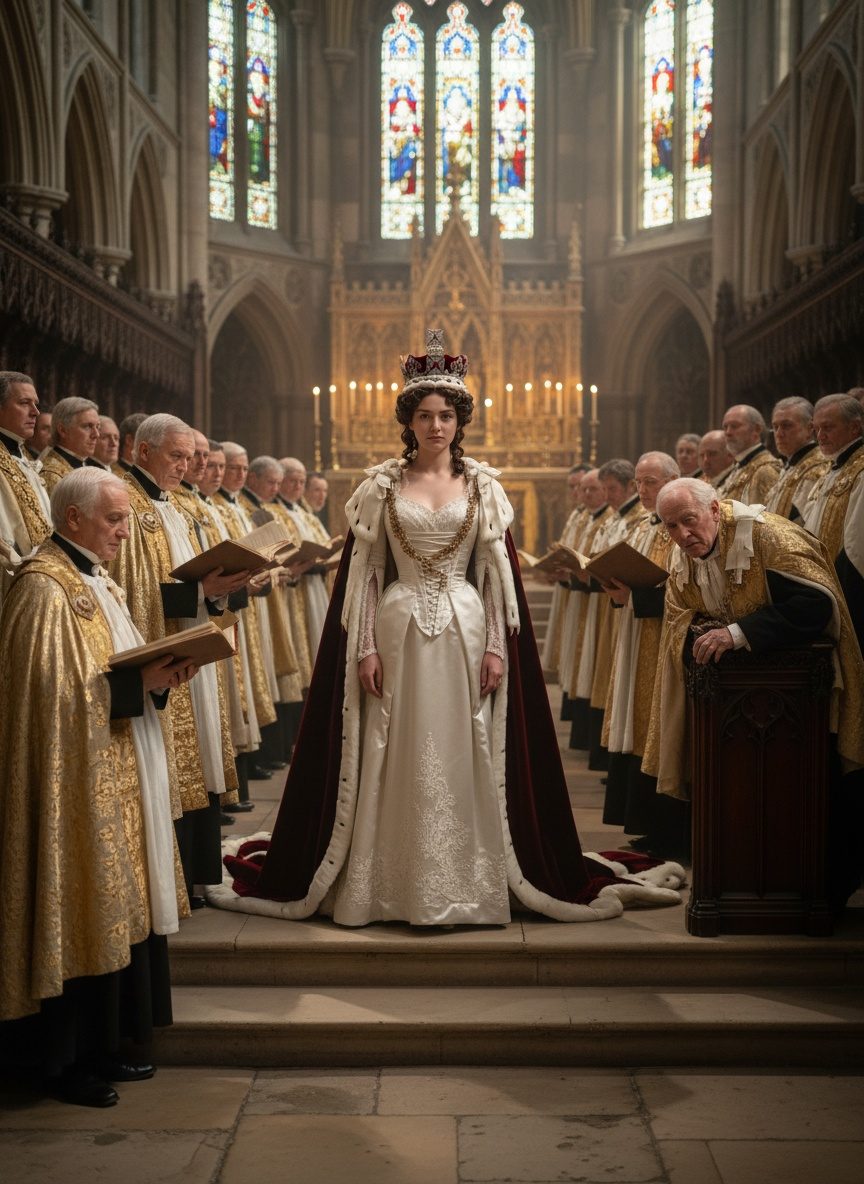
The coronation of Queen Victoria went off without a hitch. Almost nothing could be further from the truth.
A Crown Too Heavy for a Young Queen
On the morning of June 28, 1838, a rare moment occurred in the annals of British history. A nineteen-year-old girl was about to be crowned Queen of an empire upon which the sun never set. Yet, as the doors of Westminster Abbey opened, it was as if the fates had conspired to add a touch of chaos amidst the grandeur.
Victoria ascended to the throne with grace, yet her coronation ceremony betrayed the nervousness of an occasion not entirely under control. Looking serene and composed, she crossed the threshold into the Abbey. Inside, it was a cacophony of grandeur and disorganization, an orchestration gone awry. The future symbol of an era steeped in societal decorum and innovation would have her first day as monarch marked with unforgettable disorder.
The young queen navigated a procession where roles seemed as confused as the plans scribbled in haste the night before. Elderly nobles shuffled awkwardly, pages scurried as if in a farcical play, and clergymen, eyes weary despite the hour, often lost their place in the liturgy.
Read next: The Day a Young Prince Knelt and Refused a Crown
Perhaps the most eternal symbol of this muddled majesty was the mistaken placement of the coronation ring. Originally intended for her right hand, a simple oversight saw the ruby ring shoved onto her left ring finger, causing the young queen discomfort as it proved stubbornly obdurate to removal. Late into the night, she soaked her throbbing hand in ice water, her regal demeanor temporarily overtaken by the agony of a miscalculated gesture.
Nonetheless, Victoria bore the weight of the occasion—and her newly bestowed crown—with a dignity that belied her years. Throughout the day, she maintained her composure, embodying the stoic spirit that would define her reign. For witnesses, her persistence amid the chaos portended the steadfastness for which she would one day be known.
The Great Fall of a Noble Lord
Amongst the noble attendees—dukes, lords, and ladies cloaked in their finest robes—one particular participant became the unintended comedian of this grand display. Lord John Rolle, an 82-year-old peer known for his diminutive stature and not much else outside Devonshire, provided a spectacle reminiscent of the slapstick comedies of a later age.
As the rituals unfolded with their own rhythm of grandeur and disorder, Lord Rolle bravely commenced his ascent to pay homage. In stepping up the Abbey's stone steps, his foot caught where grace demanded precision, resulting in a tumble of years worth of pride. To gasps and subdued exclamations of horror resounding through the vaulted ceilings, Lord Rolle rolled—not metaphorically, but literally—down the stairs he had aimed to conquer.
Queen Victoria, witnessing the stumble, reportedly extended a concern befitting her future reign of empathy. She stood, offering her own slight form as a compassionate anchor, a gesture that endeared her to many hearts both present and removed from the ceremony by distance.
This display of humility, contrasted by the orchestrated fanfare surrounding her, echoed far beyond the Abbey that day. It hinted at the human touch behind the crown, a quality pivotal for securing the affections of her millions of subjects.
Read next: The Day a Queen Rode Alone Into a Mutinous Army
The Hum of Beneath the Pageantry
Though her day had been one of splendor spliced with mishaps, Victoria herself recorded it as “the most beautiful” of her life. This paradox perhaps underpins why it matters more now than a mere historic recounting of glittering jewels and misplaced ornaments.
The chaos, the fortuitous mishaps—the crowning madness—gave life to the idea that leadership is not about perfection. On days stained with rain and unexpected blunders, the strength lies in how we weather through them and find beauty therein.
The coronation event set the stage for not just another monarch, but an era defined by contrast—the Victorian Era. It is remembered for advances and contradictions, shadowed by the brilliance of an empire in flux, much like the young queen who began her reign amid silent thunder and misplaced ornaments, ready to steer a nation through its grandest and gravest transformations.
In the echoes of that day, beneath the pomp and ceremony, lies an enduring lesson of human resilience. It serves to remind us that the crowns we wear, tangible or otherwise, might be heavy, ill-fitting, and accompanied by an unexpected fall now and then—but it is in these moments of unforeseen chaos that true character is forged.