Bill Millin walked blithely onto a battlefield many considered hell. German soldiers had him in their crosshairs, but none fired the shot. Was it mercy they granted, respect, or something else entirely?
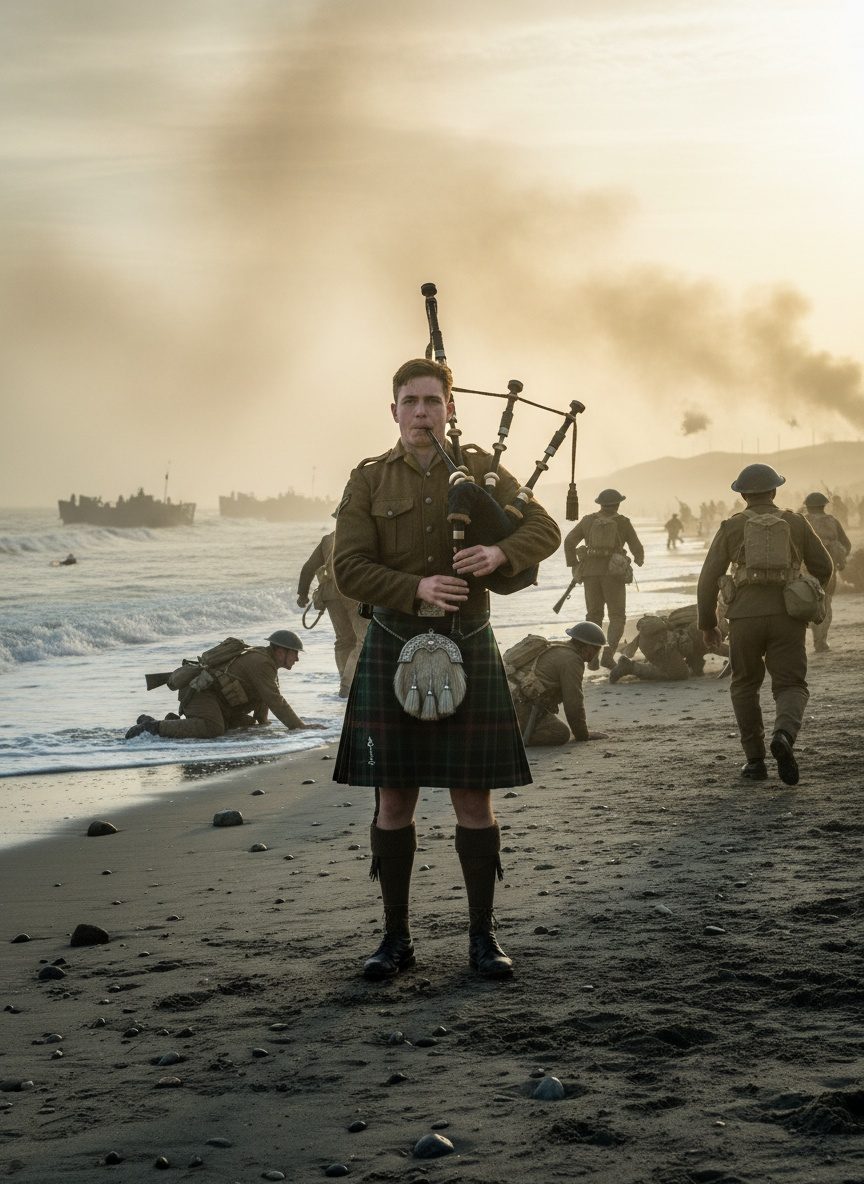
On the morning of June 6, 1944, the course of the war—and perhaps the world—was set to change on the beaches of Normandy. The Allied forces, a coalition of brave souls gathered from across the globe, were about to embark on what would come to be known as D-Day—the largest seaborne invasion in history. Millin, just a lad of twenty-one, ritually prepared his bagpipes, his father's kilt brushing against his knees as he stepped off the landing craft and into the icy, tumultuous waves—waves of water and waves of chaos—all without a rifle for protection. What he carried instead was an instrument armed with music, an unexpected weapon of morale and defiance.
Sword Beach was one cog in a complex war machine, but no less crucial than the others. As Millin waded ashore, his surroundings exploded in every direction. He was fortunate; for every bullet that missed, someone else was not so lucky. His comrades raced for cover, darting and weaving among the artillery-riddled sands, instinct driving them to hunker down until safety was assured or their mission complete. Millin, however, seemed possessed by an older form of bravery, one forged on the rugged highlands of Scotland long before modern conflict.
The bagpipes wailed amidst the mechanical clatter of guns. Imagine the shrill, haunting melody slicing through the air, notes rising above the tide's roar and artillery thunder. The marching tunes he played had been battle songs for centuries, compelling men forward when fear alone might have stopped them cold. The dramatic contrast of Millin's steely composure against the surrounding chaos became a surreal tableau: a figure out of time amidst modern violence. His kilt marked him as a Highlander, a badge of tradition drawing the eyes of all and yet sparing him from their bullets.
Read next: The Day a British Stretcher-Bearer Refused an Order to Save Lives
Millin was not one to shirk orders from Lord Lovat, his commanding officer, who nonchalantly instructed him to play despite regulations prohibiting pipers from the front lines—a ban instituted after heavy losses in World War I. Yet Lovat valued the morale the pipes inspired more than rigid adherence to rules. This, indeed, was the paradox of Millin’s mission: what seemed madness to one was strategy to another, an intangible force that repaired fearful hearts with notes of courage.
The Germans later revealed that they refrained from shooting him because they thought he had gone mad. How else could they rationalize the relentlessly marching figure who defied all logic to reveal their positions with music? Perhaps the element of unpredictability in war—the human touch, unpredictably soft in the hands of Millin—was more dangerous than any weapon.
On the beach shrouded in smoke, where flesh and metal met in grim reckoning, Millin's pipes called the soldiers forward, sparking a vitality they might not have otherwise summoned in the face of such atrocious odds. His melody, untethered from rational expectation, was steeped in the oral tradition of Scottish combat, echoing with the lore of ancient warriors. It charged the atmosphere, pulling energies taut like instruments on strings—unseen yet felt by all.
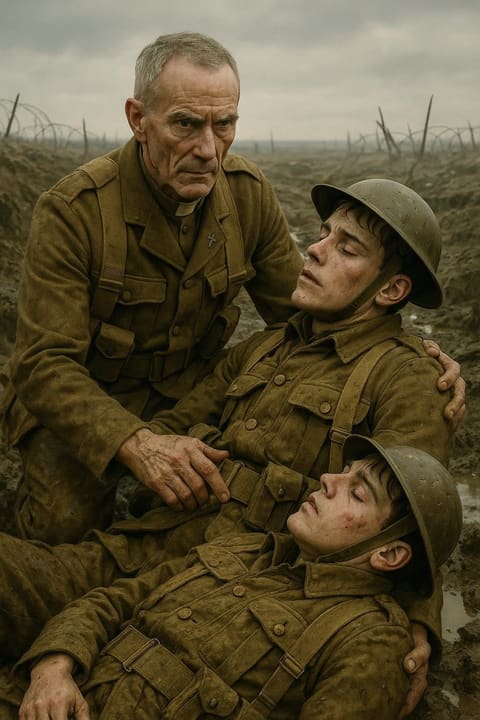
Read next: The Day a Army Chaplain Gave His Coat to a Dying Stranger
For Millin, the act was as much a tribute to his heritage as it was a duty of war. He played the tunes "Highland Laddie" and "The Road to the Isles," pieces with strong martial connotations that would remind his brothers-in-arms of the lands and people they fought to protect. It was a unifying force, transforming fear into something more palatable: the steadfastness of home, the camaraderie of a shared mission.
One by one, gradually emboldened by the brazen music, the troops arose from their foxholes. Each note seemed to knit their spirits, binding them tight against the chaos. Where the gunfire failed to break their resolve, the pipes fortified it. As waves of soldiers advanced, steps fell into synchrony with the rhythm, harmonious not by command but by the invisible tether of bagpipe strains.
This demonstration of resolve was more than just a moment of historical peculiarity. It was an act of conscious defiance against the dehumanizing machinery of war. Millin's performance on Sword Beach was an assertion that even amidst the worst of human conflict, humanity itself could not be drowned out by the sound of gunfire or set aside by duty. More than seventy years on, this impossible scene whisper into our historical consciousness: courage is not always the lack of fear; often, it is the willingness to walk upright into its very heart and make noise.