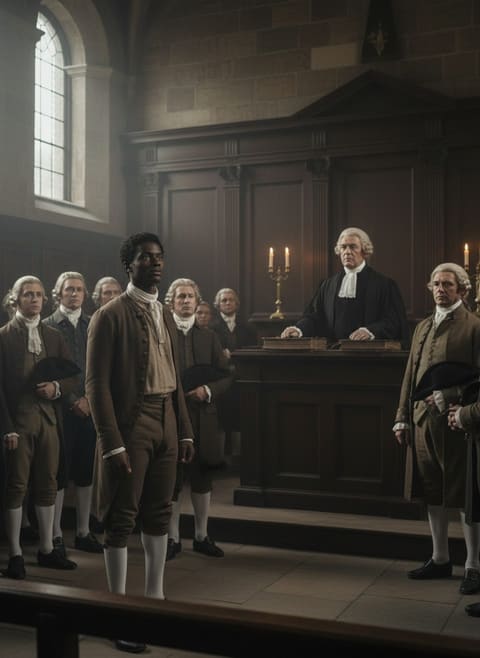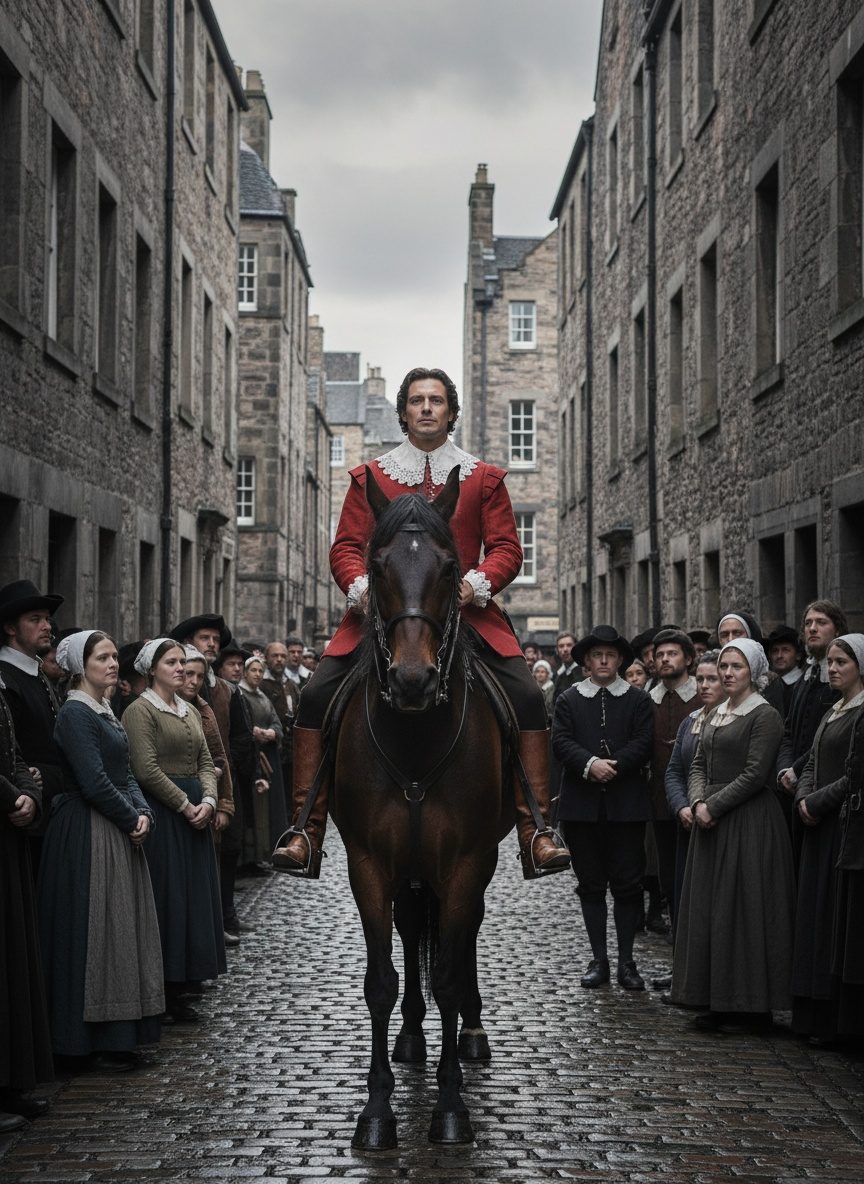
He was a nobleman, yet he faced haughty disdain. Bound for execution, he rode like royalty.
The Unexpected Chivalry of Condemnation
In the spring of 1650, the city of Edinburgh was not awash in sympathy; rather, it buzzed with the energy of a populace ready to witness the fall of a man who had been both revered and reviled throughout Scotland. James Graham, the Marquess of Montrose, was no stranger to the theatrics of war and politics. Yet, what unfolded as he was led through Edinburgh was nothing less than extraordinary. Expecting the jeers of a crowd eager to see his humiliation, Montrose instead elicited something else entirely.
Wearing a striking outfit more akin to a princely regalement than prisoner’s rags, Montrose's entrance to the city was an audacious display of defiance. The audacity of his attire and demeanor altered public perception. What was meant to be a procession of shame became a procession of respect — a final act of honor before his impending execution. The same townspeople who once clamored for his downfall found themselves in confounding awe.
A King’s Man Through Triumph and Trial
The story of James Graham is cradled within the tumultuous seas of the Wars of the Three Kingdoms, which saw Scotland, England, and Ireland entangled in conflict. For King Charles I, Montrose was an invaluable ally. In a series of lightning-fast campaigns across the Scottish Highlands, Montrose's unmatched strategic brilliance led to six consecutive victories against formidable odds.
Read next: The Day a Scots Weaver's Son Freed the Kirk From a King
Notably, he achieved these feats with mostly meager resources, often commanding forces that were improvisationally cobbled together from Highlanders, Irish confederates, and royalist sympathizers. The savagery and audacity of his campaigns earned him both the deep loyalty of his men and the hostile enmity of his enemies.
Despite his initial triumphs, Montrose's fortunes would take a bitter turn. As the tides of war shifted, so did the loyalties and strength of Scotland's factions. After a string of losses, which curtailed his remarkable rise, Montrose found himself captured — a prisoner of those who had long sought his end.
The Captor and the Captive Dream
His capture ignited a fervor among the Scottish Covenanters, who saw in Montrose a defiant rebel against their religious and political visions. This was a time when the personal and the political were deeply intertwined, creating the backdrop for his dramatic last days. The spectacle of his capture was one of both jubilation and fear for his captors, as even in chains, Montrose’s spirit could not be easily silenced.
James Graham stood accused of treason and all the horrors of war he'd unleashed on the land. Yet it was not just his martial exploits that painted him as a threat. His undeniable charisma and military ingenuity left an indelible mark, and his mythos was fiercely defended by his loyal supporters.
During his final days, Montrose demonstrated a refusal to relinquish his dignity. He upheld the prerogative of a soldier who fought for king and country, astonishing even his most ardent critics with a gallantry that rivaled the ancient knights of lore. This moment was not simply one of personal tragedy but a reflection of larger political and ideological tides sweeping through Britain at the time.
March of Silence
But perhaps the most compelling paradox was found in Edinburgh's reaction when Montrose was paraded before them; the gallows awaited him. He was presented as a cautionary tale, a warning against rebellion, yet his demeanor turned the intended lesson on its head. Standing tall, dignified, and regal as ever, he turned an execution march into an emergence of stoic valor and enduring pride.
Read next: The Day a Highland Clan Turned a Massacre Into a Legend
This compelling scene wove silence over the assembled throng. The jeers that his captors had counted on to be the soundtrack of his demise faded into an uncanny stillness. In place of the anticipated spectacle of ridicule, the sight of Montrose brought reflective sorrow, and tears rippled through portions of the crowd.
As they gazed upon this proud man, a curious sense of admiration overtook many onlookers. Montrose remained composed, mindful of the spectacle he orchestrated, imbuing his final moments with an air of noble defiance. The crowd, which came to see what they thought was the righteous humbling of a villain, saw instead the fleeting vision of nobility in chains.
The Legacy of the Marquess
The Marquess of Montrose met his end soon thereafter, but the memory of his resolve during his final days lingered like echoes from a deep canyon. His death was a reflection of the divided loyalties that characterized 17th-century Scotland and the wider British Isles. Montrose's journey, culminating in an unexpected turn of public sentiment, serves as a poignant reminder of the power of individual conviction against the sweeping tides of history.
Even in death, Montrose left behind a legacy not easily tarnished by defeat or execution. His story speaks to the complexities of loyalty and honor in a world of shifting allegiances, a Britain reeling from revolution and unrest. He reminds us that dignity and courage have a transformative power that can ripple outwards, challenging the perceptions of all who bear witness.