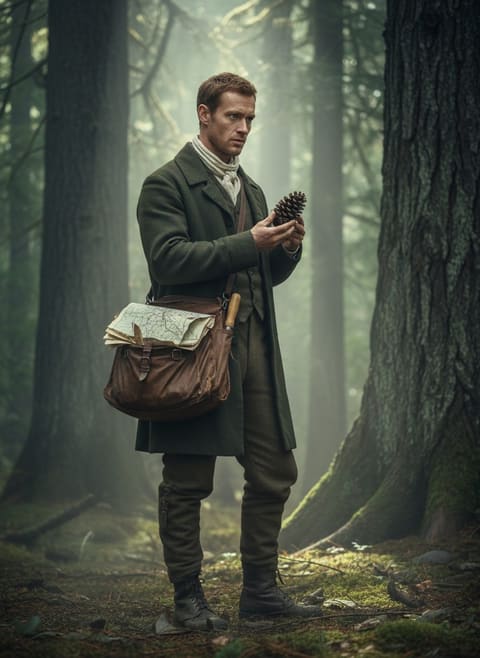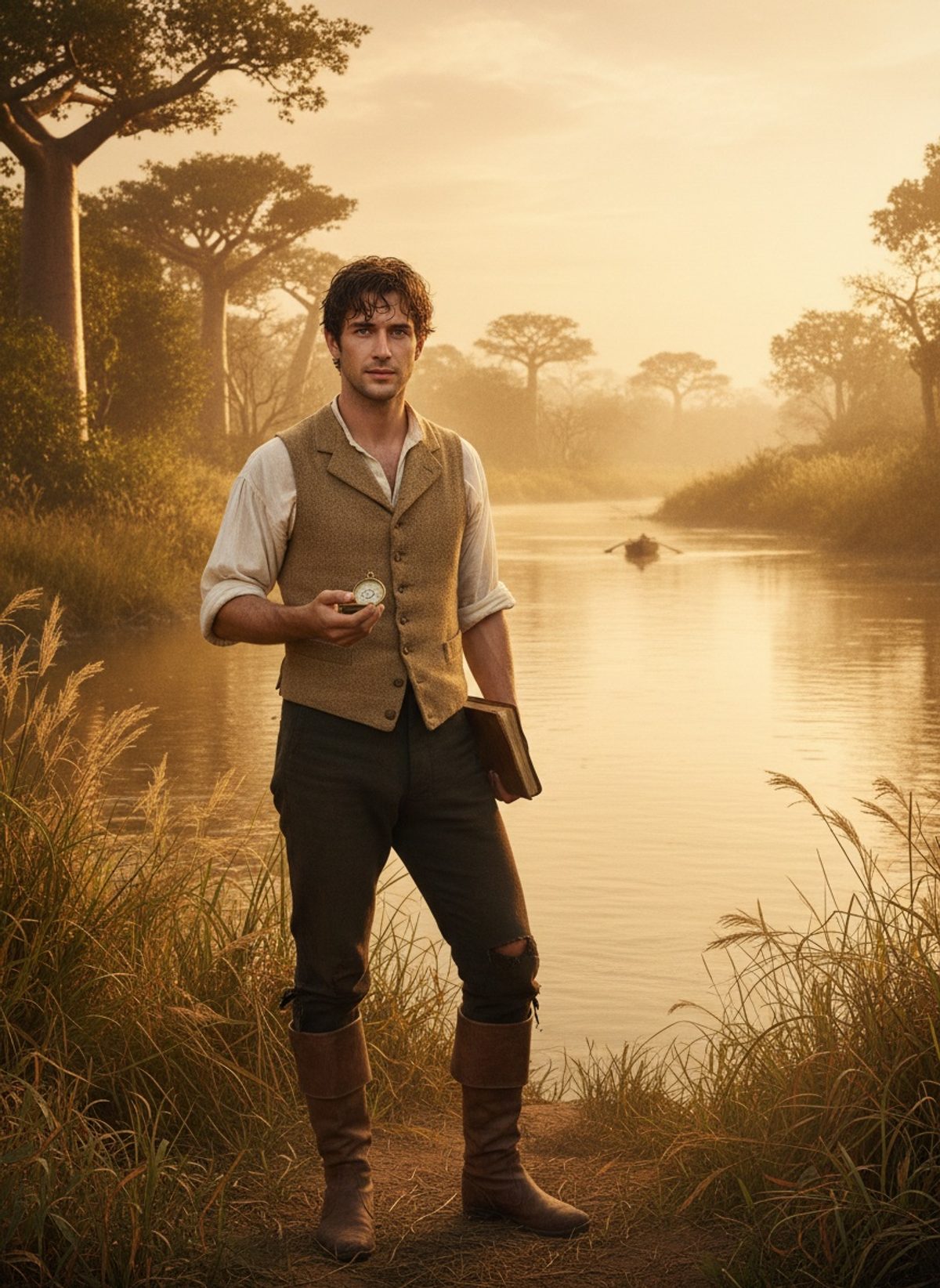
Mungo Park is hardly a household name. And yet, his journey through the heart of Africa deserves a place among the most gripping tales of exploration.
The Unassuming Scotsman
Mungo Park, born in 1771 in the Scottish borderlands, was a man driven not by glory but by curiosity. As a young surgeon eager to explore the unknown, he left the familiar fields of Foulshiels for the incomprehensible vastness of West Africa. It was 1795 when his feet first touched African soil, a place that no European had yet managed to chart in full due to its perilous terrain and hostile climate.
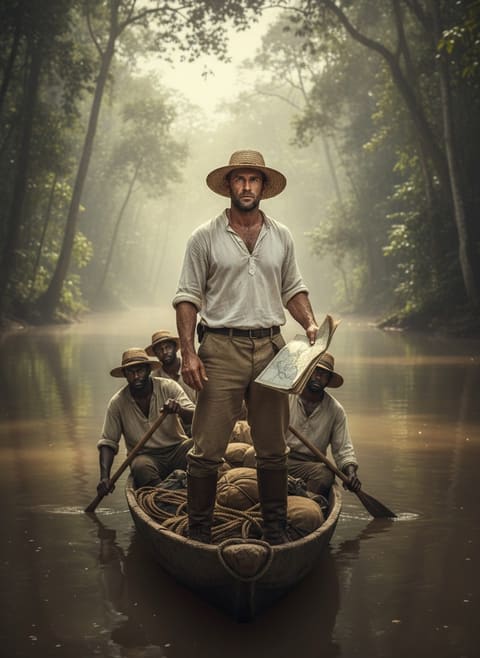
Armed with nothing but a compass, a notebook, and an insatiable thirst for discovery, Park ventured into the oppressive heat of the African interior. His mission was to chart the course of the Niger River, a waterway veiled in mystery and myth. In those days, the Niger's origins and path were as elusive as the heart of the continent itself. To many, Park's expedition seemed an act of madness, a suicide mission devoid of military escort or comprehensive maps.
But Alexander Mackenzie, an explorer himself, had inspired Park with his own documentation of the Canadian wilderness just a few years before. Mackenzie's tales convinced Park that such adventures were not just for the brave but for the meticulous—the patient seekers of knowledge who would sketch maps as they walked, one foot in front of the other.
Read next: The Walk That Never Stopped: Britain's Greatest Foot Journey
Into the Unknown
Park ventured beyond the familiar coastal regions into territories scarcely documented, treading paths that saw few Europeans before him. His journey was one of extraordinary endurance. Twelve times he came to the brink of death by starvation, disease, and capture. Yet, with each escape, he pressed onward, always driven by the promise of the Niger.
The African landscape was an adversary, a wilderness of suffocating jungles and expansive deserts. Park often struggled for mere survival, subsisting on meager rations and sleeping beneath the stars. As his body weakened, so did his spirits, until his encounters with the indigenous people renewed his will.
Amidst the trials, there were moments of humanity—a local chief offering hospitality, a village sharing food despite their own poverty. These acts of kindness were only possible because Park approached with respect, rather than the heavy-handed entitlement common among European explorers of his time.
He once wrote of the hypnotic nights under the African sky, where the sounds of nocturnal life filled the air. These dreamlike evenings were punctuations between the more frequent nightmares: being taken prisoner, narrowly escaping murderous bandits, and battling the fever that seemed to lurk behind every twig and stone.
Finding the Niger
After what seemed an eternity of unyielding heat and relentless adversities, Park staggered into the town of Ségou on the banks of the Niger. His arrival was triumphant yet unceremonious—a travel-worn man looking at the murky water with the awe of someone meeting a legend in the flesh. In front of him lay the same river that had eluded explorers and mapmakers for centuries, its existence now substantiated by his weary eyes.
Read next: The Day a Welsh Naturalist Mapped the Roof of the World
Park dipped a cautious hand into the river, feeling its flow and beginning to chart its course in his mind. His success marked a transformational moment in the world's geographic understanding. Where once there had been nothing but wild conjecture and fabricated maps, Park's observations brought a vision that laid the roots for future explorations.
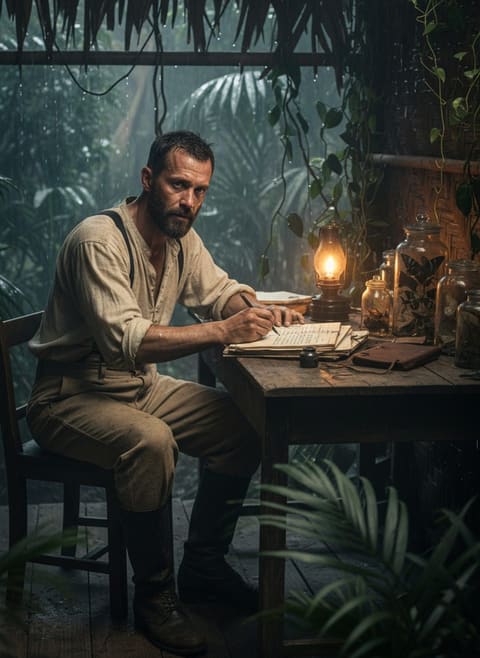
The explorer’s notebooks, packed with sketches and notes accumulated over two thousand grueling miles, offered a peek into West African culture and landscapes that had remained untapped reservoirs of stories, peoples, and lands. His success was not only in finding the river but also in documenting the journey for those who followed.
The Power of Perseverance
Park returned to Britain as a hero of discovery, his exploits becoming the stuff of legend. Yet, his journey was more than a personal triumph. It expanded the horizons of European geographical knowledge and tipped the balance towards more accurate representations of Africa. His willingness to venture into the unknown reshaped notions of what's possible when curiosity outweighs caution.
Park's story matters because it personifies the indefatigable human spirit in pursuit of understanding against all odds. We remember him not just for the cartographic voids he filled but also for the courage and stubborn resolve that took him deep into the heart of darkness with little more than the conviction that the world was larger and even more wondrous than most dared to dream.