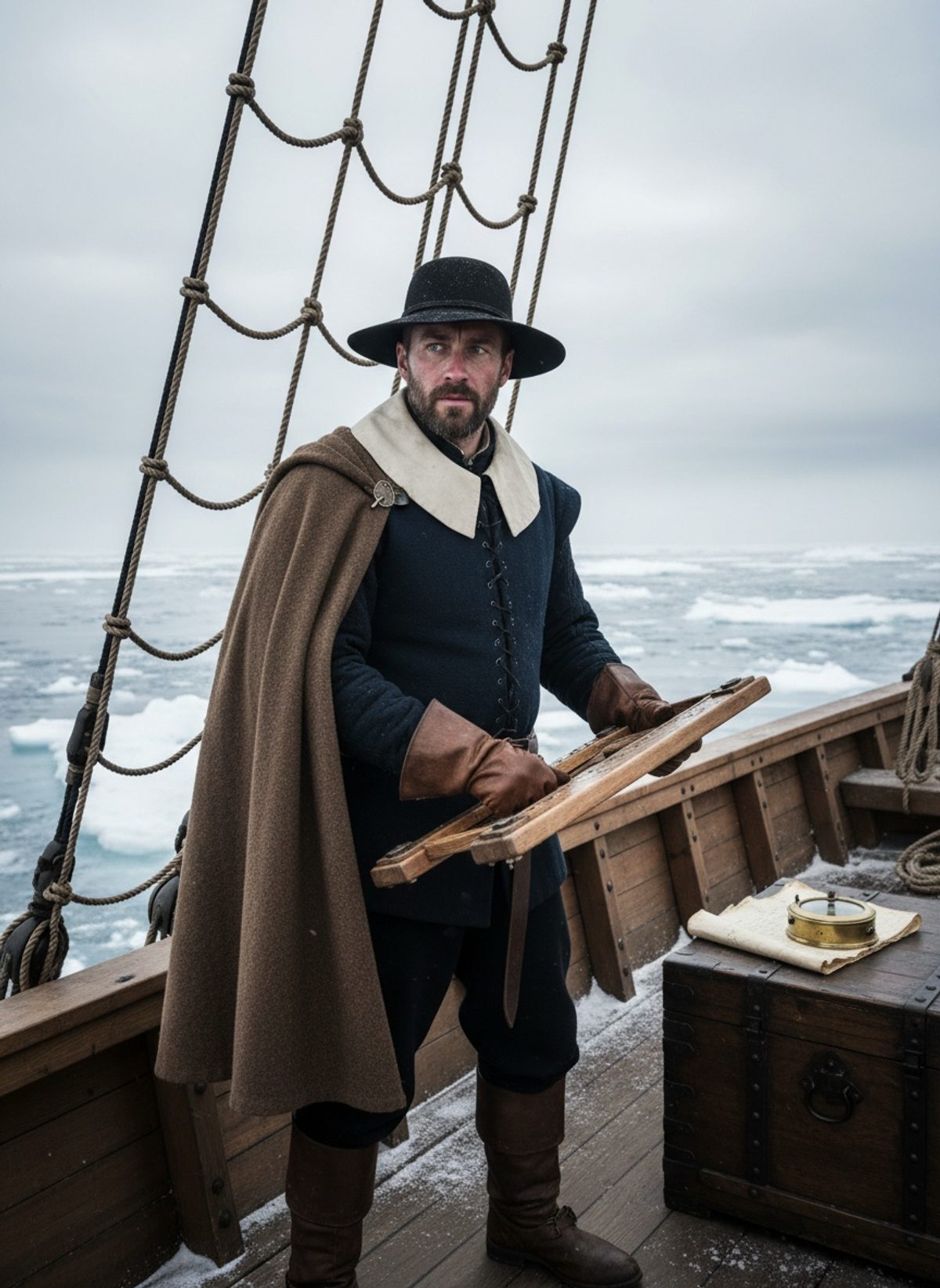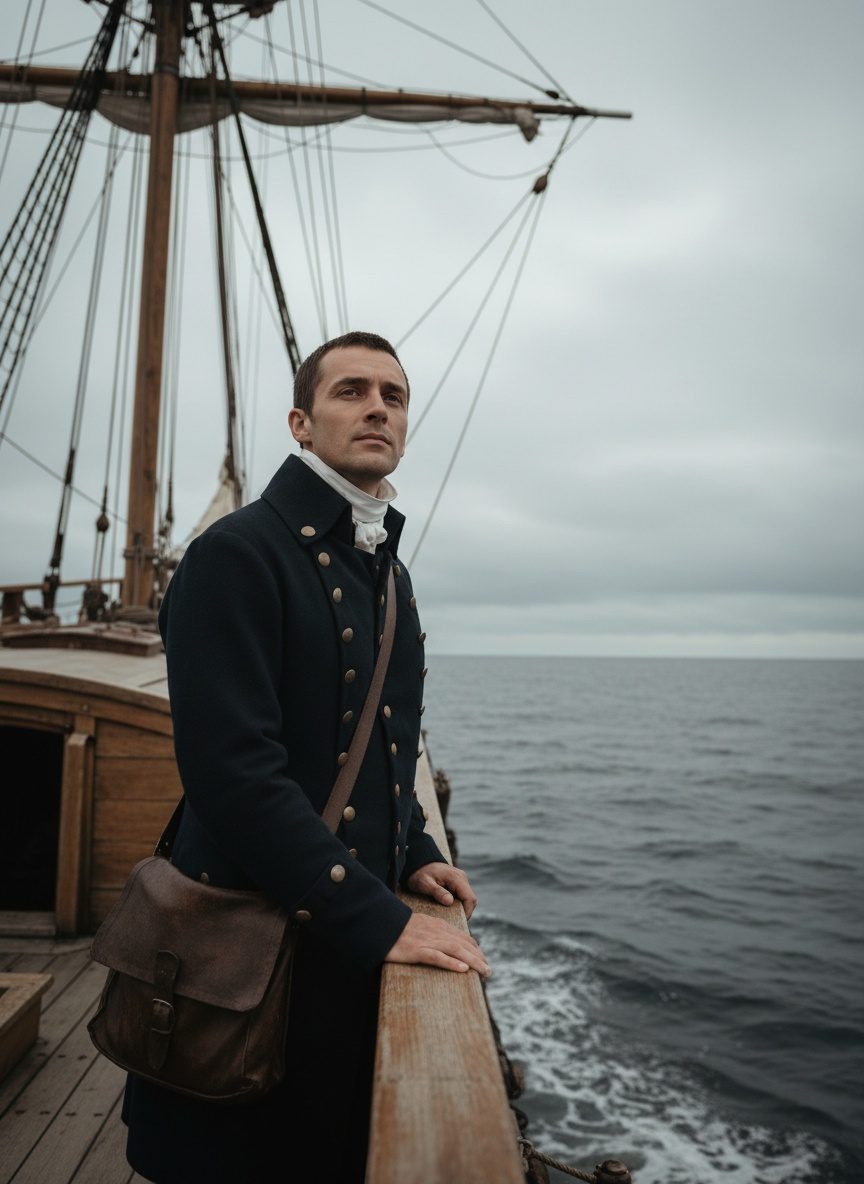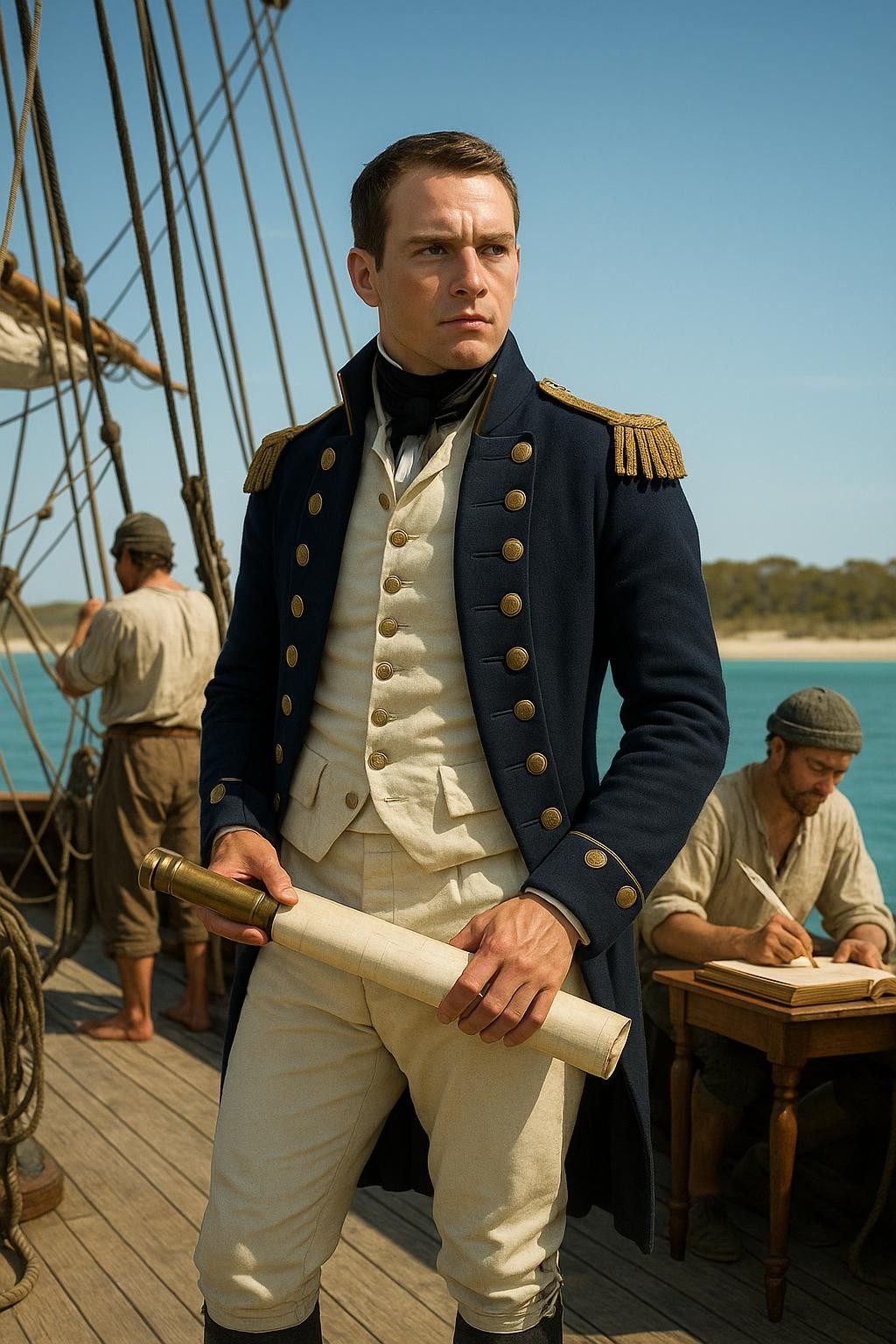
July 22, 1801. The sun rose over the calm seas near the port of Portsmouth, glistening on the deck of HMS Investigator. A brisk breeze carried the sounds of the bustling waterfront, where the ship was busily being prepared for an unprecedented voyage. Amidst the organized chaos stood a determined young man of thirty, Matthew Flinders, whose mind was set on a bold and ambitious mission — to chart the uncharted, name the unnamed, and eternally alter the cartographic representation of the world. Born in Lincolnshire, Flinders was on the brink of achieving what no other explorer had managed before: the complete mapping of the massive southern landmass that would later be known as Australia.
Few had ventured close to the mysterious shores of this expansive territory, and fewer still had returned with revelations beyond its perilous reefs and untamed wilderness. Flinders held within him the curiosity and tenacity characteristic of England’s finest explorers — qualities that had driven him from the green pastures of Donington all the way to the Royal Navy’s ranks as a distinguished navigator. The task laid out for Investigator and her crew was monumental, rife with the challenges of unknown elements and the constant threat of nature’s unpredictability. But Flinders was resolute, driven by a vision of completion left unrealized by his predecessors, and fueled by a deep understanding of the significance that a comprehensive map of this land would have for future generations.
There was a mystical allure to the continent's extensive coastlines, having been glimpsed but never fully understood by European navigators. To Flinders, each unmarked bay and headland was like a blank page in the annals of history waiting to be scribed. He was no stranger to the painstaking precision required in coastal surveying, having honed these skills during earlier voyages around New South Wales with George Bass. The hard-earned experience only intensified his ambition to capture the entire continental expanse on paper. He envisaged that fitting the final pieces into this global jigsaw was not only a personal quest but also a scientific duty.
Setting sail across the sprawling and choppy waters presented more than just navigational challenges. Supply lines lagged at the mercy of the ocean's fickle temperament, and the morale of crews could dwindle as the days blurred into an arduous continuum of unrelenting effort. Yet, under Flinders' leadership, Investigator's crew was imbued with a sense of purpose and adventure. The ship embarked on its lengthy journey to the southern hemisphere, laden with provisions and an array of surveying equipment carefully selected to withstand the rigorous demands of the endeavor. Among these instruments was the seemingly humble but crucial sextant that Flinders wielded with expertise.
Read next: The Day a Devon Captain Mapped the World's Last Shore
Months passed as Investigator traced the jagged outline of the landmass, and Flinders meticulously documented each feature with acute observation, his maps growing richer in detail with every fresh discovery. His determination was unyielding, anchored by a vision of unifying a fragmented and unexplored coast into a coherent geographical identity. This ambition went hand in hand with the navies’ stakes, for these maps promised safer passage for future mariners and vital territorial claims for the British Empire. The mapping venture was not merely an academic exercise; it was a geopolitical maneuver in an era defined by naval supremacy and exploration.
As the ship rounded the country, Flinders' diligence bore fruit in an incredible tapestry of coastlines that would redefine the world's understanding of the southern hemisphere. These maps were imbued with more than cartographic intricacy — they embodied the human spirit of discovery and the capacity to extend frontiers of knowledge. In his reports back to England, Flinders furnished the etymological seed for the continent's ultimate name. "Australia," derived from the Latin *Terra Australis*, meaning "southern land," captured both the geographic and symbolic essence of his achievement.
Returning to England, Flinders faced an unexpected set of tribulations that nearly overshadowed his contributions. The political climate and naval feuds of the period led to his detention on the island of Mauritius by the French for several years. Yet, the spirit of his pioneering task remained unextinguished, with advancements made through his arduous journey eventually reaching the wider world, albeit delayed. His charts, upon their dissemination, reshaped global perception, defining an entire continent and opening it to futures shaped by its landscapes and peoples. Flinders did not witness the full measure of his work’s influence during his lifetime, dying young and largely uncelebrated immediately.
Although he did not live to witness the official adoption of the name "Australia," Matthew Flinders' indelible legacy as the father of its modern cartography is now recognized. The name he ventured has since grown synonymous with a land of vibrant, diverse cultures, rich histories, and distinctive natural wonders. Such was the power of a single man's dedication to exploring the world’s unknowns, driven by dreams realized through grit and ambition. It serves as a reminder that behind the borders we draw and the maps we trust lies an unyielding spirit of inquiry — one that determinedly follows the trails of possibility unyielded by any single horizon. In these pursuits, we find the true measure of our humanity. As we reflect on Flinders’ journey, we are prompted to consider what unexplored territories still await today's voyagers — both on Earth and beyond. The courage to name a land is the courage to know it, and in knowing, we transform the void into vistas known and shared. The story of Matthew Flinders is not just the making of a map, but the expansive embrace of the world’s wonders waiting to be discovered.